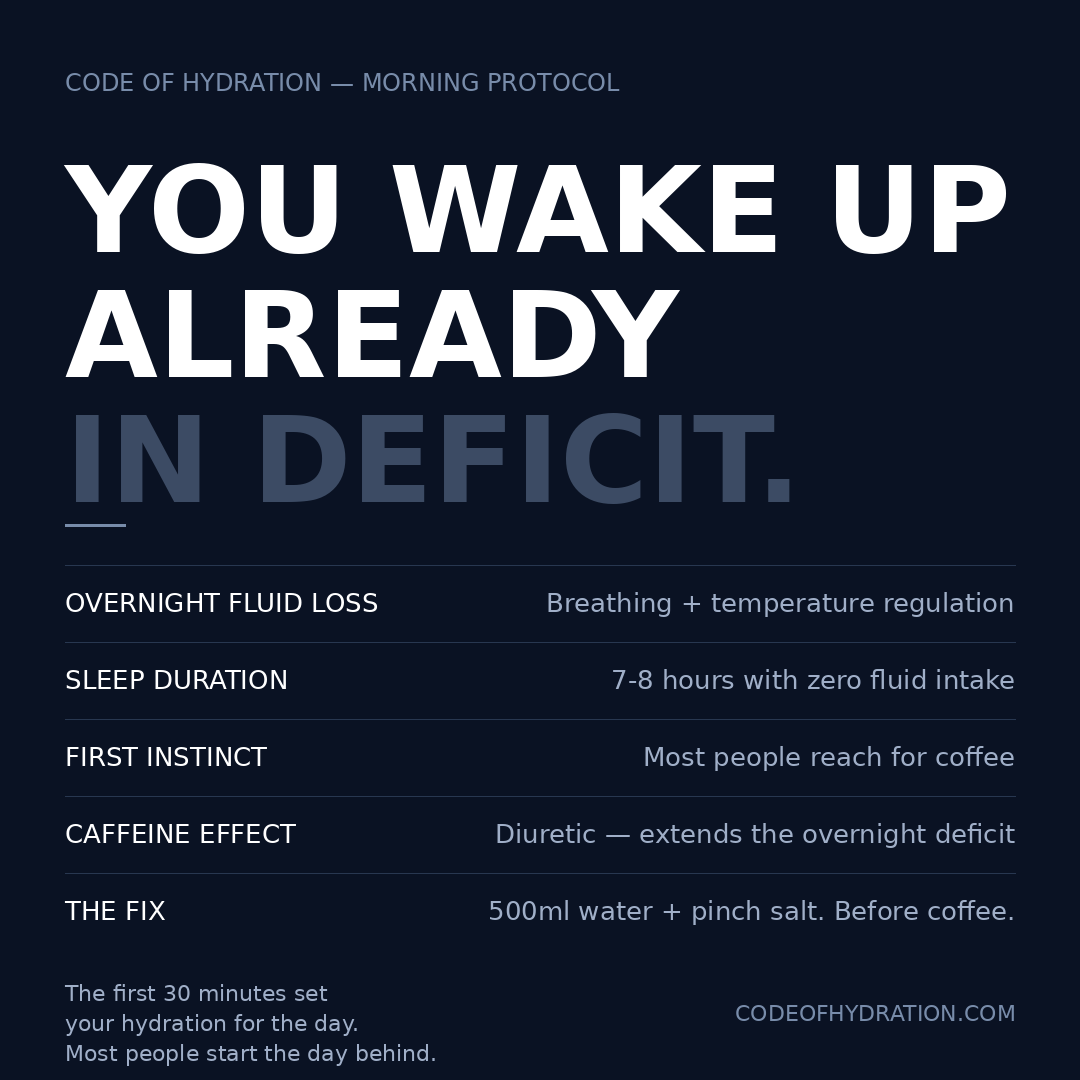
You wake up already in deficit. Seven or eight hours of sleep without any fluid input, breathing out moisture all night, body temperature regulated through evaporation — by the time the alarm goes off, your hydration balance is already negative. That’s the baseline everyone starts from.
What you do in the first thirty minutes determines how quickly you address that deficit — or how much deeper you go before you even start.
What most people actually do
Most people reach for coffee. Often before water, before food, before anything else. Coffee is a mild diuretic — it inhibits vasopressin, the hormone that tells your kidneys to conserve fluid, increasing urine output. The first input of the day is increasing fluid loss at exactly the moment the body is already running a deficit from overnight. The 2pm fog that arrives so reliably? Most of the time its roots are here, in the first thirty minutes of the day.
The morning protocol that actually works
500ml water before anything else. Before coffee, before your phone, before the school run. Add a pinch of unrefined sea salt — this provides sodium and trace minerals that support cellular absorption and replace what overnight metabolism depleted. This takes about thirty seconds.
Wait at least 20 minutes before coffee. Give your body time to begin absorbing the water and rebalancing before you introduce a diuretic. This one habit alone changes the trajectory of your morning.
Avoid starting with coffee on an empty stomach. Caffeine on an empty stomach spikes cortisol, which further depletes fluid balance and sets a stress response in motion that can persist through the morning.
How does your morning routine score?
The free Code of Hydration quiz takes 3 minutes and assesses your morning habits alongside everything else to give you a personalised picture.
Why the first 30 minutes matters disproportionately
Hydration isn’t just about total volume consumed — it’s about when you consume it. Starting the day in deficit and trying to catch up at noon is significantly less effective than addressing the overnight deficit immediately on waking. This is one of the highest-leverage single habits available for improving daytime energy, cognitive clarity, and afternoon performance. It costs nothing and takes thirty seconds.
Frequently Asked Questions
Why should you drink water first thing in the morning?
You lose 0.5–1 litre of fluid overnight through breathing, temperature regulation, and metabolic processes — all without any fluid replacement. This overnight deficit means you wake up mildly dehydrated every single morning, regardless of how well you hydrated the day before. Morning is also the body’s highest fluid-absorption window — the digestive system is primed and ready. Addressing the deficit immediately, before anything that compounds it (like coffee), sets a fundamentally different hydration trajectory for the day.
How much water should you drink in the morning?
400–500ml (roughly two large glasses) before coffee is a practical and evidence-informed target. Adding a small pinch of unrefined sea salt supports mineral balance and improves cellular absorption. This volume addresses most of the overnight deficit and gives the body the mineral support it needs to properly utilise the fluid. The exact amount is less important than the habit — consistency of morning hydration matters more than precision.
How long should you wait after waking to drink coffee?
At minimum 20–30 minutes after drinking water, and ideally 60–90 minutes after waking. There are two reasons. First, giving water time to absorb before introducing a diuretic makes the rehydration meaningfully more effective. Second, cortisol — your natural morning stress hormone — peaks in the first 30–60 minutes after waking. Adding caffeine during this cortisol peak amplifies the stress response and accelerates fluid loss. Waiting allows cortisol to begin declining before you add caffeine’s stimulant effect.
Does the timing of water intake actually matter?
Yes, significantly more than most people assume. The body’s fluid regulation is time-sensitive — it doesn’t simply pool and redistribute all fluid equally regardless of when it was consumed. Morning is a peak absorption window. Water consumed during a deficit state (as in the morning) is absorbed differently and more completely than water consumed when you’re already topped up. Total daily volume matters, but timing is an independent variable with meaningful effects on cellular hydration outcomes.
Why does coffee on an empty stomach make dehydration worse?
Two mechanisms. First, caffeine inhibits vasopressin, increasing kidney fluid excretion at the exact moment the body most needs to conserve and absorb fluid. Second, caffeine on an empty stomach produces a sharper cortisol spike than caffeine with food. Cortisol is a catabolic hormone that — among other effects — promotes sodium excretion through the kidneys, pulling water with it. The combination of caffeine’s diuretic effect and cortisol’s fluid-depleting effect makes coffee on an empty stomach one of the worst morning hydration decisions available.
What difference does morning hydration actually make to afternoon energy?
The afternoon energy crash is one of the most consistent expressions of a hydration deficit that has been building since morning. Research shows that mild dehydration — even 1–2% fluid loss — measurably reduces cognitive performance, increases fatigue perception, and impairs sustained attention. When morning hydration is addressed properly, many people report that the 2–3pm slump either disappears entirely or is significantly reduced within a few days of consistent morning water habits. It’s one of the highest-return single changes available for afternoon productivity.
Related Reading
- How Much Water Should You Actually Drink a Day? (It’s Not 8 Glasses)
- Why Am I Always Dehydrated Even Though I Drink a Lot of Water?
- Why You Feel Tired After 40 (And What Hydration Has to Do With It)
This article is for general informational purposes only and is not medical advice.
Leave a Reply