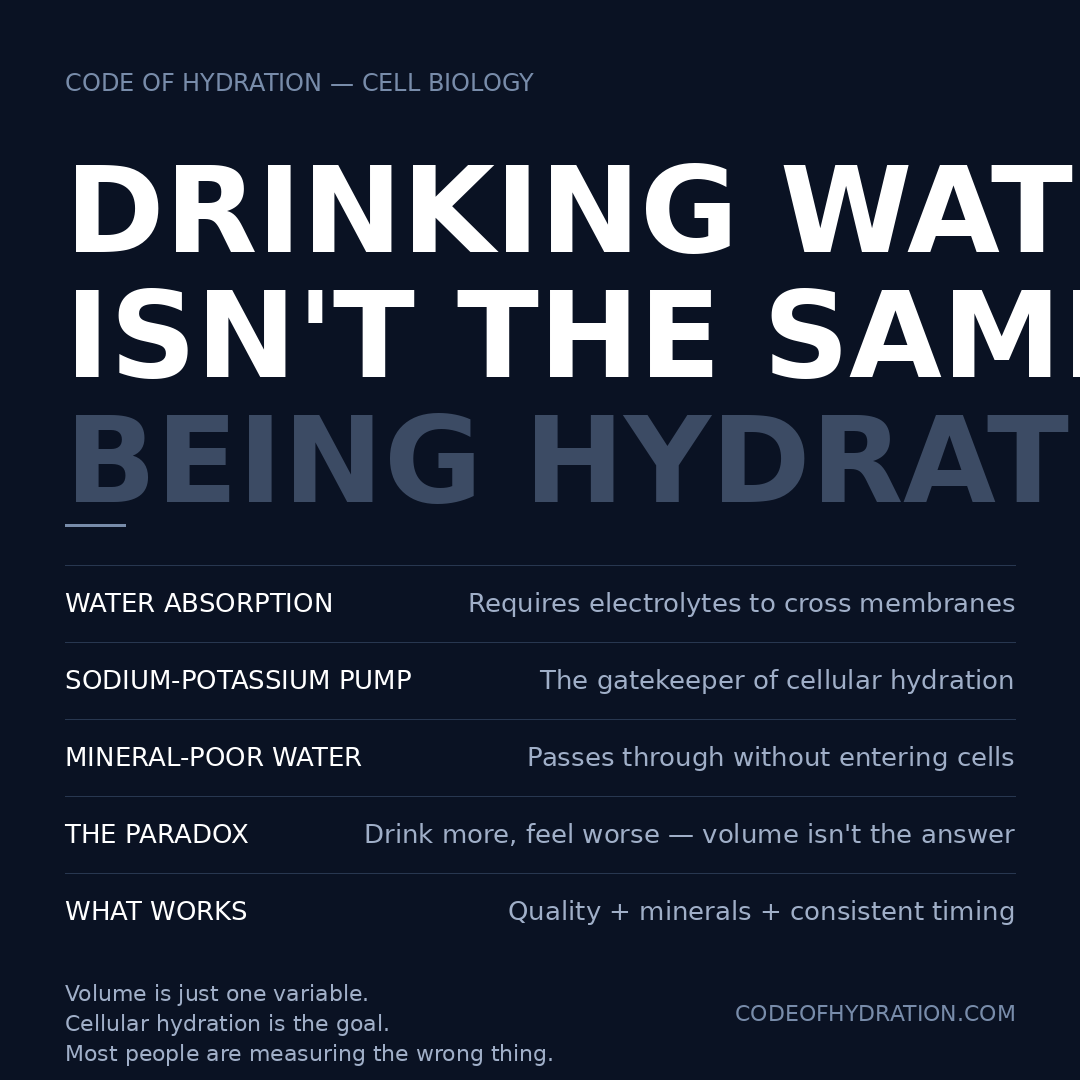
This is one of the most common questions people ask. Someone tells me they drink two litres a day, sometimes more. They carry a water bottle everywhere. They tick every box on every hydration checklist. And they still feel tired, foggy, headachy, or thirsty in a way that doesn’t go away no matter how much they drink.
According to Simply Younger’s review of the cellular hydration research, the problem almost certainly isn’t the volume. The problem is that drinking water and actually being hydrated are two different things — and most people have never been told what sits between the two.
Key Takeaways
- Drinking water and being cellularly hydrated are two different things. Water requires electrolytes — sodium, potassium, magnesium — to cross cell membranes. Without them, water passes through the system without entering the cells that need it.
- The most common causes of persistent dehydration despite drinking plenty: mineral-poor water, poor timing (caffeinating before rehydrating), caffeine depleting magnesium, underestimating daily fluid losses, sodium-potassium imbalance, and a suppressed thirst signal.
- The morning window is critical. The gut is in optimal absorption state after overnight fasting. Front-loading 400–500ml with a pinch of unrefined salt before coffee delivers more effective cellular hydration than the same amount drunk in the evening.
- According to Simply Younger, a suppressed thirst signal is the most insidious cause — chronic mild dehydration dampens the very signal designed to alert you to it, creating a self-reinforcing loop that’s surprisingly hard to notice from the inside.
- Start with minerals and timing first — those two fix the majority of cases. Add a pinch of good salt to your morning water, drink it before coffee, and give it two weeks.
1. Your Water Is Stripped of Minerals
Water doesn’t hydrate you on its own. It hydrates you in combination with electrolytes — minerals like sodium, potassium, magnesium, and calcium that create the osmotic gradients pulling water across cell membranes and into the cells where it’s actually needed. Most modern tap water and virtually all filtered or reverse osmosis water is low in these minerals. When you drink large volumes of mineral-poor water, you can actually dilute the electrolyte concentration in your body, making cellular absorption worse rather than better. The fix is simple: a pinch of unrefined sea salt or a trace mineral supplement added to your water.
2. You’re Drinking at the Wrong Times
Timing matters almost as much as volume. First thing in the morning, after an overnight fast, your gut is primed for absorption — a glass of water on an empty stomach gets absorbed significantly faster than the same glass drunk alongside a meal. Most chronically dehydrated people drink most of their water in the second half of the day, playing catch-up. The fix is front-loading — drinking 500ml within the first 30 minutes of waking, before coffee, before food, before anything else. That single habit change moves the needle more than adding another litre in the evening ever will.
3. Coffee and Tea Are Pushing You Into Deficit
Caffeine actively depletes magnesium, and magnesium is one of the key minerals governing how water crosses cell membranes. Two or three cups of coffee before you’ve properly rehydrated from overnight is a reliable way to start every day behind — regardless of how much water you drink alongside it. The fix isn’t to give up coffee. It’s to rehydrate first, then caffeinate. Water before coffee, every morning, without exception.
4. You’re Losing More Than You Think
Most people dramatically underestimate how much fluid they lose in a day. You breathe out roughly 400ml per day just through respiration. You lose another 400–600ml through skin through insensible perspiration. Add in urine output and you’re already at 2–2.5 litres before you’ve done a single thing that feels like exercise. If you’re stressed, in a centrally heated or air-conditioned environment, or eating a high-sodium diet, your losses are higher still.
5. Your Electrolytes Are Out of Balance
Sodium and potassium work together in the sodium-potassium pump that moves water in and out of cells across your entire body. If the ratio between these two minerals is off, water transport is impaired at the cellular level regardless of how much you drink. The modern Western diet tends to be very high in sodium and relatively low in potassium. Without adequate potassium from whole foods — leafy greens, avocados, sweet potatoes, beans — the pump doesn’t work efficiently, and cellular hydration suffers.
6. Your Thirst Signal Is Broken
Chronic mild dehydration suppresses the thirst signal. If you’ve been slightly under-hydrated for weeks or months, your body stops sending reliable thirst cues — which means you don’t drink enough, which keeps you dehydrated, which further dampens the signal. It’s a self-reinforcing loop. The sign to look for isn’t dramatic thirst. It’s persistent mild fatigue in the afternoons, headaches that come and go without an obvious cause, and difficulty concentrating after lunch. The fix is to drink on a schedule rather than waiting to feel thirsty — particularly in the morning and mid-afternoon — until the signal recalibrates over a few weeks.
Find out exactly which of these is affecting you
The free Code of Hydration quiz takes 3 minutes and gives you a personalised score showing exactly where your hydration is breaking down — and what to do about it.
Frequently Asked Questions
Why am I always dehydrated even though I drink a lot of water?
The most common causes are mineral-poor water, poor timing (front-load in the morning), caffeine depleting magnesium before you’ve rehydrated, underestimating daily fluid losses, sodium-potassium imbalance from a processed food diet, and a suppressed thirst signal from chronic mild dehydration. Volume alone rarely solves the problem — mineral balance and timing matter just as much.
What does it mean if you’re always thirsty despite drinking water?
Persistent thirst despite adequate fluid intake usually signals an electrolyte imbalance rather than insufficient volume. Water requires minerals — particularly sodium, potassium, and magnesium — to cross cell membranes and reach intracellular spaces. Without them, water stays in the extracellular space and is excreted without hydrating your cells. Adding a pinch of unrefined sea salt or an electrolyte supplement to your water often resolves this within days.
Does mineral-poor water cause dehydration?
Yes, at high volumes. Highly filtered or reverse osmosis water with very low mineral content can dilute the electrolyte concentration in your body when consumed in large amounts, impairing the osmotic gradient that drives water into cells. This is why remineralisation is recommended for RO water, and why adding a small amount of trace minerals or unrefined salt to plain filtered water improves its cellular hydration effectiveness.
Why does coffee make you feel dehydrated?
Coffee’s primary hydration impact is through magnesium depletion. Caffeine significantly increases urinary magnesium excretion, and magnesium is essential for the sodium-potassium pump that moves water across cell membranes. Multiple cups before rehydrating from overnight systematically depletes the mineral needed for cellular water absorption, leaving you functionally dehydrated even if you’re drinking adequate total fluid.
Can your thirst mechanism stop working properly?
Yes. Chronic mild dehydration suppresses the thirst signal over time as the body recalibrates its baseline. People who have been operating in a mildly dehydrated state for months or years often stop generating reliable thirst cues, making the problem self-reinforcing. The solution is scheduled intake — drinking at fixed times regardless of thirst, particularly morning and mid-afternoon — until the signal recalibrates, which typically takes two to four weeks of consistent rehydration.
This article is for general informational purposes only and is not medical advice. If you have persistent symptoms, please consult a qualified healthcare professional.
Leave a Reply