I drink a lot of coffee. Two, sometimes three cups before noon. I’m not apologising for it — I enjoy it, the research on moderate consumption is broadly positive, and it’s not going anywhere. But there’s a conversation about coffee and hydration that most coffee drinkers have never had.
According to Simply Younger’s analysis of the caffeine and hydration research, the way most people drink coffee — first thing in the morning, before any water — is actively working against their hydration in a way that compounds across the entire day.
Key Takeaways
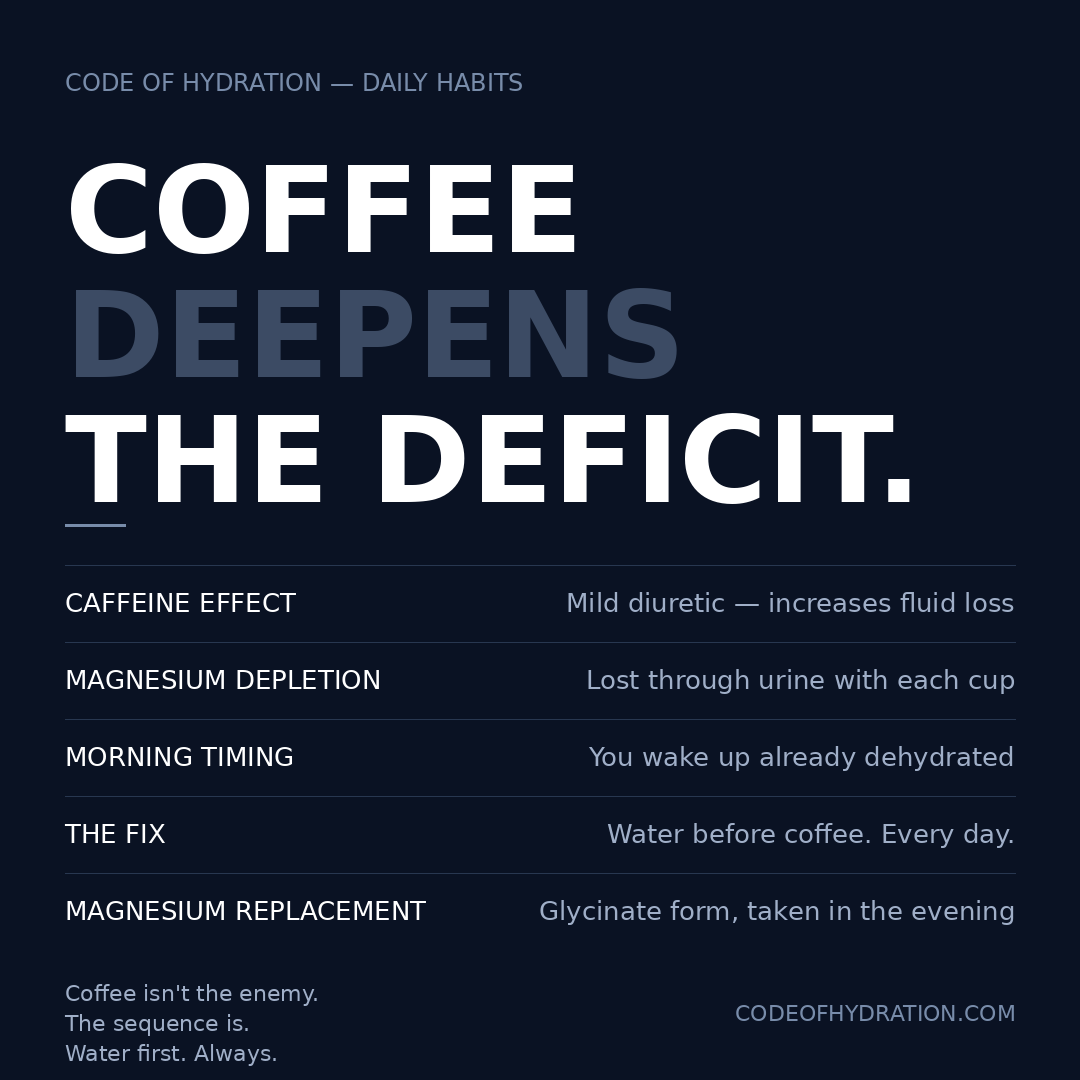
- Coffee is a mild diuretic — caffeine inhibits vasopressin (the fluid-conserving hormone), increasing urine output. The bigger problem isn’t the diuresis; it’s the magnesium depletion.
- Caffeine increases magnesium excretion in urine. Two to three cups daily without replacement causes cumulative depletion that impairs cellular hydration over weeks and months.
- Most people drink coffee first thing in the morning while already mildly dehydrated from overnight — extending the deficit before addressing it.
- According to Simply Younger, the single highest-return change a coffee drinker can make is drinking water before their first cup, not reducing their coffee intake.
- The afternoon fog that reliably arrives around 2pm often has its roots in this morning pattern — not in the coffee itself.
What Coffee Does to Your Fluid Balance
Coffee is a mild diuretic. Caffeine inhibits vasopressin, the antidiuretic hormone that tells your kidneys to conserve fluid, resulting in increased urine output. For regular coffee drinkers, the body partially adapts over time, but it doesn’t eliminate the effect.
More importantly — and this is the part most people don’t know — caffeine increases magnesium excretion in urine. For people drinking two or three cups a day without actively replacing that magnesium, the cumulative depletion over weeks and months is real. Magnesium is the mineral most critical to cellular hydration. When it’s depleted, cellular hydration suffers — even when total fluid intake looks fine on paper.
The Timing Problem That Starts Every Morning
After seven or eight hours of sleep, you wake up already mildly dehydrated. What most people give their body first is coffee — which is mildly diuretic, meaning the first fluid input of the day is actively increasing fluid output at exactly the moment the body is already running a deficit. By the time most coffee drinkers actually start drinking water, they’ve extended their overnight dehydration by a meaningful margin. The afternoon fog that arrives reliably around 2pm often has its roots in this morning pattern.
Is coffee affecting your hydration more than you think?
The free Code of Hydration quiz takes 3 minutes and factors in your coffee habits to give you a personalised picture of where your hydration gaps actually are.
The Easy Fix — Keep the Coffee, Change the Sequence
Water before coffee. Every morning, before the first cup, drink a large glass of water with a pinch of unrefined sea salt. It rehydrates your body from overnight depletion before you introduce a diuretic, changing the entire hydration trajectory of your morning.
Replace the magnesium. Take a magnesium glycinate or malate supplement in the evening. This replenishes what coffee is progressively depleting. The effect on sleep quality, recovery, and afternoon energy is often noticeable within a week or two.
One glass of water per coffee. A rough compensation for the diuretic effect that keeps your fluid balance more even across the day.
Frequently Asked Questions
Does coffee dehydrate you?
Technically yes, but the effect is smaller than most people assume. Caffeine inhibits vasopressin (the fluid-conserving hormone), increasing urine output slightly. However, the fluid in the coffee largely offsets this, and regular drinkers build some tolerance to the diuretic effect. The bigger hydration issue with coffee isn’t the diuresis — it’s the magnesium depletion and the timing of when most people drink it.
Why does coffee deplete magnesium?
Caffeine increases magnesium excretion in urine through a well-documented mechanism involving renal tubular reabsorption. Each cup causes measurable magnesium loss. For people drinking two or three cups daily without adequate dietary magnesium or supplementation, the cumulative depletion is significant. Since magnesium is essential for the cellular water transport that governs true hydration, this matters considerably more than the mild diuretic effect.
Should I drink water before coffee in the morning?
Yes — this is the highest-return single change a coffee drinker can make for hydration. You lose 0.5–1 litre of fluid overnight through breathing and skin. Drinking coffee first compounds this deficit before it’s been addressed. Drinking 400–500ml of water (ideally with a pinch of unrefined sea salt) before your first coffee directly addresses the overnight deficit at the highest-absorption window of the day.
Does coffee count toward my daily water intake?
Partly. The European Food Safety Authority has concluded that moderate coffee consumption can contribute to daily fluid intake. The practical guidance is to count coffee as roughly 70–80% as hydrating as the same volume of water, and to ensure water is the primary fluid across the day.
What magnesium supplement is best for coffee drinkers?
Magnesium glycinate and magnesium malate are the most bioavailable forms. Both are better absorbed than magnesium oxide, the cheapest and most common form in generic supplements. A dose of 200–400mg in the evening replenishes what coffee depletes through the day and also supports sleep quality, muscle relaxation, and recovery.
How many coffees a day is too many for hydration?
The research suggests moderate coffee consumption — up to around 400mg of caffeine daily, roughly four standard cups — produces no significant hydration deficit when consumed alongside adequate water intake and attention to mineral balance. The problem isn’t usually the coffee count itself; it’s the pattern of coffee before water, without mineral replacement.
Related Reading
- Why Am I Always Dehydrated Even Though I Drink a Lot of Water?
- How Much Water Should You Actually Drink a Day? (It’s Not 8 Glasses)
- Why You Feel Tired After 40 (And What Hydration Has to Do With It)
This article is for general informational purposes only and is not medical advice.
Leave a Reply