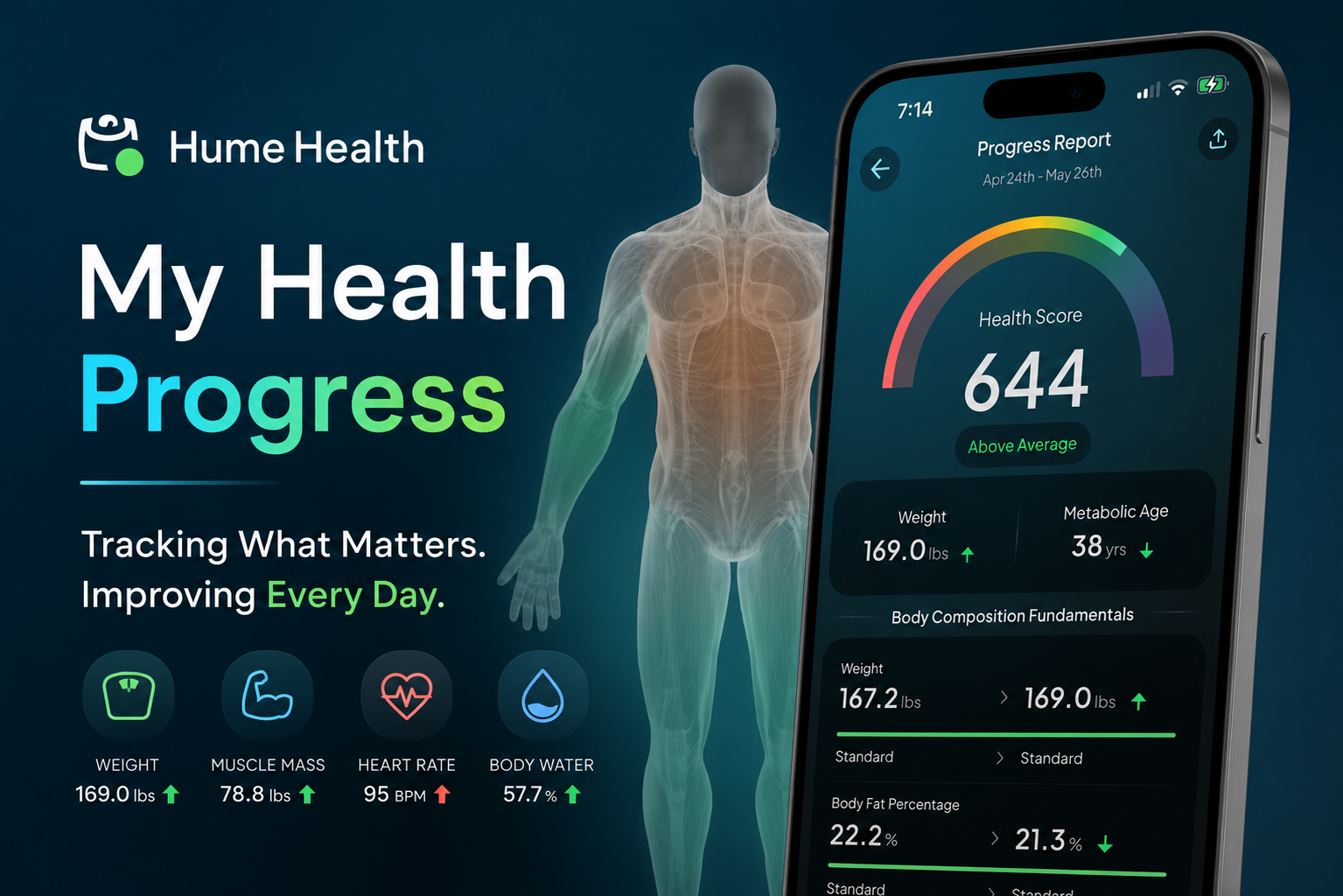
One month between weigh-ins. I stepped on the scale this morning and saw 169 lbs. Last time it was 167.2. On the face of it, that looks like I went backwards — gained 1.8 pounds toward a goal of 180. But that’s the problem with the scale as a single metric. It almost never tells you the real story.
What the Numbers Actually Say
Body fat percentage dropped from 22.2% to 21.3%. Body fat mass went from 37.1 lbs down to 36.0 lbs — 1.1 lbs of actual fat, gone. At the same time, lean mass went from 118.7 lbs up to 121.2 lbs. That’s 2.5 lbs of lean tissue gained in a single month.
So the scale went up 1.8 lbs because I added more muscle than I lost fat. That’s body recomposition — losing fat and gaining muscle simultaneously — and it’s exactly what should be happening. The number that matters most isn’t total weight. It’s what that weight is made of.
Skeletal muscle mass: up from 76.5 to 78.8 lbs. Body cell mass — the metabolically active tissue in the body — went from 84.4 to 87.7 lbs, a 3.3 lb increase. Body water percentage up from 56.2% to 57.7%. Every one of those is a green arrow.
The one I keep coming back to: metabolic age dropped from 40 to 38. Chronological age is 49. That’s eleven years younger than the calendar says, and it moved two years in the right direction in a single month. Health score: 644, Above Average. Visceral fat index held at 8 — Low. BMR up from 1,642 to 1,657 calories, which reflects the increased muscle mass.
The Goal
Target is 180 lbs — 11 lbs to go. But I want to be clear about what that means, because it’s not just “gain weight.” At 169 lbs with 21.3% body fat I’m carrying 36 lbs of fat. At 180 lbs I want to be carrying less fat than I am now, not more. The 11 lbs needs to come from lean mass while the fat number continues to fall. That’s a harder target than it sounds, and it’s why the approach matters as much as the output.
What I’m Actually Doing
People always ask about the routine, so here it is in full.
Morning — the non-negotiables
First thing every morning is hydrogen water — before anything else hits my system. There’s a meaningful body of research on molecular hydrogen as an antioxidant, and I want it going in when absorption is optimal, first thing on an empty stomach.
Straight after that, still fasted, I take PerfectAmino. The empty stomach timing is deliberate and important — amino acids compete with dietary protein for absorption, so taking them fasted means you’re getting the full uptake without interference. PerfectAmino is the one amino acid supplement I’ve stuck with long-term. The utilisation rate is significantly higher than standard protein sources, which matters when you’re trying to build lean mass without excess calories.
I also apply the X39 patch first thing. The X39 gently stimulates the skin with low levels of light to support energy flow, strength, stamina, and stem cell activity. It’s become a consistent part of the morning — patch goes on, day starts.
Then I walk. At least 10,000 steps every morning, without exception. This isn’t a workout — it’s a metabolic and nervous system baseline. Walking at low intensity in a fasted state is one of the most underrated tools in body recomposition. It burns fat without triggering the cortisol spike of high-intensity exercise, and it sets up the day hormonally. I’ve been doing this consistently and it’s non-negotiable.
Breakfast — protein first
After the walk, breakfast. At least four eggs and Greek yogurt, every day. I prioritise getting significant protein in early — the research on protein timing and muscle protein synthesis is clear enough that I don’t want to leave it to chance. Getting 40–50g in before noon is a consistent habit. Blood sugar stays stable, energy stays consistent, and I’m not fighting cravings later in the day.
Cold plunge, sauna, and steam
This is the part of the routine I genuinely look forward to. Two rounds of cold plunge followed by sauna and steam, daily. The cold plunge is the one I won’t skip — the physiological response to cold exposure (norepinephrine spike, brown fat activation, cardiovascular adaptation) is well-documented and the subjective effect on mental clarity and mood is immediate. I’ve been doing this long enough that the cold isn’t something I dread anymore. It’s become the reset.
Two rounds means two full cycles of cold-to-heat contrast. The sauna and steam follow. The combination of cold stress and heat stress on the same day produces a different adaptation than either alone — heart rate variability, recovery, and sleep quality all benefit. I notice the difference on days I don’t do it.
Training — RP Hypertrophy
Full body resistance training every second day, programmed through the RP Hypertrophy app. I’ve been using it for six-plus months now and it’s the most structured approach to training I’ve had. Renaissance Periodization’s methodology is evidence-based and the app adjusts volume and intensity based on your recovery feedback. It removes guesswork from programming entirely, which matters when you’re trying to optimise for body recomposition rather than just moving weight.
Full body every other day means each muscle group is trained with sufficient frequency to maximise protein synthesis without overtraining. Combined with the walking volume, the total weekly training load is significant but recovery-respecting.
Supplement stack
I keep this straightforward. What I’m actually taking consistently:
- PerfectAmino — fasted, first thing, as above
- Clear whey isolate — post-training, clean protein without the heaviness of concentrate
- Creatine — daily, non-negotiable for anyone doing resistance training. The evidence base is as solid as it gets in sports nutrition
- Beta-alanine — supports muscular endurance; the tingle means it’s working
- Vitamin D3 + K2 — D3 for testosterone support, immune function, and bone density; K2 ensures the calcium goes where it should
- Omega-3 — anti-inflammatory, cardiovascular, cognitive. The fish oil I never skip
- Magnesium glycinate — at night. Magnesium is involved in over 300 enzymatic reactions and most people are deficient. The glycinate form doesn’t cause digestive issues and genuinely improves sleep quality
Alcohol
I’ve significantly reduced alcohol over the past several months. I rarely go out. Most evenings I’ll have a glass of wine, but the days of any serious drinking are behind me. The effect on sleep quality, HRV, and morning energy has been noticeable enough that I don’t miss it. One glass of wine is a pleasure. More than that is a recovery cost I can feel the next day, and the data backs that up.
How Well Is Your Water Actually Hydrating You?
Cellular hydration underpins everything in this routine — recovery, muscle building, energy, and sleep. The Code of Hydration is a free two-minute quiz that maps your hydration status across four key dimensions. Most people discover gaps they didn’t know existed.
The Hydration Layer
Something worth noting specifically: body water percentage went up from 56.2% to 57.7% this month. That’s not a coincidence. The combination of hydrogen water first thing, consistent daily hydration, and the X2O’s light-infused water for cellular bioavailability has made hydration a deliberate, optimised practice rather than an afterthought. The 2.5 lb lean mass gain and the body cell mass increase both reflect a cellular environment that is well-hydrated and metabolically active. You can’t build muscle in a dehydrated cell — the enzymatic processes that drive protein synthesis require the right aqueous environment.
How Is Your Biology Tracking?
The Code of Aging is a free assessment that maps the key biological systems driving your health — cellular repair, inflammation, energy, hormonal balance. If you’re serious about your numbers improving month on month, it’s a useful baseline.
One Month Down
The scale went up 1.8 lbs. Fat went down 1.1 lbs. Lean mass went up 2.5 lbs. Metabolic age dropped two years. Body water up. Body cell mass up. BMR up.
That’s what a month of doing this consistently actually looks like. Not dramatic. Not a transformation photo. Just measurable, directional progress across every metric that matters — documented honestly, without cherry-picking.
Goal stays the same: 180 lbs, with less fat than I have now. Back in a month.
The X39 and X2O — My Daily Wellness Foundation
The X39 patch and LifeWave X2O light-infused water system are two constants in this routine. Visit my LifeWave partner page to learn more about both.
Frequently Asked Questions
What is body recomposition and is it possible after 40?
Body recomposition means losing fat and gaining muscle simultaneously rather than doing a traditional bulk or cut. It is absolutely possible after 40 — and the stats above show it happening in real time. The key requirements are consistent resistance training, adequate protein, prioritised sleep, and a cellular environment that supports recovery. It’s slower than dedicated cutting or bulking, but the quality of the outcome is higher.
Why take PerfectAmino on an empty stomach?
Amino acids compete with dietary protein for absorption at the gut level. Taking PerfectAmino fasted — before any food — means the amino acids are absorbed without competition, maximising uptake and utilisation. This timing is specifically recommended by BodyHealth and is the reason I take it first thing before breakfast or the morning walk.
What are the benefits of cold plunge for body composition?
Cold exposure triggers a significant norepinephrine release, activates brown adipose tissue (which burns calories to generate heat), improves insulin sensitivity, and accelerates recovery from resistance training by reducing inflammation and muscle damage. Daily cold plunging combined with sauna contrast supports HRV, sleep quality, and the hormonal environment that body recomposition depends on.
What is the RP Hypertrophy app and why use it?
RP Hypertrophy is a training app built on Renaissance Periodization’s evidence-based methodology for muscle growth. It programs training volume and intensity based on your recovery feedback and progression, removes guesswork from periodisation, and adjusts automatically over time. For anyone serious about body recomposition rather than just going through the motions in the gym, structured programming makes a measurable difference to outcomes.
Does alcohol affect body composition and recovery?
Yes, directly. Alcohol suppresses muscle protein synthesis for hours after consumption, disrupts deep sleep (where the majority of growth hormone and testosterone production occurs), elevates cortisol, and impairs next-day HRV and recovery. Significantly reducing alcohol is one of the highest-leverage changes you can make to body composition and recovery quality. A single glass of wine most evenings is a different conversation to regular heavier drinking — the dose matters.
How does cellular hydration affect muscle building?
Muscle protein synthesis — the cellular process that builds muscle — is enzymatic, meaning it occurs in and depends on the aqueous intracellular environment. Cellular dehydration impairs these processes directly. Body water percentage is a meaningful marker of cellular hydration status, and its increase from 56.2% to 57.7% this month corresponds with the lean mass gains recorded over the same period. Optimising cellular hydration is the foundational variable that most body composition approaches overlook entirely.
Tracked using Hume Pod. Stats cover April 24 to May 26, 2026. Age 49, height 5’8″. This post contains affiliate links. LifeWave products are for general wellness and are intended only to maintain or encourage a general state of health or a healthy activity. This content is for general informational purposes only and is not intended to diagnose, treat, cure, or prevent any disease. Always consult your physician or qualified healthcare provider before beginning any new health regimen. These statements have not been evaluated by the Food and Drug Administration.
Leave a Reply