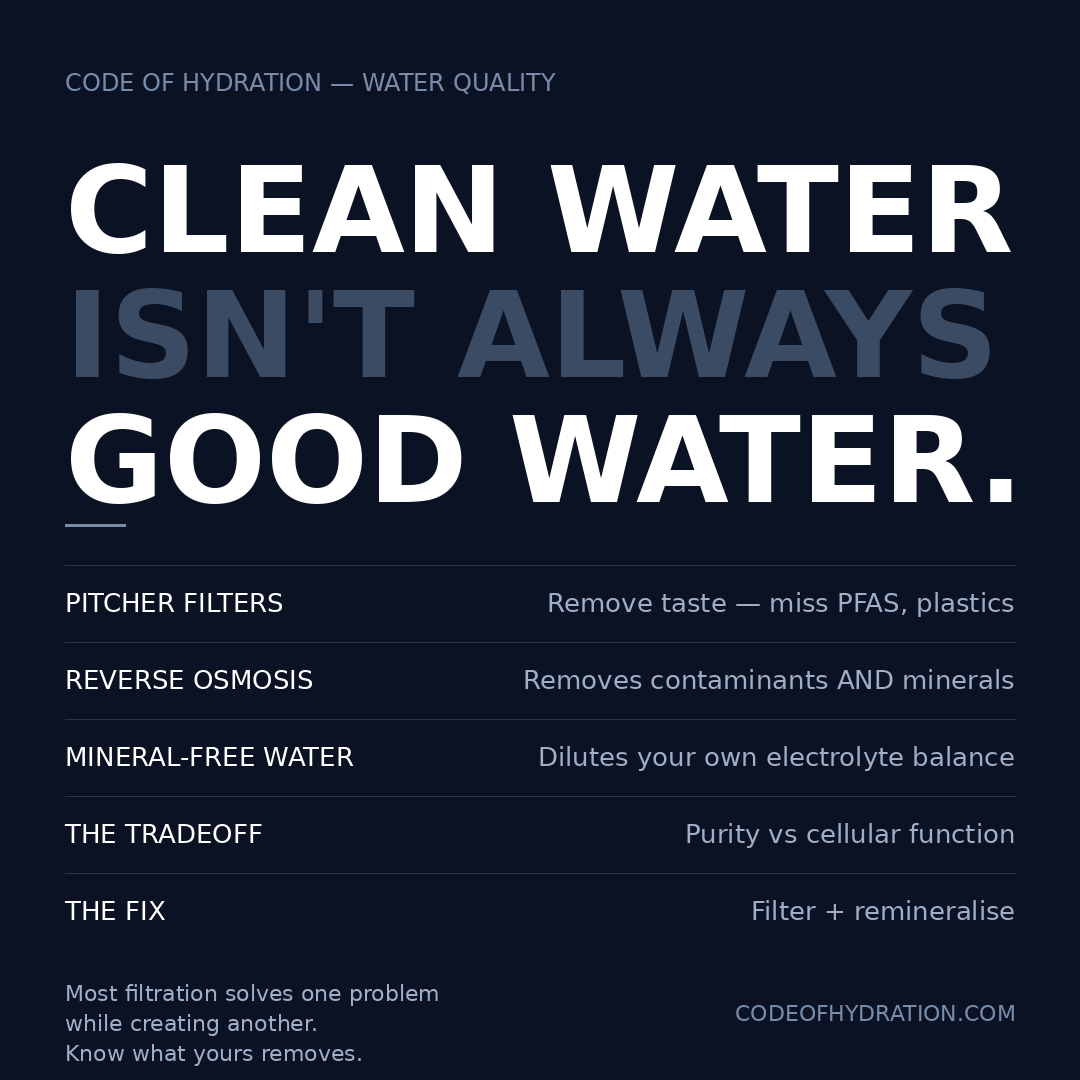
Filtering your water can be a reasonable choice, especially if your supply has a known issue or you don’t like the taste. See is tap water safe to drink? But there’s one trade-off worth understanding: some filters remove minerals as well as contaminants.
What filtration removes
Basic carbon filters, such as most pitcher filters, mainly reduce chlorine taste and some organic compounds, and leave most minerals in place. Reverse osmosis and distillation remove almost everything, including calcium and magnesium.
Does that matter?
For most people eating a normal diet, not much. Food supplies the large majority of your calcium, magnesium and potassium. The World Health Organization has noted that drinking water can contribute some calcium and magnesium, and that very low-mineral water consumed long-term may be less than ideal, particularly where diets are poor in these minerals.
What isn’t supported is the idea that mineral-poor water “passes through” without hydrating your cells. Your body controls the water inside cells using the electrolytes already in your blood. If you’re drinking plenty and still feel unwell, see your GP.
Curious how your daily habits are shaping how you age?
The free Body Age Challenge takes a few minutes and gives you a personalised picture.
Practical options
If you use reverse osmosis, a remineralisation cartridge adds calcium and magnesium back. Otherwise, focus on food: leafy greens, beans, nuts, seeds, whole grains and dairy. If you sweat heavily, use electrolytes around training. Most people don’t need to add salt to their water, and people with high blood pressure or heart or kidney disease shouldn’t without medical advice.
Frequently Asked Questions
Does filtered water remove minerals?
Carbon filters mostly don’t. Reverse osmosis and distillation do. See X2O vs reverse osmosis.
Is reverse osmosis water bad for you?
No. It’s very clean. If you drink only RO water, a remineralisation stage and a mineral-rich diet are sensible.
Should I take magnesium if I drink RO water?
Food first. If you supplement, stay within the label dose and the upper limit for supplements (250mg a day in the EU), and avoid it with kidney disease unless your doctor advises.
Is spring water better than filtered tap water?
Mineral content varies by source. Bottled water adds cost and plastic. For most people, tap or filtered tap water is perfectly good.
Related Reading
This article is for general informational purposes only and is not medical advice. As an authorised LifeWave Brand Partner, I have a financial interest in promoting LifeWave products, including X2O.
Leave a Reply