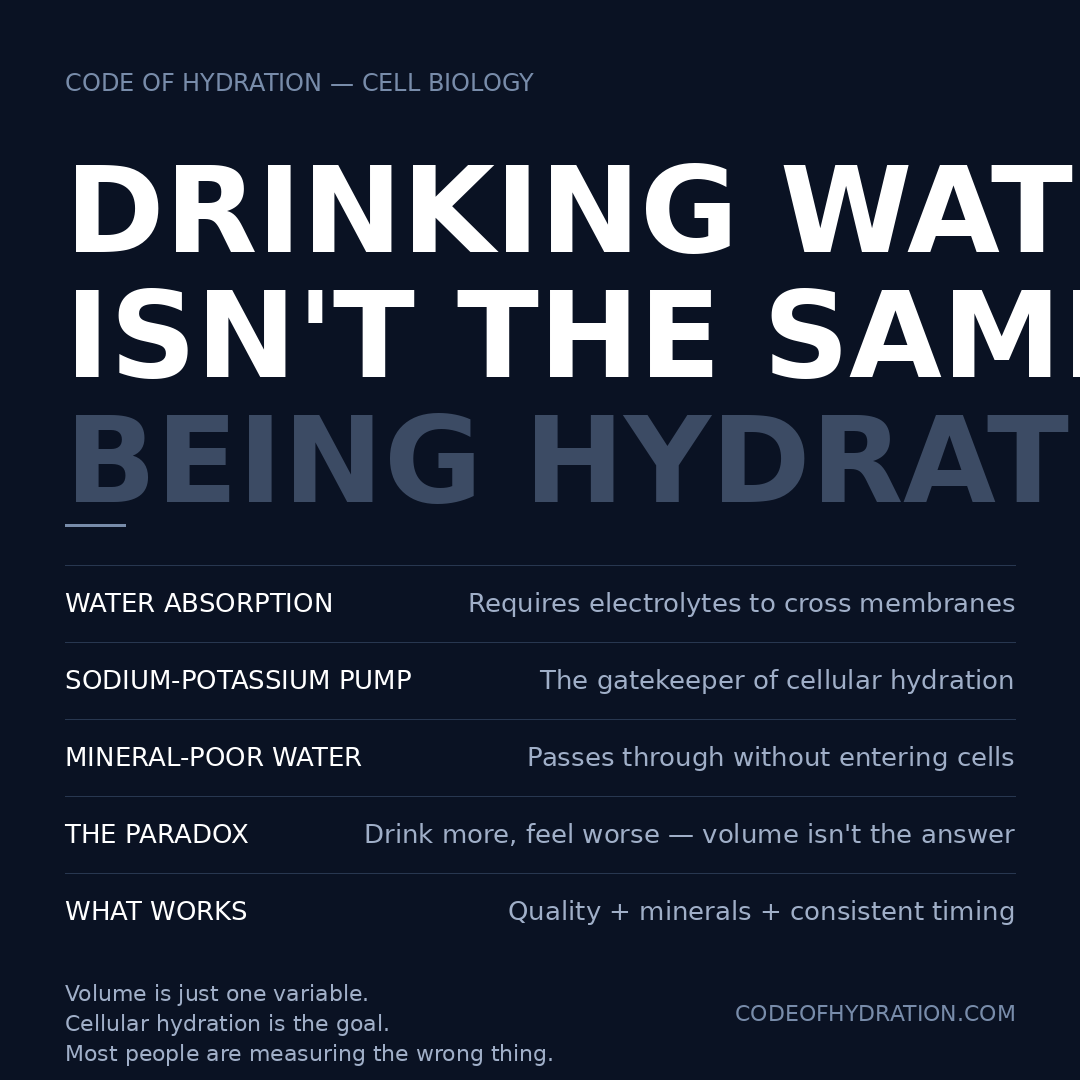
Drinking water and being hydrated are not the same thing. This is one of the most important distinctions in the entire hydration conversation — and almost nobody makes it in everyday health advice.
You can drink two litres of water a day and still be functionally dehydrated at the cellular level. The volume is there. The hydration isn’t. Understanding why explains a lot about why so many people feel persistently tired, foggy, and flat despite doing everything they think they’re supposed to be doing.
How water actually gets into cells
Water doesn’t just passively absorb into your cells like a sponge. It has to cross cell membranes through a carefully managed process governed by electrolytes — particularly sodium, potassium, and magnesium — that create osmotic gradients pulling water in the right direction.
The sodium-potassium pump is the gatekeeper. It actively moves ions across cell membranes to maintain the electrical gradient that draws water in. When electrolyte balance is off — through mineral depletion, mineral-poor water, or high fluid intake without adequate minerals — the pump struggles, and water doesn’t reach cells effectively. You drink it. You excrete it. The cells in between don’t get what they need.
Why mineral-poor water makes things worse
Modern drinking water — especially reverse osmosis filtered water — is often almost entirely mineral-free. When you drink large quantities of mineral-poor water, you can dilute the electrolyte concentration in your body, making the cellular absorption problem worse rather than better. This is the paradox that explains why some people feel worse the more water they drink. It’s not the volume that’s wrong. It’s the mineral context.
Is your water actually reaching your cells?
The free Code of Hydration quiz takes 3 minutes and assesses the full system — not just how much you drink, but whether it’s actually working.
What cellular hydration actually requires
Three things: quality, minerals, and timing. Quality means water that hasn’t been stripped of everything useful. Minerals means adequate sodium, potassium, magnesium, and calcium through food, water, or supplementation. Timing means consistent intake across the day rather than large volumes at irregular intervals.
The simplest single change most people can make is adding a pinch of unrefined sea salt to their morning water. This provides the mineral context that enables cellular absorption. Stop asking “am I drinking enough water?” and start asking “is the water I’m drinking actually getting where it needs to go?”
Frequently Asked Questions
What is the difference between drinking water and being hydrated?
Drinking water is about volume — how much fluid enters your digestive system. Being hydrated is about whether that fluid actually crosses cell membranes and reaches the intracellular space where it’s needed for metabolic function. The gap between the two is governed by electrolyte balance: sodium, potassium, and magnesium create the osmotic gradients that pull water into cells. Without adequate minerals, water you drink can pass through without meaningfully hydrating the cells that need it.
Can you drink too much water and still be dehydrated?
Yes. Drinking large volumes of mineral-poor water — particularly reverse osmosis or distilled water — can dilute your body’s electrolyte concentrations, impairing the osmotic gradients needed to drive water into cells. In this state, you excrete more than you retain, and cellular dehydration persists despite high fluid intake. This is why some people who increase their water intake report feeling no better, or even slightly worse — the problem isn’t volume, it’s mineral context.
What is cellular hydration?
Cellular hydration refers to the water content inside cells (intracellular water), as opposed to water in the bloodstream or extracellular spaces. The body’s cells are approximately 70% water, and maintaining adequate intracellular water is essential for every cellular function — energy production, protein synthesis, waste removal, and membrane signalling. Cellular dehydration impairs all of these processes and can exist alongside seemingly adequate total fluid intake if electrolyte balance is poor.
What is the sodium-potassium pump and why does it matter for hydration?
The sodium-potassium pump is a protein complex in every cell membrane that actively transports sodium out of cells and potassium in, consuming ATP (cellular energy) to do so. This creates the electrochemical gradient that governs water movement across the membrane through osmosis. When sodium or potassium levels are disrupted — through depletion, dietary imbalance, or excessive plain water intake — the pump’s efficiency drops, and cellular water uptake is impaired. It’s the primary mechanism explaining why mineral balance is as important as fluid volume for true hydration.
How do I know if my cells are actually hydrated?
There is no simple home test for intracellular hydration. The practical indicators are indirect: urine colour (pale straw yellow suggests adequate extracellular hydration), persistent symptoms despite adequate fluid intake (fatigue, brain fog, muscle cramps, dry skin), and response to adding minerals. If adding a small pinch of unrefined sea salt to your water and taking magnesium in the evening produces noticeable improvement in energy and symptom resolution within a few days, mineral-poor cellular dehydration was likely a contributing factor.
What is the best way to improve cellular hydration?
Mineral balance alongside consistent fluid intake. Practically: add a pinch of unrefined sea salt to morning water (sodium for cellular uptake), eat potassium-rich foods (avocados, bananas, sweet potatoes, leafy greens), take magnesium glycinate or malate in the evening (200–400mg), and use filtered water with remineralisation rather than stripped RO or distilled water. These changes address the osmotic gradient problem directly. Volume adjustments alone — drinking more plain water — are unlikely to resolve cellular dehydration if the mineral context is absent.
This article is for general informational purposes only and is not medical advice.
Leave a Reply