Affiliate & partner disclosure: This article contains affiliate links, and I may earn a commission if you buy through them at no extra cost to you. As an authorised LifeWave Brand Partner, I have a financial interest in promoting LifeWave products. Testimonial/editorial given by a LifeWave brand partner with financial interest in promoting the product. Full disclosure at the end.
A note before we start. This article is general science education about skin and connective tissue. It is not medical advice — new, sudden or unexplained bruising should always be checked by a doctor, as it can be a sign of a medical problem or a medication effect. Nothing here is a claim about any product. LifeWave X39 is a non-transdermal, general-wellness phototherapy patch that gently stimulates the skin with light to support the body’s natural energy flow for strength and stamina. It is not a drug or a treatment for bruising or any condition.
When did a light knock start leaving a mark?
You catch your forearm on a door frame — the kind of bump that would’ve been forgotten instantly twenty years ago — and three days later there’s a purple badge to show for it. Easier bruising is one of those quiet signs of ageing that men rarely talk about, and often it reflects real changes in the structure just beneath your skin.
Key takeaways
- Bruising happens when small blood vessels break and leak under the skin.
- With age, skin thins and the collagen that cushions vessels declines.
- Less structural support means vessels break more easily.
- Sun damage over decades accelerates this thinning.
- Some medications and conditions also increase bruising.
- New or unexplained easy bruising needs a doctor’s review.
What’s actually happening when you bruise?
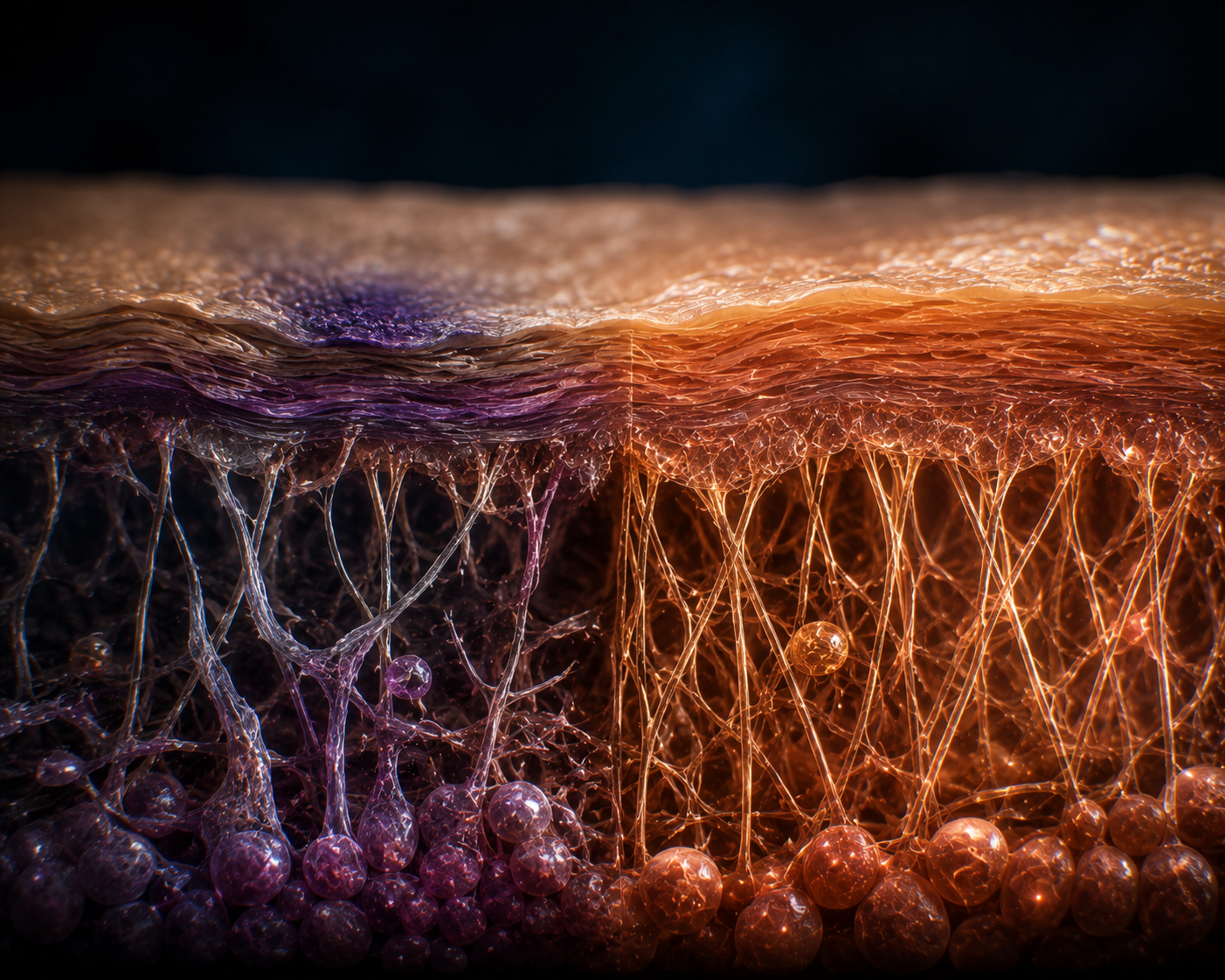
A bruise is blood that has escaped from tiny vessels — capillaries — into the surrounding tissue after a bump. Whether a given knock causes that leak depends partly on how well-protected those vessels are. In youth, they sit cushioned in a dense, springy matrix of collagen and elastin. That matrix absorbs impact and holds everything in place.
Why does the cushioning fade?
Two big reasons. First, skin naturally thins with age as collagen production slows, so there’s less padding. Second, decades of sun exposure degrade the collagen and elastin in exposed skin — which is why easy bruising often shows up first on the backs of the hands and forearms. It’s the same underlying story as skin that looks tired and creams that can’t reach the problem: the change is structural and lives below the surface.
Curious where your own ageing markers sit? Start with a short assessment.
Get the Simply Younger daily email
One short email a day: the newest post, what I’m testing, and what’s actually working for men over 40.
Join free →What can you do about it?
Protect and support the structure. Daily sun protection on hands, forearms and face slows further collagen breakdown — the most controllable factor. Adequate protein and vitamin C give the body raw materials for collagen. And because some medications (including blood thinners and regular aspirin) and certain conditions increase bruising, a genuine change is always worth mentioning to your doctor rather than assuming it’s “just age.” Never stop or change a prescribed medication without talking to your doctor first.
Where does X39 fit? Not in this story. The skin and connective-tissue science above is general education with no product association. Separately, I wear an X39 patch daily as a general-wellness habit. LifeWave X39 is a non-transdermal, general-wellness phototherapy patch that gently stimulates the skin with light to support the body’s natural energy flow for strength and stamina. It contains no drug and is not a treatment for bruising, skin thinning or any condition.
As an authorised LifeWave Brand Partner I have a financial interest in promoting it.
Shop X39 at my LifeWave store →
Frequently asked questions
Why do I bruise more easily as I get older?
Skin thins with age and the collagen that cushions small blood vessels declines, so those vessels break and leak more easily from minor bumps.
Why do bruises appear mostly on my hands and arms?
Those areas get the most sun exposure over a lifetime, and cumulative UV damage degrades the collagen and elastin that protect the vessels there.
Does sun exposure cause easy bruising?
Chronic sun exposure accelerates the breakdown of skin’s structural proteins, which is one reason sun-exposed skin bruises more readily.
Can diet reduce easy bruising?
Adequate protein and vitamin C support collagen production, though diet is only one factor.
When should easy bruising be checked by a doctor?
Any new, sudden or unexplained increase in bruising — or bruising with bleeding gums, nosebleeds or fatigue — should be reviewed promptly.
Does X39 help with bruising?
No such claim is made. X39 is a non-transdermal, general-wellness phototherapy patch that gently stimulates the skin with light to support the body’s natural energy flow for strength and stamina. It is not a treatment for any condition.
Related reading
The Mineral Holding Your Face Together · Why Your Collagen Cream Can’t Reach What It Needs To · Collagen and Ageing
Full disclosure. This article is general wellness education and is not medical advice, diagnosis, or treatment. LifeWave X39 is a non-transdermal, general-wellness phototherapy patch and is not intended to diagnose, treat, cure, or prevent any disease. As an authorised LifeWave Brand Partner, I have a financial interest in promoting LifeWave products. Always consult a qualified professional about your individual health.
Leave a Reply