Affiliate & partner disclosure: This article contains affiliate links, and I may earn a commission if you buy through them at no extra cost to you. As an authorised LifeWave Brand Partner, I have a financial interest in promoting LifeWave products. Testimonial/editorial given by a LifeWave brand partner with financial interest in promoting the product. Full disclosure at the end.
A note before we start. This article is general science education about mitochondria and cellular energy. It is not medical advice and not a claim about any product. LifeWave X39 is a non-transdermal, general-wellness phototherapy patch that gently stimulates the skin with light to support the body’s natural energy flow for strength and stamina. No claim is made that it affects mitochondria or ATP, and it is not a drug or a treatment for low energy or any condition.
What’s really powering you right now?
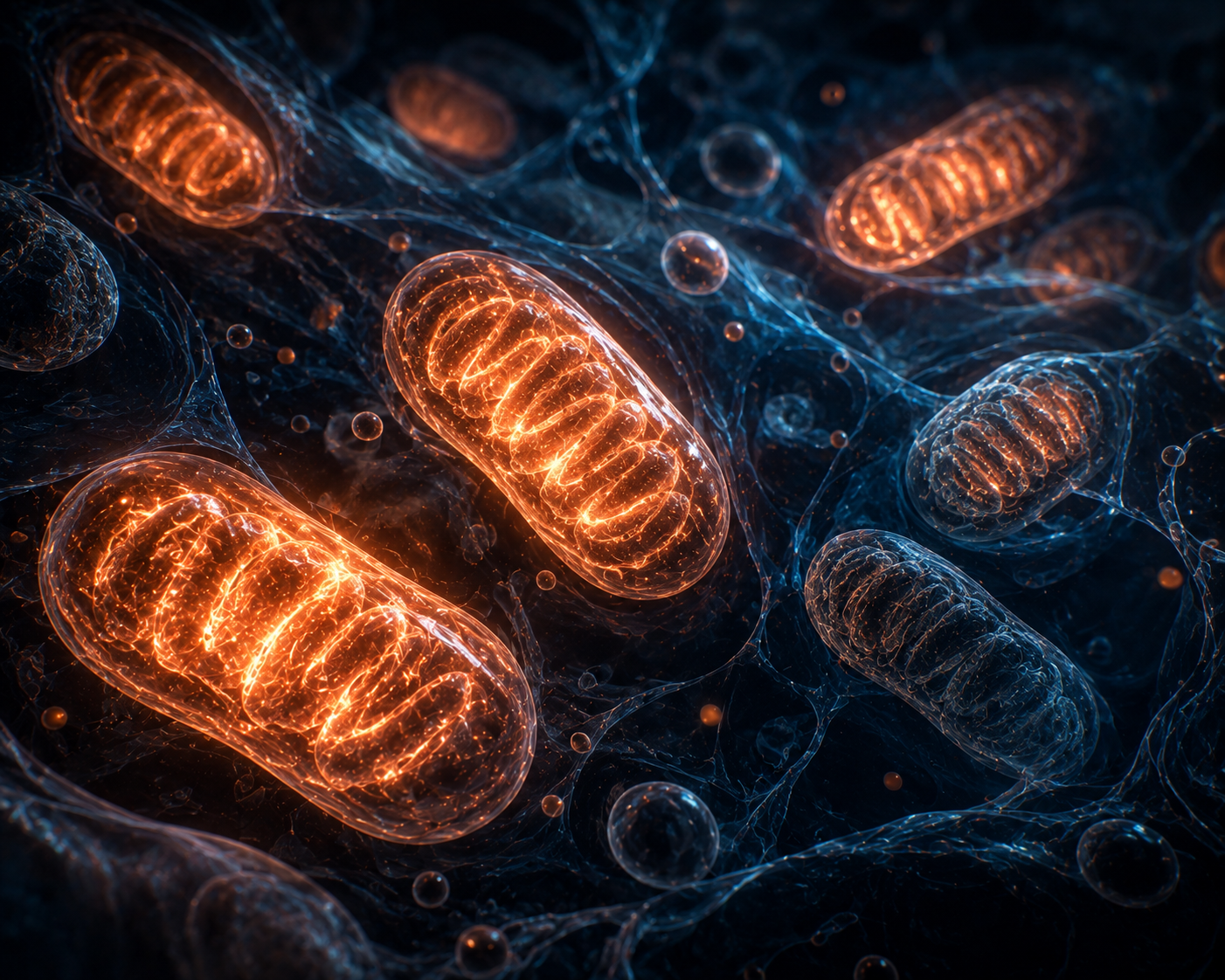
Not the coffee. Not your last meal, directly. Right now, in nearly every cell in your body, huge numbers of microscopic power plants are converting fuel into the energy currency your cells can actually spend. They’re called mitochondria, and they are the closest thing you have to a rechargeable battery pack. The catch: as the decades pass, the body gets less good at keeping them charged and in good repair.
Key takeaways
- Mitochondria make ATP, the energy currency cells spend.
- Mitochondrial function tends to decline with age.
- This decline is one factor linked to lower energy and slower recovery.
- Exercise is one of the strongest known signals to build mitochondria.
- Sleep and nutrition also influence mitochondrial health.
- Your “battery” is more trainable than most people assume.
What exactly is a mitochondrion doing?
Its main job is to take fuel from food and oxygen from the air and produce ATP — adenosine triphosphate — the molecule your cells break down to power almost everything they do. Muscle contraction, brain activity, tissue repair: all of it runs on ATP. A cell with healthy, efficient mitochondria has more energy on tap; one with tired mitochondria has less buffer, which may be part of why the afternoon energy crash can hit harder as you age.
Why does the charging slow down?
A few reasons stack up. The number of mitochondria can fall, the ones that remain can become less efficient, and the housekeeping systems that clear out damaged mitochondria and build fresh ones lose a step. That’s a recognised part of the broader cellular ageing picture. The result is a smaller, slower battery that takes longer to top up.
Want to see where your own ageing markers sit? A short assessment is the quickest way in.
Get the Simply Younger daily email
One short email a day: the newest post, what I’m testing, and what’s actually working for men over 40.
Join free →Can you rebuild the battery?
More than you’d think. Exercise — especially a mix of resistance training and some harder cardio — is one of the most reliable known signals telling the body to build more and better mitochondria. Sleep supports the repair and recycling processes. And chasing energy through endless supplements tends to disappoint because it skips the signal that drives mitochondrial biology: physical demand. That’s why my own routine is built on movement first — lifting every second day and 10,000+ steps every day.
Where does X39 fit? Not in the mitochondria story. Separately, I wear an X39 patch daily as a general-wellness habit. LifeWave X39 is a non-transdermal, general-wellness phototherapy patch that gently stimulates the skin with light to support the body’s natural energy flow for strength and stamina. It contains no drug and is not a treatment for low energy or any condition.
As an authorised LifeWave Brand Partner I have a financial interest in promoting it.
Shop X39 at my LifeWave store →
Frequently asked questions
Do mitochondria decline with age?
Research indicates mitochondrial number and efficiency tend to decline with age, along with the body’s ability to clear damaged ones and build new ones.
What do mitochondria actually do?
They convert fuel and oxygen into ATP, the energy molecule cells break down to power nearly all their activities.
Can exercise increase mitochondria?
Yes. Exercise is one of the strongest known stimuli for building more and healthier mitochondria.
Is mitochondrial decline the cause of low energy?
It’s one contributing factor among several, alongside sleep, stress, nutrition and overall health. Ongoing fatigue should be checked by a doctor.
Do supplements fix mitochondrial function?
No supplement reliably substitutes for the signal of physical activity.
Does X39 boost mitochondria or ATP?
No such claim is made. X39 is a non-transdermal, general-wellness phototherapy patch that gently stimulates the skin with light to support the body’s natural energy flow for strength and stamina. It is not a treatment for any condition.
Related reading
Tired at 3 PM? · What Cellular Aging Actually Means · NAD+ explained
Full disclosure. This article is general wellness education and is not medical advice, diagnosis, or treatment. LifeWave X39 is a non-transdermal, general-wellness phototherapy patch and is not intended to diagnose, treat, cure, or prevent any disease. As an authorised LifeWave Brand Partner, I have a financial interest in promoting LifeWave products. Always consult a qualified professional about your individual health.
Leave a Reply