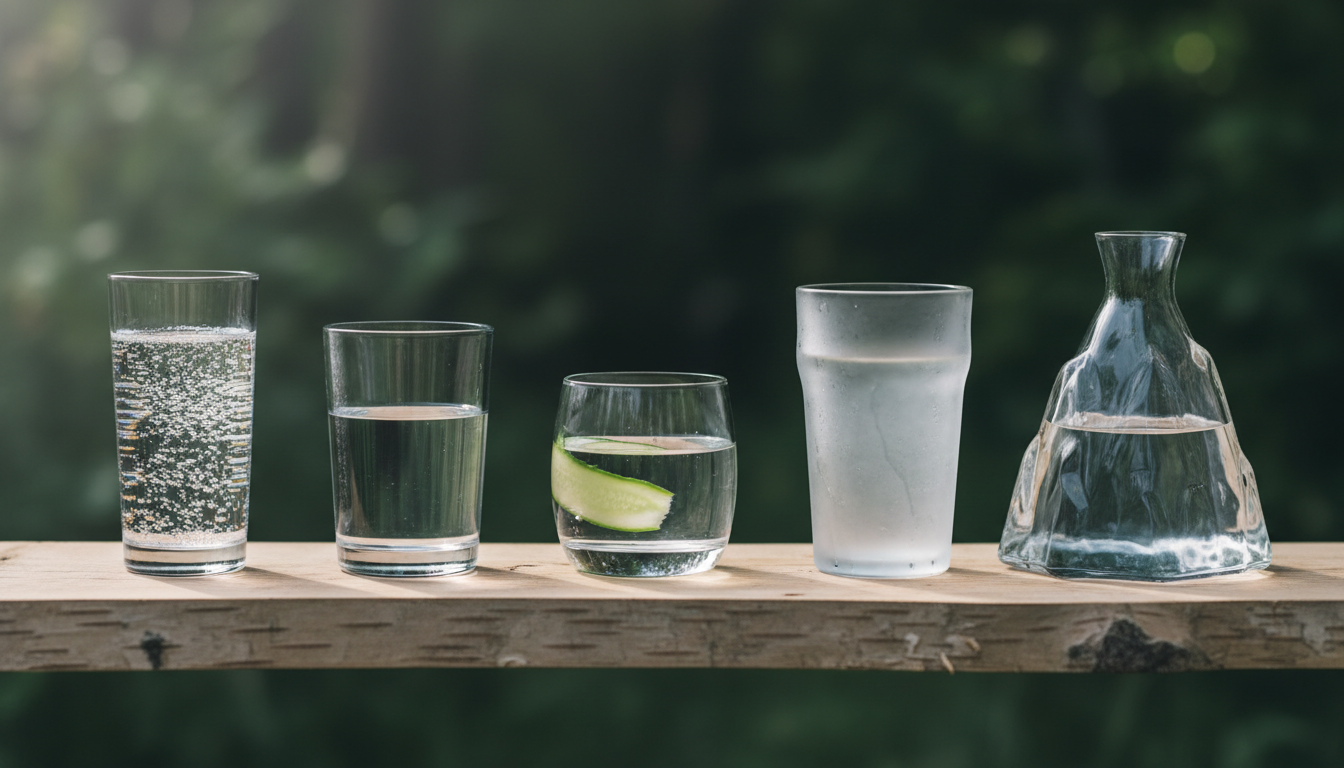
It’s a question that sounds simple until you start looking into it. Tap water, filtered water, spring water, alkaline water, hydrogen water, reverse osmosis water — the options have multiplied, the marketing has become increasingly extravagant, and the honest answer sits somewhere between “it depends” and “more complicated than anyone has told you.”
According to Simply Younger’s evidence-led breakdown of every major water type, here’s what the research actually says about each one — including the tradeoffs most guides won’t tell you.
Key Takeaways
- Healthy water does three things: it’s free from contaminants, it contains useful minerals (calcium, magnesium, potassium), and it doesn’t contain things that interfere with how your body works. Most water quality conversations focus only on the first point and ignore the second.
- Clean water and hydrating water are not the same thing. Mineral-free water (like RO without remineralisation) hydrates less effectively at the cellular level than mineral-containing water.
- RO produces the cleanest water available at home — but strips all minerals. The WHO has noted potential health risks from long-term consumption of low-mineral water. RO is only complete with remineralisation.
- According to Simply Younger, the alkaline pH in alkaline water does nothing once it hits stomach acid. What’s genuinely interesting is the dissolved molecular hydrogen produced as a byproduct — over 100 clinical studies show promising results for hydrogen-rich water.
- The honest hierarchy: quality spring water in glass or RO with minerals added back are best. Standard carbon filtering is good but incomplete. Plastic-bottled spring water of uncertain provenance is less reliable than it appears.
What Makes Water “Healthy” in the First Place?
Before comparing water types, it helps to define what we’re actually optimising for. Healthy water does three things well: it’s clean (free from heavy metals, pharmaceuticals, PFAS, microplastics, excess chlorine, nitrates); it contains useful minerals (calcium, magnesium, potassium, and trace elements that support cellular function and drive water into cells via osmosis); and it doesn’t contain things that interfere with how your body works. Most water quality conversations focus entirely on cleanliness and ignore minerals. This is a significant gap, because clean water and hydrating water are not the same thing.
Tap Water
The good: Regulated, tested, relatively cheap, and in most developed countries microbiologically safe. Often contains beneficial minerals including calcium and magnesium. The concern: The EPA’s most recent Contaminant Candidate List added microplastics, pharmaceuticals, and PFAS, acknowledging these are present in public supplies. Treatment chemicals including chlorine and chloramine create disinfection byproducts that have been studied for long-term health effects. Verdict: Acceptable baseline. The foundation to improve from, not the destination.
Filtered Water (Carbon)
The good: Removes chlorine, chloramine, sediment, and many volatile organic compounds. Significantly improves taste. Leaves minerals intact — actually a positive. The concern: Standard carbon filters don’t reliably remove PFAS, heavy metals, pharmaceuticals, microplastics, or fluoride. People often assume “filtered” means comprehensively clean. It doesn’t. Verdict: A meaningful improvement over unfiltered tap for most households. Worth having. Not comprehensive.
Reverse Osmosis Water
The good: The most thorough filtration available for home use. Removes PFAS, heavy metals, nitrates, fluoride, pharmaceuticals, microplastics, and virtually everything else. The concern: RO removes minerals along with contaminants, producing nearly mineral-free water. Drinking large volumes of demineralised water can dilute electrolyte balance and impair cellular hydration. The WHO has noted that long-term consumption of low-mineral water may carry health risks. Verdict: The cleanest option, but only complete with remineralisation. Without minerals added back, it solves one problem while creating another.
Spring Water
The good: Naturally filtered through rock, naturally mineralised, collected at source before exposure to modern infrastructure. Good spring water is clean, mineral-rich, and structurally coherent in ways processed water is not. The concern: Quality varies enormously by source. Some products marketed as spring water are filtered municipal water. Plastic bottles introduce microplastic contamination. Verdict: Among the best options when sourced well and packaged in glass. Highly variable in practice.
Alkaline Water
The good: Alkaline ionised water produced by electrolysis generates dissolved molecular hydrogen (H₂) as a byproduct. The hydrogen — not the alkalinity — is where the interesting science lies. Over 100 clinical studies have examined hydrogen-rich water with encouraging results across oxidative stress, exercise performance, and inflammatory markers. The concern: The alkaline pH itself does very little once it reaches stomach acid, which neutralises it immediately. Marketing that claims alkaline water “balances your body’s pH” is not supported by evidence. Verdict: The marketing is largely misleading; the underlying hydrogen science is genuinely interesting.
Hydrogen-Enriched Water
The good: Dissolving molecular hydrogen directly into water at meaningful concentrations produces a selective antioxidant that can cross cell membranes and reach mitochondria. A 2024 systematic review of over 100 clinical studies found promising signals across multiple health markers. The concern: Quality varies enormously. Hydrogen is extremely volatile and dissipates quickly once produced. Verdict: The most scientifically interesting category of functional water. Worth attention if you’ve already addressed the basics. Requires product quality scrutiny.
Not sure where to start with your own water?
The free Code of Hydration quiz takes 3 minutes and helps you identify the specific gaps in your current hydration — including water quality.
The Honest Hierarchy
Best: Quality spring water in glass, or RO water with remineralisation, or hydrogen-enriched water from a quality source. These tick all three boxes — clean, mineralised, potentially functional. Good: Multi-stage filtered tap water that preserves minerals. Acceptable: Standard carbon-filtered tap water. Better than nothing: Unfiltered tap water in regulated supply areas. Incomplete despite the premium: RO water without remineralisation, plastic-bottled spring water of uncertain provenance, alkaline water marketed primarily on pH.
Frequently Asked Questions
What is the healthiest water to drink?
The healthiest water is clean, mineral-rich, and free from contaminants. In practical terms: quality spring water in glass, reverse osmosis water with minerals added back, or hydrogen-enriched water from a verified source. The key variables are cleanliness, mineral content, and absence of compounds that interfere with how the body uses water.
Is reverse osmosis water good or bad for you?
RO produces the cleanest water available at home, removing PFAS, heavy metals, nitrates, fluoride, pharmaceuticals, and microplastics. The problem is that it also removes minerals. The WHO has noted potential health risks from long-term consumption of low-mineral water. RO water is best used with a remineralisation stage or with trace minerals added manually.
Is alkaline water actually good for you?
The alkaline pH itself does little once it reaches stomach acid. Claims that alkaline water “balances your body’s pH” are not supported by evidence. What is genuinely interesting is the molecular hydrogen produced as a byproduct of electrolysis in alkaline ionisers — over 100 clinical studies have examined hydrogen-rich water with promising results. The hydrogen matters; the alkalinity largely doesn’t.
Does a Brita filter make tap water healthy?
A Brita improves tap water meaningfully by removing chlorine, sediment, and some organic compounds that affect taste and odour. It does not remove PFAS, heavy metals, fluoride, pharmaceutical residues, or microplastics. It is a genuine improvement over unfiltered tap but is not comprehensive protection against the full range of modern water contaminants.
What is hydrogen water and does it actually work?
Hydrogen water is water with dissolved molecular hydrogen (H₂) at meaningful concentrations. H₂ is a selective antioxidant that can cross cell membranes and reach mitochondria. A 2024 systematic review of over 100 clinical studies found encouraging signals across oxidative stress, exercise performance, and inflammatory markers. Product quality varies widely — hydrogen is volatile and dissipates quickly, so delivery format matters significantly.
This article is for general informational purposes only and is not medical advice.
Leave a Reply