If you’ve spent any time in the premium hydration space, you’ll know that deciding which water technology is worth investing in requires navigating a crowded market of competing claims, technical terminology that varies by brand, and a general absence of honest head-to-head comparison. Most companies compare themselves to a vague “ordinary water” rather than to the specific alternatives that thoughtful buyers are actually considering.
This post does the comparison honestly. I’ll put the LifeWave X2O against the four most serious water technology categories: reverse osmosis systems, alkaline ionisers, standalone hydrogen water machines, and structured water devices. I’ll assess each on filtration effectiveness, hydrogen enrichment, unique capabilities, and value proposition. And I’ll be clear about what the X2O does better, what it does differently, and where the alternatives have genuine strengths.
The Four Comparison Categories
1. Reverse Osmosis (RO) Systems
What RO does well: Contaminant removal. A properly installed reverse osmosis system with NSF/ANSI 58 certification removes 90-99% of most contaminants — PFAS, heavy metals, nitrates, pharmaceutical residues, fluoride, microplastics. This is the gold standard for chemical filtration in home water treatment. High-end whole-house RO systems can process large volumes continuously.
What RO doesn’t do: Everything beyond filtration. RO water is mineral-stripped — a genuine concern for cellular hydration, as outlined elsewhere on this blog. Standard RO systems produce no hydrogen enrichment and no functional enhancement of the water beyond removing what shouldn’t be there. Under-sink RO systems require plumbing installation; whole-house systems are significant infrastructure investments.
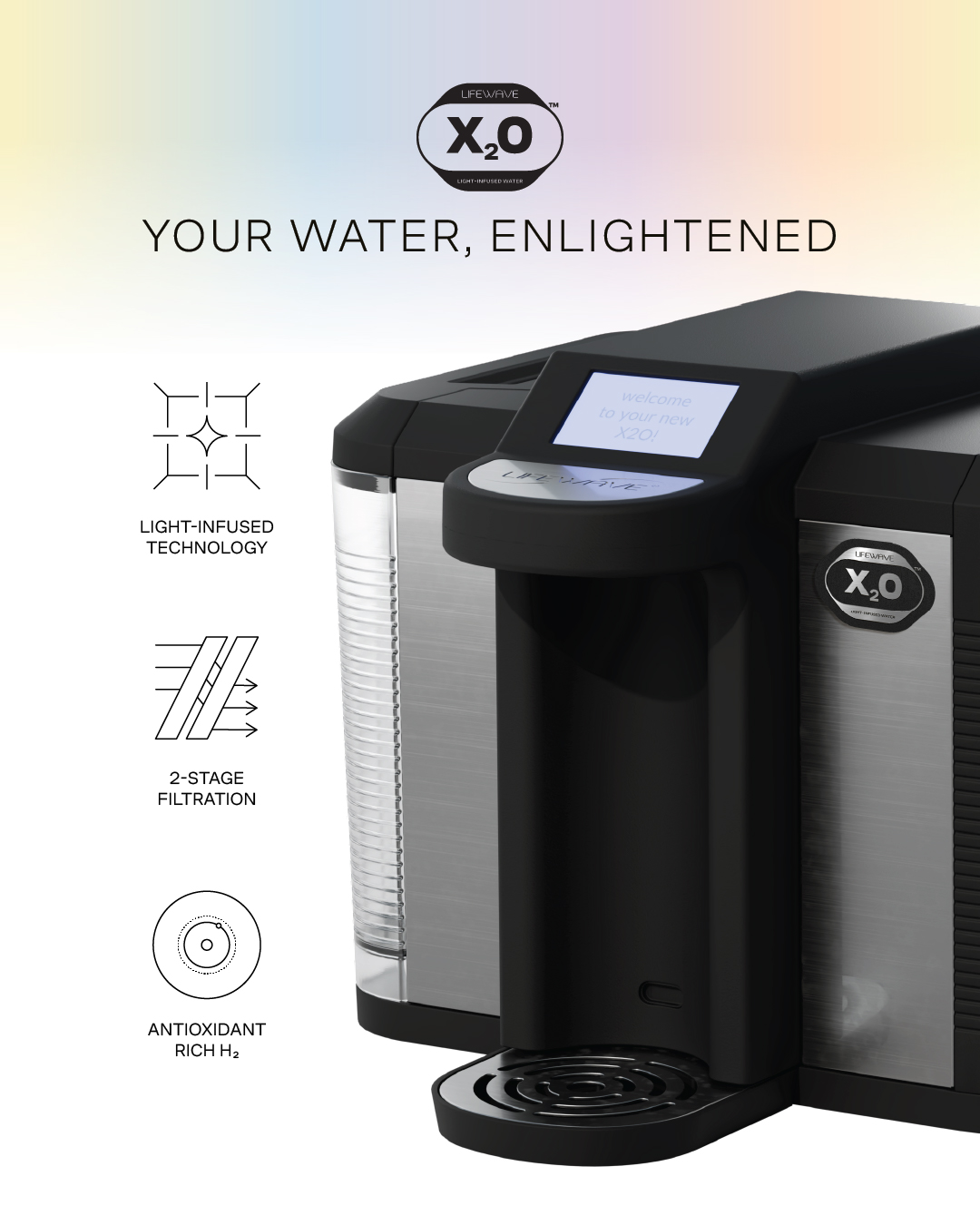
How the X2O compares: The X2O’s dual-stage filtration handles contaminant reduction — its primary filter is undergoing full NSF certification and was previously tested to remove major water contaminants. Where RO uses membrane pressure filtration, the X2O’s filter system uses a different mechanism that integrates with the downstream hydrogen and light stages. The X2O then adds hydrogen enrichment and light-frequency infusion that RO systems never attempt. For people who want clean water, the X2O delivers it. For people who want maximum filtration breadth as a standalone priority and nothing else, a dedicated NSF 58-certified RO with remineralisation remains the most comprehensive filtration option.
2. Alkaline Ionisers
What alkaline ionisers do well: They use electrolysis to separate water into alkaline and acidic streams, producing water with elevated pH and — as a byproduct of electrolysis — dissolved molecular hydrogen. Premium units from established brands produce hydrogen concentrations around 1.5-2.0 ppm, above the Molecular Hydrogen Institute’s 0.5 ppm effectiveness threshold. Some ionisers have been available for decades with established user bases.
What alkaline ionisers don’t do: The elevated pH claim — that alkaline water improves health by alkalising the body — is not well-supported by research, as covered in detail elsewhere on this blog. The benefits that ioniser users report are almost certainly attributable to the hydrogen content rather than the alkalinity. Additionally, most alkaline ionisers have limited or no contaminant filtration — they change the water’s properties but don’t necessarily clean it. Plumbing connection is typically required. Quality ionisers cost $2,000-$4,000+ without the additional capabilities the X2O brings.
How the X2O compares: The X2O produces hydrogen-enriched water through a dedicated hydrogen enrichment stage rather than as a pH-alteration byproduct. This means the X2O’s hydrogen process is purpose-built rather than incidental. The X2O also filters before enriching, addressing the contamination problem that ionisers largely ignore. And it then adds the patented light-infusion step that no ioniser attempts. An alkaline ioniser at comparable price to the X2O essentially delivers a subset of what the X2O provides, without the filtration and without the biophotonic layer.
3. Standalone Hydrogen Water Machines
What standalone hydrogen machines do well: They focus specifically on producing high-concentration hydrogen-rich water. Some units achieve concentrations of 1.5 ppm or higher, with quality units maintaining consistent concentration above the research threshold. For buyers who want hydrogen water as the primary goal, standalone machines can be effective at lower price points ($400-$1,500 for quality units) than comprehensive systems.
What standalone hydrogen machines don’t do: They typically don’t filter the water before enriching it, meaning you’re infusing contaminants alongside the hydrogen if your source water is problematic. They don’t address any other dimension of water quality. They have no photonic component.
How the X2O compares: The X2O’s hydrogen enrichment component is purpose-built and produces above-threshold concentrations, comparable to standalone hydrogen machines in the most important variable. But the X2O adds filtration before the hydrogen stage — cleaning the water before enriching it — and adds the light-infusion stage after. For someone choosing between a standalone hydrogen machine and the X2O, the X2O delivers the hydrogen benefit plus filtration plus the photonic layer. The price difference is significant ($5,495 vs. $400-$1,500), but so is the comprehensiveness of what’s being delivered.
4. Structured Water Devices
What structured water devices claim: That vortexing, magnetism, or other physical treatments change water’s molecular geometry, making it more easily absorbed by cells and more biologically active. The theory draws on real phenomena — water does form hydrogen bond networks that can be influenced by energy inputs — but the evidence base for structured water health claims is weak. The persistence of any structural change through the digestive process and into cellular uptake is not well-demonstrated.
How the X2O compares: The X2O does alter water properties — the hydrogen enrichment process simultaneously adjusts water’s molecular structure, which LifeWave describes as altering the bond angles between hydrogen and oxygen to enhance the water’s interaction with cells. This is grounded in the electrochemistry of hydrogen enrichment rather than vortexing or magnetism. The X2O’s approach to molecular water properties is more technically grounded and more consequential than typical structured water devices, and it adds filtration and photonic infusion that structured water devices don’t attempt.
The Comparison Table
Here’s a direct capability comparison across the five key dimensions:
Contaminant filtration: RO — Excellent (NSF 58 certified). Alkaline ioniser — Limited. Hydrogen machine — None. Structured water — None. X2O — Good (NSF certification in progress, previously tested).
Hydrogen enrichment: RO — None. Alkaline ioniser — Yes (as byproduct of electrolysis). Hydrogen machine — Yes (primary function). Structured water — None. X2O — Yes (dedicated enrichment stage, above-threshold concentration).
Light-frequency infusion: RO — None. Alkaline ioniser — None. Hydrogen machine — None. Structured water — None. X2O — Yes (patented, first-of-kind).
Plumbing-free countertop operation: RO — No (requires plumbing). Alkaline ioniser — No (typically requires plumbing). Hydrogen machine — Yes. Structured water — Varies. X2O — Yes (self-contained 2-litre reservoir).
X39/LifeWave patch synergy: RO — None. Alkaline ioniser — None. Hydrogen machine — None. Structured water — None. X2O — Yes (designed to amplify LifeWave’s non-transdermal patch system).
Who the X2O Is For
The X2O is not the right choice for everyone, and I wouldn’t represent it as such. It’s the right choice for someone who wants the most comprehensive water wellness system currently available, values the convergence of filtration, hydrogen enrichment, and photonic technology, and is either already in the LifeWave ecosystem or open to the frontier of biophotonic wellness.
For someone whose primary goal is maximum chemical filtration on a budget, a properly spec’d RO system with remineralisation will serve them well at lower cost. For someone who wants hydrogen water as a single intervention, standalone hydrogen machines are available at a lower price point. The X2O’s value proposition is the combination: no other single device does all three things simultaneously.
Curious whether the X2O is right for your situation?
I’m an authorised LifeWave Brand Partner. Reach out directly and I’ll give you an honest assessment based on your specific needs, water quality, and wellness goals. I can also share user experiences I’m not able to publish.
Not sure where your hydration currently stands?
The free Code of Hydration quiz takes 3 minutes and gives you a personalised baseline across volume, minerals, timing, and water quality.
Frequently Asked Questions
Is the LifeWave X2O better than reverse osmosis?
They serve overlapping but distinct purposes. A NSF 58-certified RO system with remineralisation provides the most comprehensive chemical filtration available for home use. The X2O adds hydrogen enrichment and light-frequency infusion that RO systems don’t attempt. If maximum chemical filtration is the only goal, a quality RO system is outstanding. If filtration plus hydrogen benefits plus photonic wellness is the goal, the X2O addresses all three in a single plumbing-free countertop system that an RO system alone doesn’t replicate.
How does the X2O compare to a Kangen water machine?
Kangen machines are alkaline ionisers that use electrolysis to produce alkaline, hydrogen-enriched water. They have an established track record and produce above-threshold hydrogen concentrations. The comparison to the X2O is honest: Kangen produces hydrogen-enriched alkaline water with limited filtration. The X2O produces filtered, hydrogen-enriched water plus patented light-frequency infusion. The X2O doesn’t produce alkaline water (it works with multiple water sources), but the alkalinity argument for Kangen’s benefits is not well-supported by the research — the hydrogen is doing the work. The X2O’s light-infusion technology has no equivalent in any Kangen product.
Is hydrogen water better than regular filtered water?
For cellular hydration and antioxidant support, the evidence says yes. Over 3,000 peer-reviewed studies document hydrogen’s biological effects beyond what filtration alone provides. The combination of clean water (from filtration) plus antioxidant-rich hydrogen enrichment addresses two different dimensions of water quality simultaneously. The X2O is the only system that adds a third dimension — photonic infusion — to this foundation.
Why doesn’t the X2O connect to my plumbing?
By design. The X2O is a countertop system with a 2-litre reservoir, processing water in approximately 45-minute cycles producing two 450ml glasses. This design makes it portable, installation-free, and usable with any water source — tap, spring, distilled, or filtered. LifeWave recommends drinking one 450ml glass daily, preferably in the morning on an empty stomach, so the cycle frequency is designed around this usage pattern rather than whole-household water replacement.
Can I use the X2O alongside my existing water filter?
Yes. The X2O accepts any water source, so you can feed it pre-filtered water from your existing system. Using already-filtered water as the X2O’s input reduces the load on its own filters and may extend filter life. LifeWave specifies that alkaline or carbonated water should not be used, and minerals should not be added before processing, as these can affect the system’s performance and void the warranty.
How does the X2O’s price compare to alternatives?
At $5,495 (with PayPal financing available over 3-24 months), the X2O is at the premium end. Quality alkaline ionisers range from $2,000-$4,000+. Standalone hydrogen machines range from $400-$1,500 for quality units. Quality under-sink RO systems cost $200-$600 plus installation. The X2O is the only option that combines all three functions in a plumbing-free system. Replacement filters are $130 every six months. The value case depends on how much the combination of capabilities matters relative to individual alternatives — something I cover in detail in Post 5 of this series.
This article is for general informational purposes only and does not constitute medical advice. LifeWave X2O products are for general wellness and are intended only to maintain or encourage a general state of health or a healthy activity. Always consult with your physician or other qualified healthcare provider before embarking on a new health regimen. I am an authorised LifeWave Brand Partner.
Leave a Reply