Affiliate & partner disclosure: This article contains affiliate links, including to Hume Health, and I may earn a commission if you buy through them at no extra cost to you. As an authorised LifeWave Brand Partner, I have a financial interest in promoting LifeWave products. Testimonial/editorial given by a LifeWave brand partner with financial interest in promoting the product. Full disclosure at the end.
A note before we start. This is general information, not medical advice. If you carry a lot of weight around your middle, ask your GP about blood pressure, blood sugar and cholesterol checks before making big changes to diet or exercise. LifeWave X39 is a non-transdermal, general-wellness phototherapy patch that gently stimulates the skin with light to support the body’s natural energy flow for strength and stamina. It is not a treatment for any condition.
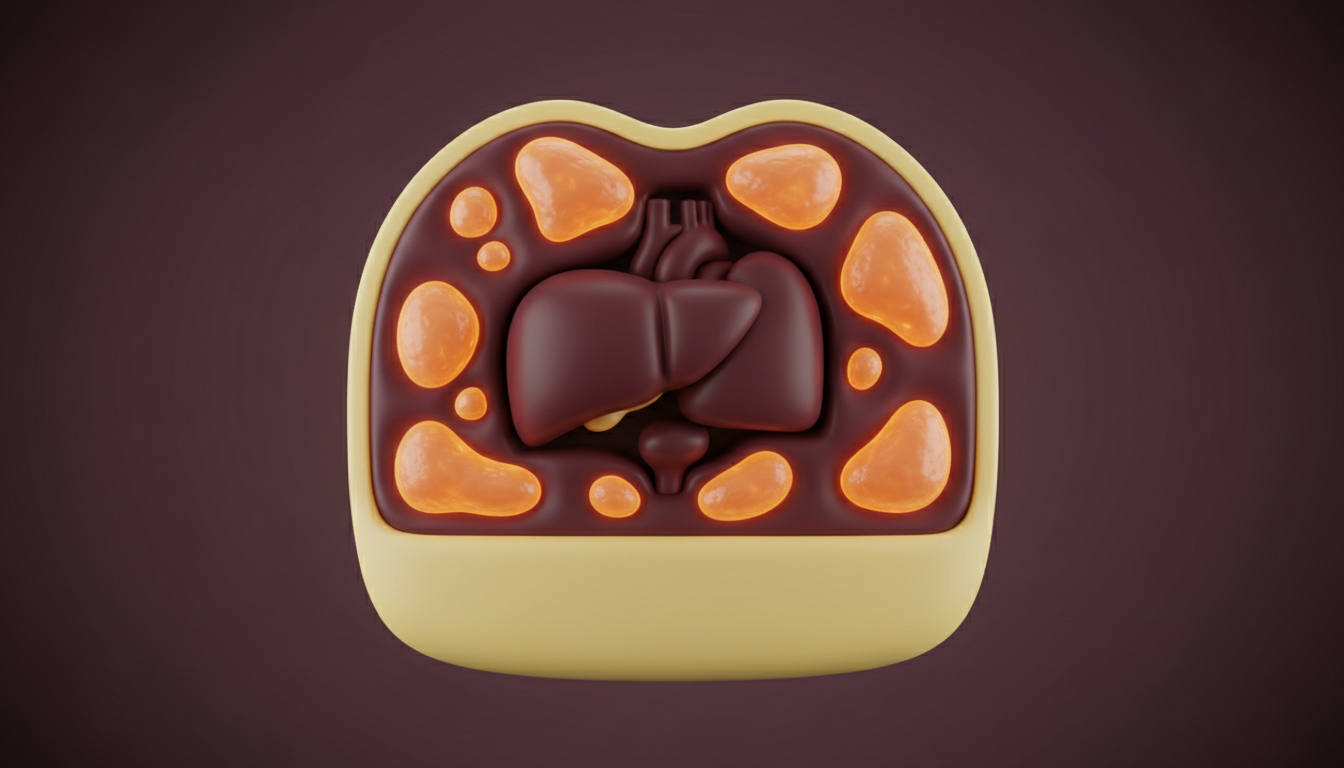
Grab a handful of your belly. What you’re holding is subcutaneous fat. The fat that worries doctors more is the stuff you can’t grab — visceral fat, packed deep around your liver, intestines and other organs.
Two men with the same waist size can carry very different amounts of each. One might have a soft layer under the skin and relatively little around his organs. The other might have a firm, round belly that looks smaller but hides far more visceral fat. On the outside they look similar. On the inside, their health risks can be very different.
For men over 40 this matters more than ever. Men naturally tend to store fat around the middle, and that tendency usually grows with age, falling testosterone, less sleep and more years of sitting. The good news is that visceral fat is also the type that tends to respond fastest when you change your habits.
Key takeaways
- Subcutaneous fat sits under the skin; visceral fat surrounds the internal organs.
- Visceral fat is more metabolically active and more strongly linked to type 2 diabetes, fatty liver and heart disease.
- Men tend to store more visceral fat than women, especially with age.
- Waist-to-height ratio is a simple home check: aim to keep your waist under half your height.
- Visceral fat usually responds well to daily movement, strength training, sleep, less alcohol and overall fat loss.
What is subcutaneous fat?
Subcutaneous fat is the layer just under your skin — on your belly, thighs, hips, back and arms. It stores energy, cushions the body and helps with insulation. It also produces hormones, including leptin, which helps regulate appetite.
In moderate amounts, subcutaneous fat is relatively harmless. Some research even suggests fat stored on the hips and thighs is less risky than fat stored around the middle. Large amounts still put strain on joints, raise blood pressure and affect how you move, so it’s not something to ignore — but it isn’t the main villain.
What is visceral fat?
Visceral fat lies deeper, inside the abdominal cavity, wrapped around your liver, stomach, intestines and kidneys. Everyone needs a small amount to protect the organs. The problem is excess.
Visceral fat is much more active than subcutaneous fat. It releases inflammatory chemicals and free fatty acids that drain directly to the liver through the portal vein. Over time, that can push the liver to store more fat, raise cholesterol and blunt the body’s response to insulin. That’s why excess visceral fat is strongly linked with insulin resistance, fatty liver, type 2 diabetes, high blood pressure and heart disease. See why visceral fat is dangerous for a deeper dive.
Why do men carry more belly fat after 40?
- Hormones. Men’s fat distribution favours the abdomen, and lower testosterone with age is associated with more visceral fat.
- Muscle loss. Less muscle means fewer calories burned and poorer blood sugar control.
- Alcohol. Regular drinking adds calories and appears to favour fat storage around the middle.
- Sleep and stress. Short sleep and chronic stress are both linked to more abdominal fat.
- Sitting. Desk jobs, commuting and evenings on the couch add up.
How can you tell which type you have?
- The pinch test. Soft fat you can grab between your fingers is mostly subcutaneous.
- The shape test. A hard, round belly that pushes outward — the classic “beer belly” — suggests more visceral fat behind the abdominal wall.
- Waist-to-height ratio. Measure your waist at the belly button. If it’s more than half your height, that’s a useful warning sign.
- Body composition devices. Many give an estimated visceral fat rating. DEXA and MRI scans measure it more precisely.
- Blood markers. High triglycerides, low HDL cholesterol and rising fasting glucose often travel with visceral fat. See blood work after 40.
How do you lose visceral fat? A practical plan
- Walk every day. Aim for 8,000–10,000 steps. Aerobic activity is consistently linked with visceral fat loss, even when the scale barely moves. A 10-minute walk after meals helps too — see walking after meals.
- Lift weights two to four times a week. Muscle improves insulin sensitivity and protects your metabolism while you lose fat.
- Cut back on alcohol. It’s one of the most common drivers of belly fat in men. Try alcohol-free weeknights as a start.
- Prioritise sleep. Seven to nine hours. Short sleep raises hunger hormones and cravings.
- Eat more protein and fibre. Both keep you full. Reduce ultra-processed foods and sugary drinks.
- Manage stress. Walks, breathwork, time with friends — anything that brings stress levels down regularly.
- Measure monthly. Waist measurement and body composition beat the bathroom scale.
Visceral fat often drops faster than subcutaneous fat when you start making changes, so your health markers can improve before you see much change in the mirror.
What mistakes do men make with belly fat?
- Doing endless sit-ups. You can’t spot-reduce fat. Core work builds muscle but won’t burn the fat on top.
- Crash dieting. Losing weight fast often means losing muscle, which makes fat regain more likely.
- Judging by the scale alone. You can lose fat and gain muscle at the same weight.
- Assuming slim means safe. Thinner men can still carry risky visceral fat, especially if they drink and don’t move much.
Get the Simply Younger daily email
Short, no-nonsense breakdowns of the science of ageing well after 40 — straight to your inbox.
Join free →How do I track mine?
I scan monthly on the Hume Body Pod, which gives me body fat, muscle mass and an estimated visceral fat figure. Watching the trend month to month tells me far more than a single weigh-in ever could.
My daily habits: 10,000+ steps, lifting every second day, PerfectAmino to help with protein, creatine, cold plunge and sauna, and the Operator Standard to keep me consistent.
Where does X39 fit?
X39 isn’t a fat-loss product and doesn’t affect belly fat. I wear it daily as a separate general-wellness habit: a non-transdermal, general-wellness phototherapy patch that gently stimulates the skin with light to support the body’s natural energy flow for strength and stamina.
Shop X39 at my LifeWave store →
Frequently asked questions
What is the difference between subcutaneous and visceral fat?
Subcutaneous fat sits under the skin and can be pinched. Visceral fat surrounds the internal organs and is more strongly linked with metabolic and heart disease.
Is visceral fat worse than subcutaneous fat?
Generally, yes. Visceral fat is more metabolically active and more closely associated with diabetes, fatty liver and heart disease.
Can you lose visceral fat?
Yes. It often responds well to daily walking, strength training, better sleep, less alcohol and overall fat loss — sometimes faster than subcutaneous fat.
How do I measure visceral fat at home?
Waist-to-height ratio is the simplest check. Body composition devices give an estimate, while DEXA or MRI scans are most accurate.
Why do men store more belly fat?
Hormones and genetics mean men tend to store more fat around the abdomen, and the tendency often increases with age.
Does X39 reduce belly fat?
No. X39 is a non-transdermal, general-wellness phototherapy patch that gently stimulates the skin with light to support the body’s natural energy flow for strength and stamina. It is not a weight-loss product.
Related reading
Visceral Fat: Why Belly Fat Is Dangerous · How Accurate Are Smart Scales? · Lose Fat Without Losing Muscle · Metabolic Age Explained · Insulin Resistance · Walking After Meals
Full disclosure. This article is for general information and is not medical advice. Links to Hume Health, PerfectAmino and the Operator Standard are affiliate links, and I may earn a commission at no extra cost to you. LifeWave X39 is a non-transdermal, general-wellness phototherapy patch and is not intended to diagnose, treat, cure or prevent any disease. As an authorised LifeWave Brand Partner I have a financial interest in promoting LifeWave products.
Leave a Reply