Affiliate & partner disclosure: This article contains affiliate links, including to Hume Health, and I may earn a commission if you buy through them at no extra cost to you. As an authorised LifeWave Brand Partner, I have a financial interest in promoting LifeWave products. Testimonial/editorial given by a LifeWave brand partner with financial interest in promoting the product. Full disclosure at the end.
A note before we start. Everything below about diet and stem cells is general science education — it is not about any product, and nothing here describes a treatment, cure, or fix for any condition. Speak to your doctor or a dietitian before making big dietary changes, especially if you have a health condition. Where LifeWave X39 is mentioned, it is a non-transdermal, general-wellness phototherapy patch that gently stimulates the skin with light to support the body’s natural energy flow for strength and stamina. It is not a drug, not a stem cell product, and not a treatment for any disease.
Can what you eat actually affect your stem cells?
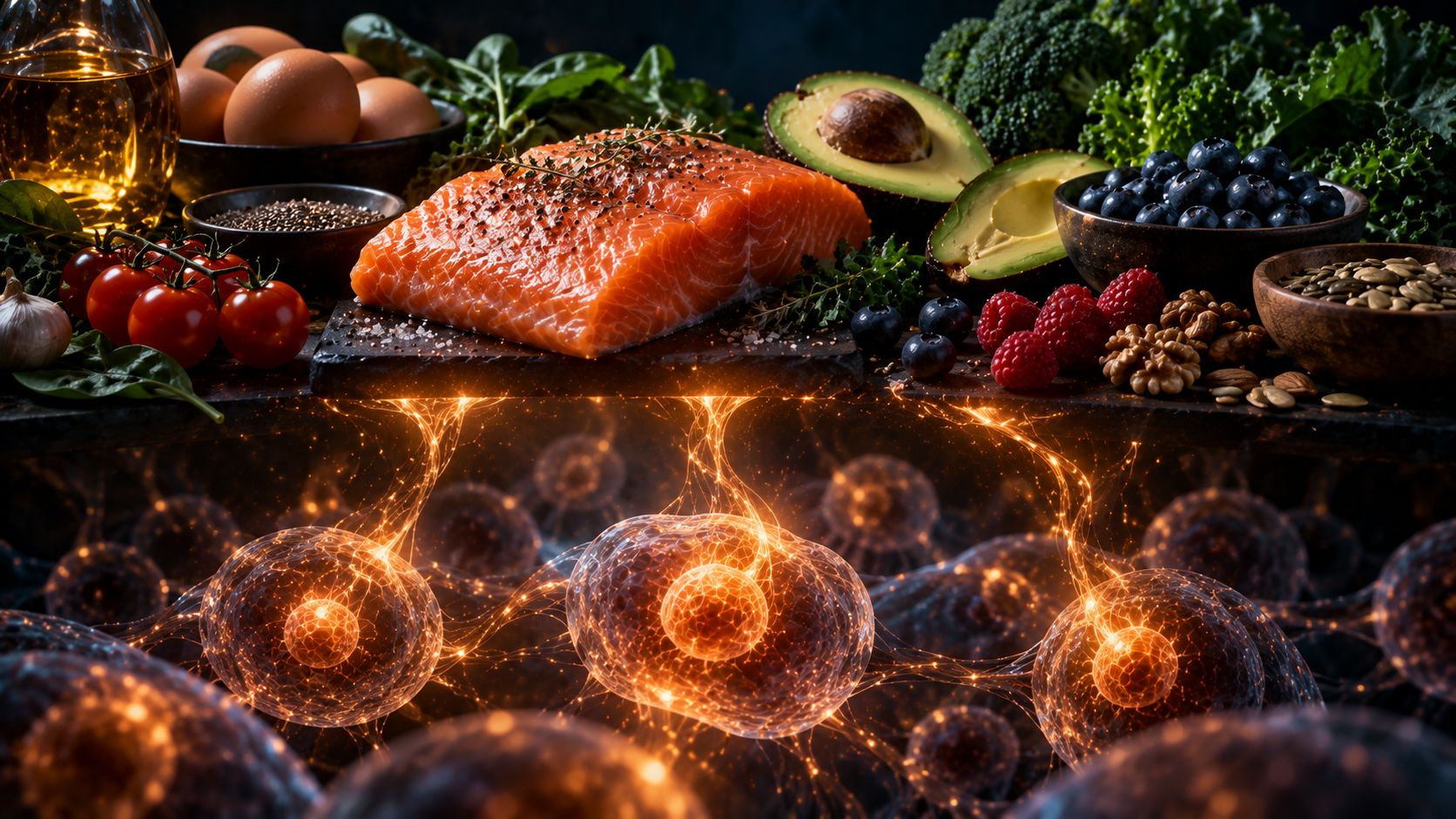
Yes — through several documented mechanisms. Nutrition provides the raw materials stem cells need for division and differentiation, influences the signalling pathways that regulate them, shapes the inflammatory environment of their niches, and affects the metabolic state that determines whether they stay quiescent, activate, or become senescent. What you eat shapes the cellular environment your repair infrastructure works in.
I’m Dave, I’m 50. Nutrition is one of the pillars of my week, and a monthly scan on a Hume Body Pod shows me how my body composition responds.
Key takeaways
- Diet influences stem cells through raw materials, signalling pathways, inflammatory load, and metabolic state.
- Fasting and calorie restriction shift nutrient-sensing pathways (mTOR, AMPK, sirtuins) toward maintenance and autophagy.
- Omega-3s, polyphenols, vitamin D and zinc are linked with healthier niches and lower inflammation.
- Ultra-processed food, excess sugar, and chronic calorie surplus impair stem cell function.
- Adequate protein supports muscle repair, gut lining renewal, and blood cell production.
How does fasting affect stem cells?
Some of the most direct evidence comes from fasting research. When you fast, mTOR activity falls (reducing growth signalling and promoting autophagy), AMPK activates (triggering cellular clean-up), and sirtuin activity rises. In animals, these shifts promote stem cell self-renewal. MIT research found a 24-hour fast boosted intestinal stem cell function in mice through a switch to fatty acid oxidation, and prolonged fasting cycles promoted renewal of blood-forming stem cells in mice. Human evidence is earlier-stage.
Which nutrients support stem cell function?
Omega-3 fatty acids (EPA and DHA from oily fish or supplements) help reduce chronic inflammation and support cell membranes.
Polyphenols from berries, green tea, cocoa and colourful vegetables have shown effects on signalling pathways in the lab. Resveratrol, quercetin and EGCG are the most studied.
Vitamin D influences mesenchymal stem cell differentiation toward bone. Deficiency is common in men over 40, particularly in northern countries like Ireland.
Zinc and copper are cofactors for enzymes involved in DNA repair, cell division, and immune cell production. As a piece of editorial science, the copper peptide GHK-Cu has been studied for repair signalling.
Protein. Constant renewal — blood cells, gut lining, muscle repair — needs a steady amino acid supply. I hit my protein with food plus ten PerfectAmino tablets a day.
Get the Simply Younger daily email
One short email a day: the newest post, what I’m testing, and what’s actually working for men over 40.
Join free →What damages stem cells through diet?
Ultra-processed foods drive chronic inflammation and can disrupt the gut microbiome. Since gut stem cells renew the lining every few days, that disruption matters.
Excess sugar and chronic calorie surplus promote insulin resistance, keep mTOR chronically active (suppressing autophagy), increase oxidative stress, and accelerate glycation damage. See insulin resistance after 40.
Alcohol impairs blood stem cell function, disrupts the gut barrier, and increases inflammation. Heavy drinking is associated with faster stem cell exhaustion.
My own basics at 50: protein at every meal, 10g of creatine, omega-3 and vitamin D daily, magnesium before bed, and Perform electrolytes daily, alongside lifting every second day, 10,000+ steps, and cold plunge, sauna and steam most days.
Where does X39 fit? Separately from everything above, I wear an X39 patch daily as a general-wellness habit. LifeWave X39 is a non-transdermal, general-wellness phototherapy patch that gently stimulates the skin with light to support the body’s natural energy flow for strength and stamina. It contains no drugs or nutrients and is not a treatment for deficiencies, metabolic disorders, or any condition discussed above. The science in this article is educational and is not a claim about the patch.
As an authorised LifeWave Brand Partner I have a financial interest in promoting it.
Shop X39 at my LifeWave store →
Frequently asked questions
Can food really affect stem cells?
Yes. Nutrition affects raw material supply, signalling, inflammation and metabolic state, all of which influence stem cell function.
What is the best diet for stem cell health?
A whole-food, protein-adequate, fibre-rich diet with omega-3s, polyphenols, and enough micronutrients, and minimal ultra-processed food, fits the research best.
Does sugar damage stem cells?
Excess sugar promotes insulin resistance, oxidative stress and glycation, which impair stem cell niches.
Why does protein matter?
Constant renewal of blood, gut lining and muscle needs amino acids. Too little protein limits repair.
Does fasting help stem cells?
Animal research shows fasting shifts pathways toward stem cell self-renewal and autophagy. Human evidence is limited, and fasting isn’t suitable for everyone.
Is X39 a nutritional product?
No. X39 is a non-transdermal, general-wellness phototherapy patch that gently stimulates the skin with light to support the body’s natural energy flow for strength and stamina. It is not a drug or treatment for any condition.
Related reading
Fasting and Stem Cell Regeneration · Stem Cells and Gut Health · Stem Cells and Inflammation · What Are Stem Cells? · The Anti-Inflammatory Diet Guide · How Much Protein Do You Need After 40?
Full disclosure. This article is general wellness education and is not medical advice, diagnosis, or treatment. LifeWave X39 is a non-transdermal, general-wellness phototherapy patch and is not intended to diagnose, treat, cure, or prevent any disease. As an authorised LifeWave Brand Partner, I have a financial interest in promoting LifeWave products. Links to Hume Health and PerfectAmino are affiliate links. Always consult a qualified professional about your individual health.
Leave a Reply