Affiliate & partner disclosure: This article contains links to products from which Simply Younger may earn a commission. As an authorised LifeWave Brand Partner, the author has a financial interest in promoting LifeWave products. See full disclosure below.
A note before we start. This article is general science education about why skin can look tired. It is not medical or cosmetic advice, and not a claim about any product. Where LifeWave X39 is mentioned, it is a non-transdermal, general-wellness phototherapy patch that gently stimulates the skin with light to support the body’s natural energy flow for strength and stamina. It is not a drug or a treatment for any condition.
Why do people say you look tired when you’re not?
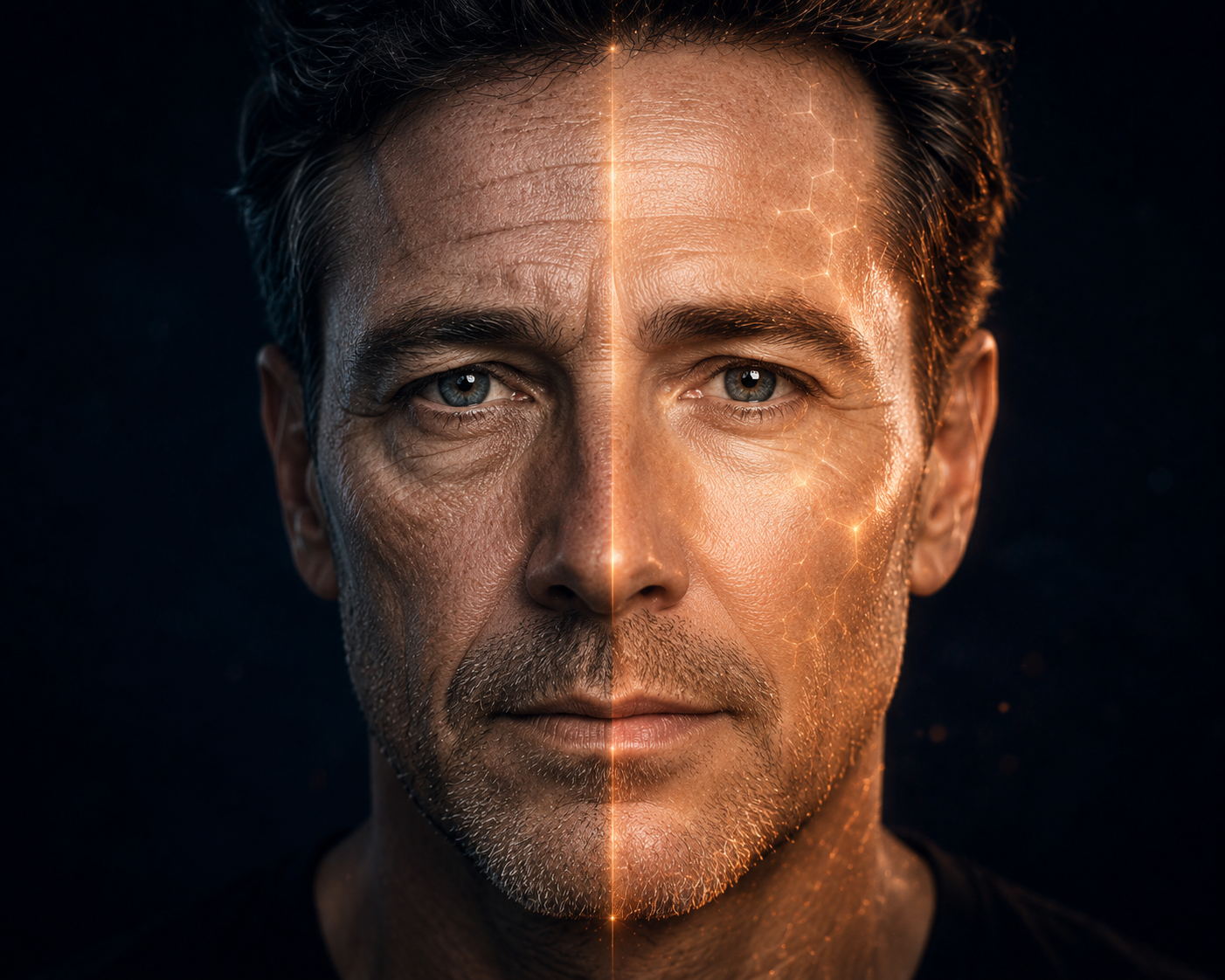
It’s a strange, slightly annoying experience: you slept well, you feel fine, and someone still asks if you’re worn out. That “tired” look is real, but it’s rarely about last night’s sleep. It’s your skin acting as a status report for what’s going on beneath the surface — circulation, cell turnover, and the structural changes that quietly accumulate with age. Read it that way and it becomes useful information rather than an insult.
Key takeaways
- “Tired-looking” skin is often about biology, not last night’s sleep.
- Reduced circulation can dull skin tone and radiance.
- Slower cell turnover leaves skin looking flatter and rougher.
- Thinning structure and less collagen support change how light reflects.
- Hydration, sun damage and lifestyle all show up on the face.
- The look reflects deeper cellular changes, not a cream deficiency.
What makes skin look “radiant” versus “tired”?
A lot of it comes down to light and blood. Youthful skin has brisk microcirculation that gives a subtle warmth and glow, faster cell turnover that keeps the surface smooth and fresh, and a dense structural matrix that reflects light evenly. As those decline, tone dulls, the surface gets rougher, and shadows fall differently — the composite of which reads to other people as “tired.” It’s the same underlying cellular ageing story, just showing up on your face.
Why is this so easily overlooked?
Because the obvious explanation — sleep — is right there, and because the beauty industry trains us to reach for a topical fix. But if your skin looks tired despite good sleep, the message is that the drivers are deeper: circulation, turnover, and structure, none of which a surface cream meaningfully reaches. The same reduced circulation and cellular efficiency that dulls your skin can also be part of what your body is signalling through energy and recovery, tied back to the way skin and light interact.
Want to understand what’s driving how your skin looks? A short assessment gives you a real baseline.
Get the Simply Younger longevity briefings
Short, no-nonsense breakdowns of the science of ageing well after 40 — straight to your inbox.
Join free →What actually helps skin look less tired?
Support the drivers underneath. Exercise boosts circulation and delivers a genuine, if temporary, post-workout glow — and over time supports the vascular health that keeps skin fed. Sun protection preserves the structure that reflects light evenly. Hydration and sleep help turnover and repair. And keeping inflammation down keeps skin from looking dull and puffy. None of it is a quick topical trick — it’s the same unglamorous foundation that supports everything else, showing up where everyone can see it.
Where X39 fits — and where it doesn’t. The skin science above is general education. LifeWave X39 is a non-transdermal, general-wellness phototherapy patch that gently stimulates the skin with light to support the body’s natural energy flow for strength and stamina. It contains no drug and is not a treatment for skin appearance, tiredness, or any condition.
As an authorised LifeWave Brand Partner I have a financial interest in promoting it. You can explore X39 and the wider wellness range at my store: lifewave.com/dcp.
Want to add X39 to your own routine? You can order it directly from my LifeWave store.
Read the signal properly — get a baseline with the quiz before reaching for another product.
See your Biological Age markers →
Or shop X39 at my LifeWave store →
Frequently asked questions
Why does my skin look tired even when I’m well rested?
Tired-looking skin often reflects reduced circulation, slower cell turnover, and structural changes underneath rather than how much you slept last night.
What causes a dull, tired complexion?
Reduced microcirculation, slower skin cell turnover, thinning structure, dehydration, and sun damage all contribute to a duller, more tired appearance.
Can exercise improve how my skin looks?
Exercise boosts circulation and can give a temporary post-workout glow, and over time supports the vascular health that helps keep skin looking fresh.
Will a cream fix tired-looking skin?
Creams can temporarily improve appearance through hydration, but the deeper drivers — circulation, turnover, and structure — aren’t reached by surface products.
Is tired-looking skin a sign of something serious?
Usually it reflects normal ageing and lifestyle factors, but any sudden or marked change in skin or complexion is worth mentioning to a doctor.
What is LifeWave X39?
It’s a non-transdermal, general-wellness phototherapy patch that gently stimulates the skin with light to support the body’s natural energy flow for strength and stamina. It is not a drug or a treatment for any condition.
Full disclosure. This article is general wellness education and is not medical advice, diagnosis, or treatment. LifeWave X39 is a non-transdermal, general-wellness phototherapy patch and is not intended to diagnose, treat, cure, or prevent any disease. As an authorised LifeWave Brand Partner, the author has a financial interest in promoting LifeWave products. Always consult a qualified professional about your individual health.
Leave a Reply