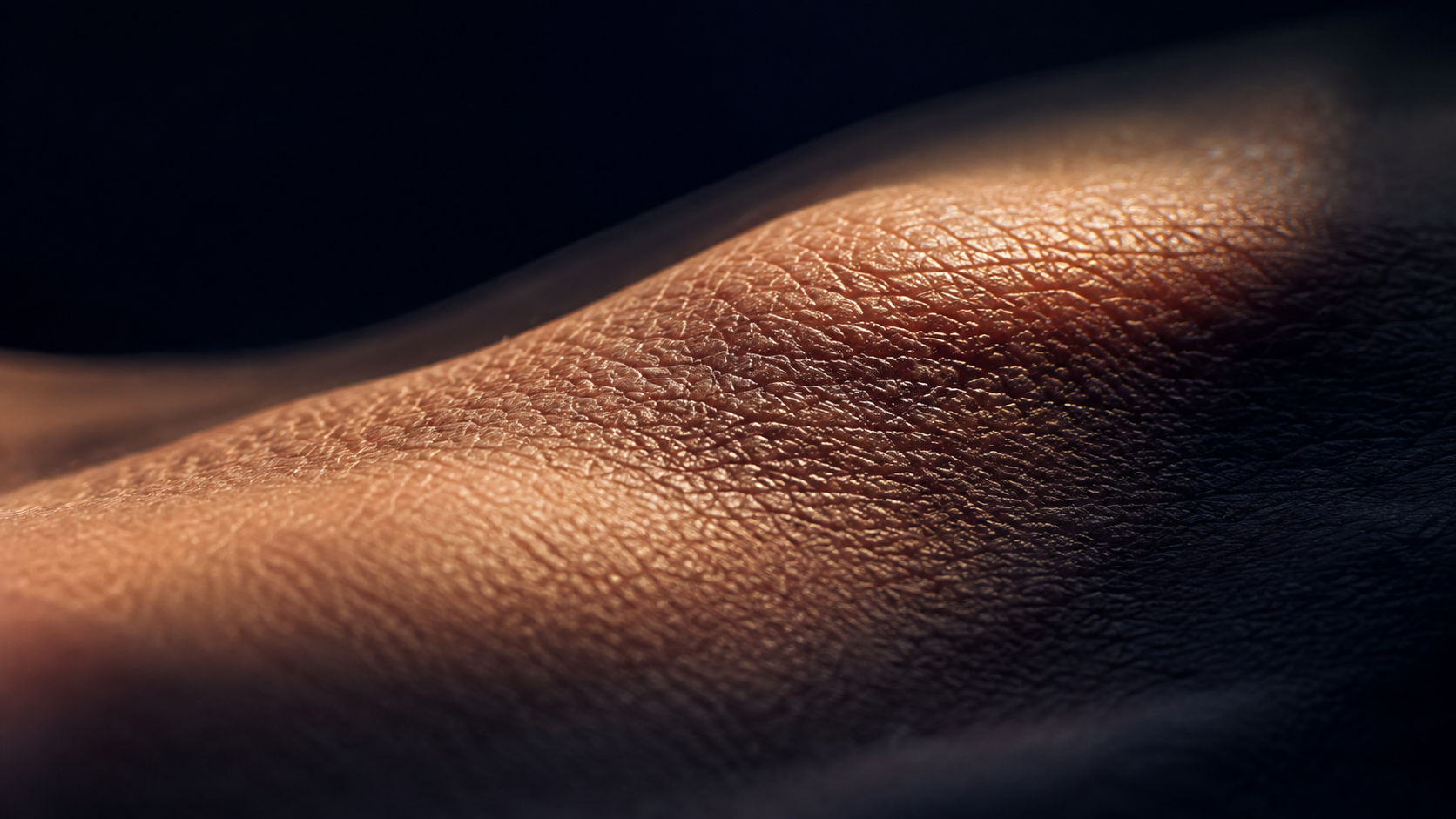
We tend to think of skin as simple wrapping — the thing that holds everything else in. In reality it’s the body’s largest organ, a sophisticated, living barrier doing dozens of jobs at once. Understanding how skin actually works makes you a smarter consumer of everything from skincare to wearable wellness tools. Here’s the plain-English science.
Key Takeaways
- Skin is the body’s largest organ, with a surface area of roughly two square metres.
- It has three main layers: the epidermis, dermis and hypodermis.
- Its outer barrier keeps water in and unwanted things out.
- Skin helps regulate temperature and senses the outside world.
- “Transdermal” means through the skin; “non-transdermal” means nothing is absorbed.
- This is general anatomy — not a claim about any product.
Why is skin called an organ?
An organ is a structure made of tissues working together for a shared set of functions — and skin fits that definition perfectly. Spread out, an adult’s skin covers roughly two square metres and weighs several kilograms, making it the largest organ we have. Far from passive, it protects against microbes, regulates temperature, manufactures vitamin D in response to sunlight, and is packed with nerve endings that let you feel the world. It is doing all of this, constantly, without you noticing.
What are the layers of skin?
Three main ones. The epidermis is the outermost layer — your waterproof, protective barrier, constantly shedding and renewing itself. Beneath it, the dermis houses collagen, blood vessels, nerve endings, sweat glands and hair follicles; it gives skin its strength and elasticity. Deepest is the hypodermis, a layer of fat and connective tissue that cushions and insulates. Each layer has a distinct job, and together they form a barrier that’s remarkably good at its work.
What does the skin barrier actually do?
Think of the outer barrier as a brick wall: tough skin cells are the bricks and lipids are the mortar. This wall keeps precious water inside your body and keeps irritants, allergens and microbes outside. When the barrier is intact, skin feels comfortable and resilient; when it’s compromised, you get dryness and sensitivity. This barrier is also why the word “transdermal” matters so much in wellness products — it describes whether something is designed to cross that wall or not.
Transdermal vs non-transdermal — what’s the difference?
A transdermal product is designed to deliver something through the skin into the body — a nicotine patch is the classic example. A non-transdermal product does not: nothing is absorbed or delivered across the barrier. This distinction is central to understanding wearable light patches, which are non-transdermal and work with light rather than by delivering any substance. For the mechanism, see how phototherapy patches work.
Biology made simple, straight to your inbox
Join the Simply Younger list for clear, honest explainers on how your body actually works.
Join Free →Frequently asked questions
Is skin really the largest organ?
Yes — by surface area and weight, skin is the body’s largest organ, covering roughly two square metres in an adult.
What is the epidermis?
The outermost skin layer — your protective, waterproof barrier that constantly renews itself.
What does “non-transdermal” mean?
It means nothing is delivered through the skin into the body. The product does not cross the skin barrier.
Does skin really make vitamin D?
Yes — skin synthesises vitamin D in response to sunlight, one of its many active roles.
Why does the skin barrier matter?
It keeps water in and irritants out. A healthy barrier means comfortable, resilient skin; a compromised one leads to dryness and sensitivity.
Does skin change as we age?
Yes — collagen and elasticity change over time. You can explore your ageing profile with the Code of Aging quiz.
Leave a Reply