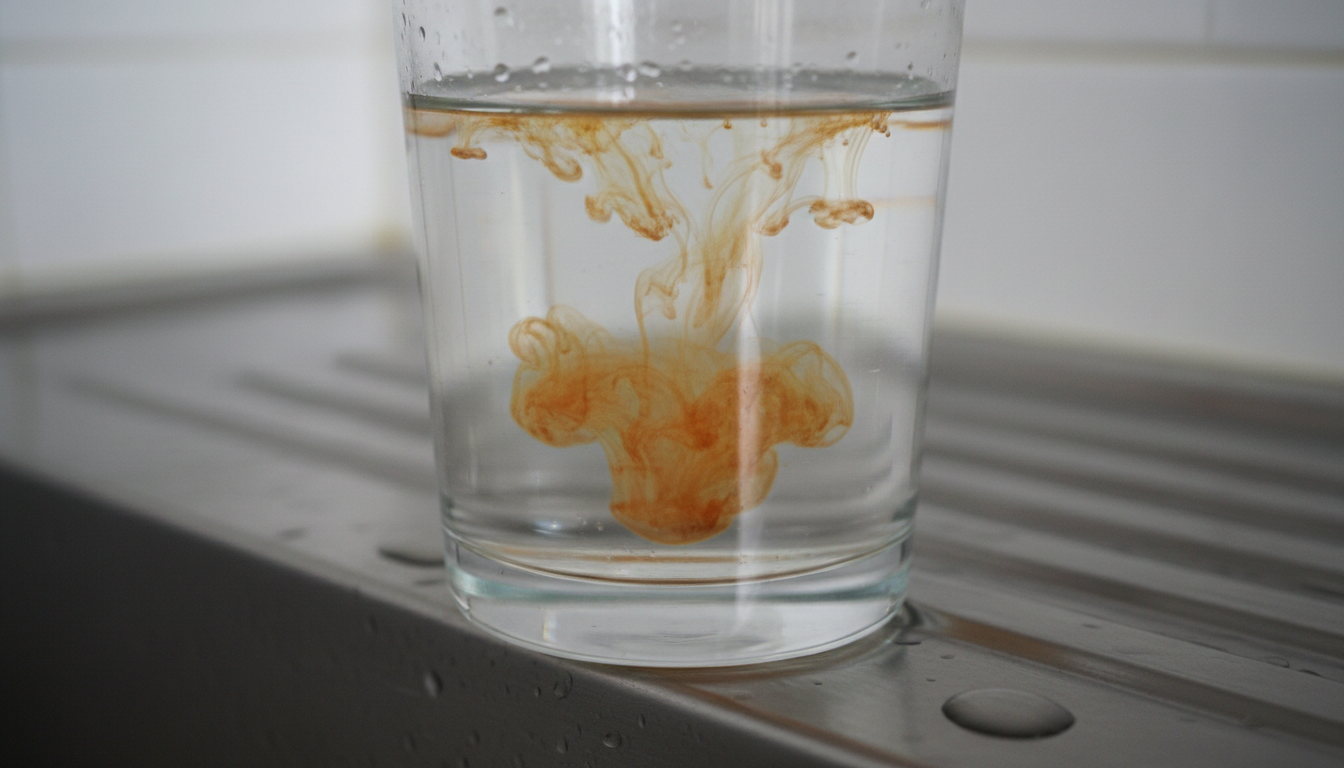
The movie came out in 2000. The problem never went away.
Chromium-6 — the carcinogen made famous by the Erin Brockovich case — is still showing up in tap water across America. A 2016 analysis by the Environmental Working Group found chromium-6 in the tap water of 75% of American cities tested, affecting over 200 million people across all 50 states. And there is still no federal legal limit specifically for chromium-6 in drinking water. Not a weak limit. No limit.
What Is Chromium-6 and Why Is It Dangerous?
Chromium-6, also called hexavalent chromium, is a form of the metal chromium in which the chromium atom carries a positive charge of six. It is chemically distinct from chromium-3 (trivalent chromium), which is an essential trace nutrient found in food and is largely harmless at normal exposure levels. The two forms have very different biological properties and very different health risk profiles — a distinction that is critically important to understanding the regulatory failure around chromium-6.
Chromium-6 is a known human carcinogen. It is classified as a Group 1 carcinogen by the International Agency for Research on Cancer — meaning the evidence of carcinogenicity in humans is sufficient. It causes lung cancer through inhalation exposure in occupational settings — a finding established decades ago. The question that became central to the Erin Brockovich case, and that remains contested in the regulatory arena, is whether drinking it causes cancer.
The evidence on oral exposure has strengthened considerably since the 1990s. Animal studies have consistently shown that drinking chromium-6 causes gastrointestinal tumours in rodents at concentrations relevant to human drinking water exposure. Epidemiological studies in human populations with elevated chromium-6 in their water supply have found associations with stomach cancer and other gastrointestinal malignancies. The National Toxicology Program has concluded that chromium-6 in drinking water is likely carcinogenic to humans. The regulatory framework has not kept pace with this evidence.
What Was the Erin Brockovich Case?
The Erin Brockovich case centred on the town of Hinkley, California, where Pacific Gas and Electric had used chromium-6 in its compressor station operations and allowed it to contaminate local groundwater for decades. Residents of Hinkley experienced elevated rates of cancer and other serious health conditions. Erin Brockovich, a legal clerk working for a small law firm, investigated the contamination and helped build a case against PG&E that resulted in a $333 million settlement in 1996 — the largest settlement ever paid in a direct-action lawsuit in US history at that time.
The 2000 film dramatising the case brought chromium-6 into public consciousness worldwide. It also created the reasonable expectation that the regulatory system would respond to such a high-profile demonstration of harm by setting protective standards for the chemical in drinking water. That expectation has not been met.
Is Chromium-6 Still in US Tap Water in 2026?
Yes. The EWG’s 2016 analysis — the most comprehensive national testing of chromium-6 in US tap water conducted to date — found chromium-6 in the water supplies of 75% of the cities tested, serving more than 200 million Americans across all 50 states. The contamination is not concentrated in one region or industry. It is national in scope.
Chromium-6 enters water supplies through multiple pathways. Industrial discharges — from metal finishing, leather tanning, textile manufacturing, and chemical production — are direct sources. Coal ash disposal sites leach chromium-6 into groundwater. Natural geological deposits of chromium-bearing rock weather and dissolve into groundwater in some regions. The chemical is both an industrial contaminant and, in some areas, a naturally occurring one.
Since the 2016 analysis, there is no evidence of systematic improvement in national chromium-6 levels. The industrial sources continue to operate. The geological sources are unchanged. And the regulatory framework that would require treatment and removal has not been updated.
Why Is There No Federal Limit for Chromium-6?
The EPA’s current maximum contaminant level for chromium in drinking water is 100 parts per billion — a standard set in 1991. Critically, this limit applies to total chromium: it combines chromium-6 and chromium-3 into a single measurement. Because chromium-3 is largely harmless and chromium-6 is a known carcinogen, measuring them together means the standard provides no specific protection against the dangerous form. A water supply could contain 99 ppb of chromium-6 and be within the legal limit.
The 1991 standard was set primarily based on concerns about skin irritation from chromium exposure — before the evidence on the carcinogenicity of drinking chromium-6 was well established. It has not been updated in over 30 years despite the accumulation of evidence that chromium-6 specifically, at concentrations found in US water supplies, poses a cancer risk.
The EPA began the process of setting a specific chromium-6 limit in 2008, following a petition from health advocacy groups. That process was opened, stalled, partially reopened, and stalled again across multiple administrations. As of 2026, no federal maximum contaminant level specifically for chromium-6 has been finalised. The regulatory machinery has been in motion for nearly two decades without producing a standard.
California moved independently. In 2014, California became the first state to set a maximum contaminant level specifically for chromium-6, setting it at 10 ppb. That state standard has since faced legal challenges from industry groups and has not been consistently enforced. But the scientific work that underpinned it produced a public health goal — a non-binding target representing the level expected to cause no more than one cancer case per million people who drink the water over a lifetime — of 0.02 ppb.
What Is the 5,000x Gap Between the EPA Standard and the Safe Level?
California’s public health goal for chromium-6 is 0.02 parts per billion — derived from cancer risk modelling based on animal study data and standard risk assessment methodology. The EPA’s federal standard for total chromium is 100 parts per billion. The ratio between these two numbers is 5,000.
This means that water containing chromium-6 at the federal legal limit — water that your utility would report as compliant — could contain chromium-6 at a concentration 5,000 times higher than the level California’s own scientists calculated as protective against cancer risk.
This is not a minor discrepancy. It represents a fundamental regulatory gap between what the law currently permits and what the science indicates is safe. And it is a gap that has persisted for decades while the EPA’s rulemaking process has repeatedly stalled under pressure from industrial users of chromium-6 who have lobbied against the setting of a specific limit.
The EWG’s health guideline for chromium-6 is 0.02 ppb — matching the California public health goal. Testing conducted by the EWG found chromium-6 above this level in a significant proportion of US water systems, meaning tens of millions of Americans are being served water that exceeds the scientifically derived protective threshold, while their utility reports full compliance with federal law.
Why Does This Still Happen 25 Years After the Erin Brockovich Film?
The Erin Brockovich case and film created enormous public attention and reasonable expectation of regulatory action. What it did not create was the structural change in the regulatory process that would have translated that attention into enforceable standards. The reasons are the same as those that explain the persistence of other unregulated or inadequately regulated water contaminants: industrial lobbying, slow regulatory machinery, the high cost of compliance for utilities and industries that would need to reduce chromium-6 levels, and the difficulty of attributing cancer cases to a specific exposure source in the epidemiological record.
The pattern is consistent across the water quality landscape. Known or suspected carcinogens enter the water supply. Evidence of harm accumulates. Advocacy groups petition for regulation. Industry groups contest the evidence and the economic impact of proposed standards. The regulatory process opens, stalls, and reopens across multiple administrations. The contaminant remains in the water while the process continues. People drink it.
Do you know what’s in your water right now?
The free Code of Hydration quiz takes 3 minutes and gives you a personalised score based on your specific habits, symptoms, and water quality — not just how much you drink.
Does a Water Filter Remove Chromium-6?
Not all filters are effective against chromium-6. The chemistry of hexavalent chromium makes it more challenging to remove than many other contaminants.
- Reverse osmosis is the most effective residential option for chromium-6 removal, typically achieving reductions of 85–95%. It is the standard recommendation for households in areas with known or suspected chromium-6 contamination.
- Strong base anion exchange resins are effective at removing chromium-6 and are used in some specialised point-of-use systems. They require proper maintenance and periodic regeneration.
- Activated carbon filters — including standard pitcher filters and most tap-attached units — are largely ineffective against chromium-6. Chromium-6 is an anion in water and does not bind well to activated carbon surfaces. Standard filters will not reliably protect against hexavalent chromium.
- Check the EWG tap water database. The EWG database at ewg.org/tapwater allows you to search by zip code to see whether chromium-6 has been detected in your water system and at what concentration relative to both the federal limit and the EWG health guideline of 0.02 ppb.
- NSF/ANSI Standard 58 covers reverse osmosis systems and includes chromium-6 reduction as a tested parameter. Look for this certification when selecting a reverse osmosis system for chromium-6 protection.
Frequently Asked Questions
Is chromium-6 still in US tap water in 2026?
Yes. The EWG’s most comprehensive national analysis found chromium-6 in 75% of US cities tested, affecting over 200 million people. There is no evidence of systematic national improvement since that analysis, and no federal limit specifically for chromium-6 has been set.
What is the safe level of chromium-6 in drinking water?
California’s public health goal — the level calculated to cause no more than one cancer case per million people drinking the water over a lifetime — is 0.02 parts per billion. The EPA’s federal standard for total chromium is 100 ppb. The EWG health guideline matches the California public health goal at 0.02 ppb.
Why is there no federal limit for chromium-6?
The EPA began the rulemaking process for a specific chromium-6 limit in 2008 but the process has stalled repeatedly under pressure from industrial users of chromium-6. The current federal standard covers total chromium — combining the dangerous hexavalent form with the harmless trivalent form — and was set in 1991 based on concerns about skin irritation, before the evidence on carcinogenicity from oral exposure was established.
Does chromium-6 cause cancer?
Chromium-6 is a Group 1 human carcinogen (IARC) for inhalation exposure. Animal studies consistently show gastrointestinal tumours from drinking chromium-6 at concentrations relevant to human water supply. Human epidemiological studies have found associations with stomach cancer in populations with elevated exposure. The National Toxicology Program has concluded it is likely carcinogenic to humans via oral exposure.
What is the difference between chromium-6 and chromium-3?
Chromium-3 (trivalent chromium) is an essential trace nutrient found in food and is largely harmless at normal exposure levels. Chromium-6 (hexavalent chromium) is a known carcinogen with a very different biological profile. The EPA’s current water standard measures total chromium — combining both forms — which means the standard provides no specific protection against the dangerous hexavalent form.
This article is for general informational purposes only and is not medical advice. Always consult a qualified healthcare professional if you have concerns about your health or water quality.
Leave a Reply