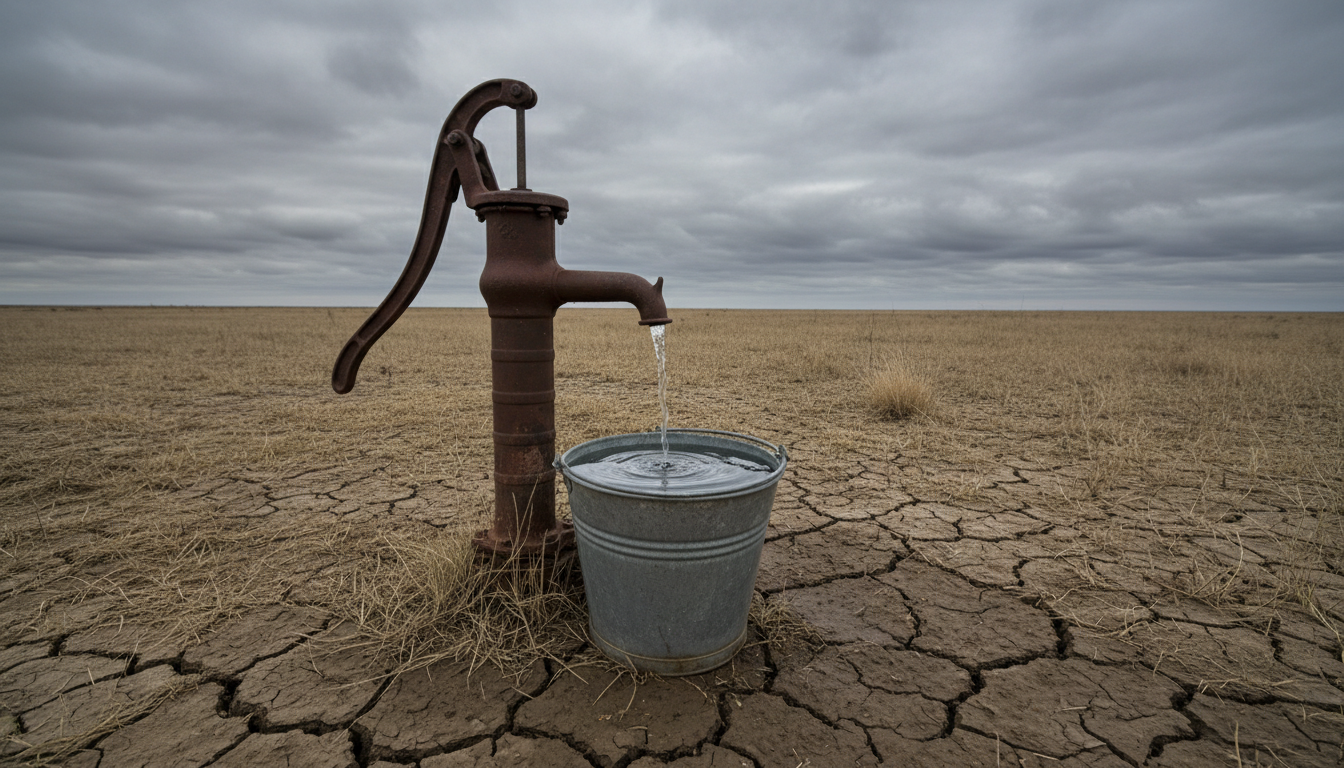
Arsenic occurs naturally in groundwater across large parts of the United States. Millions of people are drinking it every day. And because it is colourless, odourless, and tasteless, most of them have no idea.
According to Simply Younger’s review of the arsenic and water safety research, the legal limit doesn’t mean safe — and the EPA’s own 2023 internal assessment makes that gap much wider than most people realise.
Key Takeaways
- Arsenic is a Group 1 human carcinogen (IARC) linked to bladder, lung, liver, kidney, and skin cancers. Millions of Americans drink it daily at levels that carry meaningful lifetime cancer risk — even within the EPA’s legal limit.
- The EPA’s 10 ppb legal limit was set in 2001 as a practical compromise, not a risk-free threshold. The National Academy of Sciences concluded it still carries significant cancer risk over a lifetime of consumption.
- In 2023, the EPA’s own internal risk assessment (IRIS) concluded arsenic is approximately 30 times more toxic than previously estimated at low doses. The legal limit has not been updated in response.
- According to Simply Younger, arsenic is undetectable by smell, taste, or sight — the only way to know if it’s in your water is to test it.
- Reverse osmosis removes 90–95% of arsenic. Standard carbon filters and boiling do not remove it.
Is Arsenic in US Tap Water Dangerous?
Yes — at concentrations found in millions of American water supplies, arsenic poses a significant cancer risk over a lifetime of consumption. The EPA’s own legal limit does not eliminate that risk. It permits a level of exposure that the National Academy of Sciences has concluded still carries meaningful cancer probability over decades of daily intake. Arsenic is a naturally occurring metalloid that dissolves into groundwater through geological processes — meaning contamination can be a feature of local geology that has existed for centuries, not just industrial activity.
What Is the EPA’s Legal Limit for Arsenic?
The EPA’s maximum contaminant level (MCL) for arsenic in drinking water is 10 parts per billion (ppb), set in 2001. This was itself a compromise — the EPA’s own risk assessment at the time indicated that even 10 ppb carried residual cancer risk, but the limit was set at a level considered technically and economically achievable rather than one that eliminated risk entirely. Legal compliance does not mean the water is cancer-risk-free.
The 2023 Finding That Changed Everything — And Was Quietly Shelved
In 2023, the EPA’s own Integrated Risk Information System (IRIS) completed an updated toxicological review of arsenic. Its conclusion: arsenic is approximately 30 times more toxic than previously estimated, based on updated modelling of its cancer-causing mechanism at low doses. If the 10 ppb limit was already carrying residual cancer risk under the old estimate, a finding that arsenic is 30 times more toxic has significant implications for what a protective limit would actually look like. The EPA has not updated the MCL in response to this finding.
What Cancers Has Arsenic Been Linked To?
Arsenic is classified as a Group 1 human carcinogen by the IARC — meaning the evidence of carcinogenicity in humans is sufficient, not merely probable. Peer-reviewed research has linked chronic arsenic exposure through drinking water to cancers of the bladder, lungs, liver, kidney, and skin. Bladder cancer has the strongest and most consistent association, with multiple large epidemiological studies showing dose-response relationships. Beyond cancer, chronic low-level arsenic exposure is also associated with cardiovascular disease, type 2 diabetes, peripheral neuropathy, and adverse developmental outcomes in children.
Where Is Arsenic Most Likely in US Water Supplies?
The highest documented arsenic levels are in the Southwest (Nevada, Arizona, New Mexico), parts of the Midwest (Michigan, Wisconsin, Minnesota, Iowa), and New England (Maine, New Hampshire, Vermont). However, arsenic has been detected in municipal water supplies and private wells across all 50 states. Two wells in the same county can show dramatically different arsenic levels depending on local geology and well depth.
Is Arsenic in Private Well Water Regulated?
No. Private wells — which supply drinking water to approximately 43 million Americans — are not subject to federal regulation under the Safe Drinking Water Act. The EPA’s 10 ppb standard applies only to public water systems. Private well owners are entirely responsible for testing and treating their own water. In high-arsenic regions, private well water frequently exceeds the municipal limit. Many well owners have never tested for arsenic.
Why Can’t You Detect Arsenic Without Testing?
Arsenic at concentrations relevant to drinking water health risk is completely undetectable by human senses. No taste. No smell. No colour. Water containing arsenic at 50 ppb — five times the legal limit — looks, smells, and tastes identical to water containing none at all. The exposure accumulates silently over years and decades until it manifests as a health outcome that is then attributed to other causes.
Do you know what’s in your water — including what you can’t taste or smell?
The free Code of Hydration quiz takes 3 minutes and gives you a personalised score based on your specific habits, symptoms, and water quality.
How to Test Your Water for Arsenic
- Check the EWG tap water database at ewg.org/tapwater using your zip code — covers municipal supplies.
- Request your Consumer Confidence Report — municipal suppliers publish annual water quality reports showing detected arsenic levels.
- Test your private well with a state-certified laboratory — annually, and immediately after any change in taste, colour, or local land use.
What Removes Arsenic From Drinking Water?
- Reverse osmosis is the most effective residential option, removing 90–95% of arsenic.
- Distillation is also effective but slower and more energy-intensive.
- Activated alumina filters are designed specifically for arsenic removal.
- Standard activated carbon filters and boiling do not remove arsenic.
Frequently Asked Questions
How do I know if my water has arsenic?
You cannot tell by looking, tasting, or smelling it. The only way to know is to test. Check the EWG tap water database for municipal supply data, or arrange a certified laboratory test — especially if you are on a private well.
Is arsenic in well water more dangerous than in tap water?
Private well water is unregulated and untreated, meaning arsenic can be present at any concentration with no monitoring or removal. Municipal tap water is tested and treated to stay below the 10 ppb limit — though that limit still carries residual cancer risk according to the National Academy of Sciences.
Does boiling water remove arsenic?
No. Boiling does not remove arsenic and can actually increase its concentration by reducing water volume through evaporation. Reverse osmosis or distillation are required for effective removal.
What is the safe level of arsenic in drinking water?
The EPA’s current legal limit is 10 ppb, but the National Academy of Sciences has concluded this level still carries cancer risk over a lifetime. The EPA’s own 2023 internal toxicity review suggests arsenic may be 30 times more toxic than the current limit assumes. There is no universally agreed “safe” level for a known human carcinogen at chronic low-dose exposure.
This article is for general informational purposes only and is not medical advice. Always consult a qualified healthcare professional if you have concerns about your health or water quality.
Leave a Reply