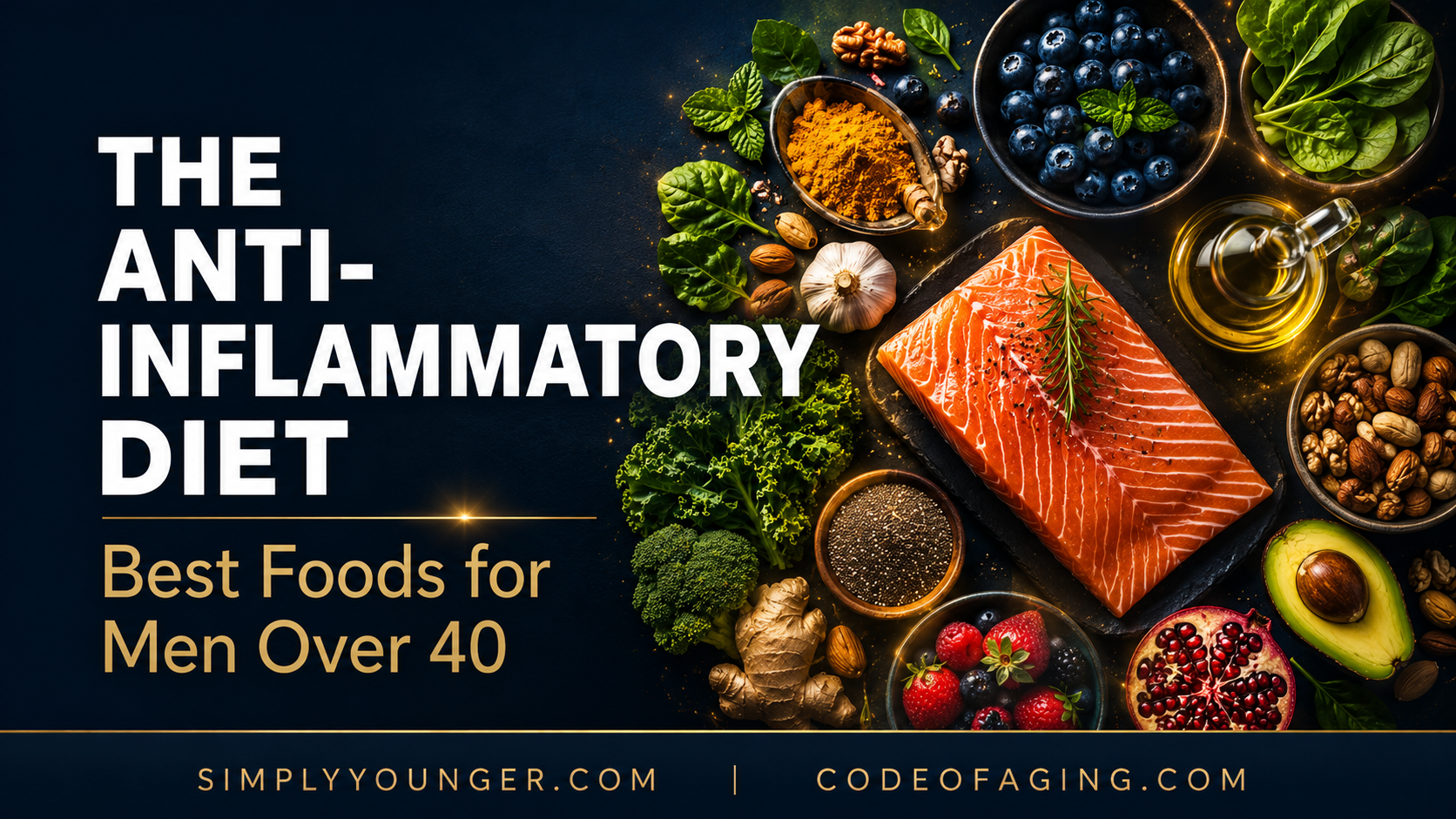
Chronic inflammation is one of the most important health concepts you’ve probably never had properly explained. Unlike the acute inflammation of a cut or a sprained ankle — which is helpful and temporary — chronic low-grade inflammation is a silent, persistent process that researchers now link to nearly every major age-related disease, from heart disease to diabetes to cognitive decline. The encouraging news is that what you eat is one of the most powerful tools you have to influence it.
According to Simply Younger’s analysis of the research on inflammation and ageing, the foods on your plate send signals to your body that either fuel or calm inflammation — and for men over 40, getting this right is one of the highest-leverage changes you can make. This guide covers the best anti-inflammatory foods and habits, why they work, and how to build them into your life.
- Chronic inflammation drives most age-related disease — it’s linked to heart disease, type 2 diabetes, cognitive decline, and accelerated ageing.
- Diet is one of the most powerful levers — foods either promote or calm inflammation through the signals they send the body.
- The best anti-inflammatory foods include fatty fish, colourful vegetables and fruits, olive oil, nuts, and spices like turmeric and ginger.
- Omega-3 fats are central — they are among the most studied and effective anti-inflammatory nutrients.
- Habits matter as much as foods — sleep, exercise, stress management, and avoiding ultra-processed foods all powerfully influence inflammation.
What Is Chronic Inflammation and Why Does It Matter?
Inflammation is the body’s natural defence response. Acute inflammation — redness, swelling, heat around an injury or infection — is helpful and resolves quickly. Chronic inflammation is different: a persistent, low-grade activation of the immune system that simmers in the background for months or years. It produces no obvious symptoms, which is exactly what makes it dangerous.
This persistent inflammation is now recognised as a central driver of ageing, so much so that researchers coined the term “inflammaging” to describe the chronic inflammation that accompanies getting older. It contributes to the development of cardiovascular disease, type 2 diabetes, certain cancers, neurodegenerative conditions, and the general decline associated with ageing. Reducing chronic inflammation is one of the most impactful things you can do for long-term health, which connects to the broader picture in our guide on healthspan versus lifespan.
What Are the Best Anti-Inflammatory Foods?
The most powerful anti-inflammatory foods share common features: they are nutrient-dense, rich in antioxidants and polyphenols, and minimally processed. Here are the standouts:
- Fatty fish: salmon, mackerel, sardines, and anchovies are rich in omega-3 fatty acids, among the most effective anti-inflammatory nutrients known.
- Colourful vegetables: leafy greens, broccoli, peppers, and cruciferous vegetables provide antioxidants and fibre that calm inflammation.
- Berries and colourful fruits: blueberries, cherries, and other deeply coloured fruits are packed with anti-inflammatory polyphenols.
- Extra virgin olive oil: contains oleocanthal, a compound with natural anti-inflammatory properties similar in mechanism to ibuprofen.
- Nuts and seeds: walnuts, almonds, flaxseed, and chia provide healthy fats and anti-inflammatory compounds.
- Spices: turmeric (with its active compound curcumin) and ginger have well-documented anti-inflammatory effects.
- Green tea: rich in catechins, antioxidants with anti-inflammatory properties.
The pattern that emerges is essentially a Mediterranean-style way of eating — consistently shown in research to be among the most anti-inflammatory dietary patterns.
Chronic inflammation accelerates biological ageing. Take the free Code of Aging quiz to understand your trajectory and where reducing inflammation could help most.
Why Are Omega-3 Fats So Important?
Omega-3 fatty acids — particularly EPA and DHA from fatty fish — deserve special attention because they are among the most studied and effective anti-inflammatory nutrients. They work by influencing the production of signalling molecules that resolve inflammation, and by improving the balance between omega-3 and omega-6 fats in the body.
The modern Western diet is heavily skewed toward omega-6 fats (from processed and fried foods and seed oils) and low in omega-3s, a ratio that promotes inflammation. Correcting this balance — by eating more fatty fish and reducing processed foods — is one of the most effective dietary anti-inflammatory strategies. For those who don’t eat much fish, a quality omega-3 supplement is one of the most evidence-backed supplements available. We cover this in depth in our guide on omega-3 for men over 40.
Which Foods Promote Inflammation?
Just as important as what you add is what you reduce. The most inflammatory foods in the modern diet are:
- Ultra-processed foods: packaged snacks, ready meals, and processed foods high in refined ingredients and additives.
- Refined sugar and refined carbohydrates: these spike blood sugar and promote inflammatory processes.
- Processed and cured meats: associated with increased inflammatory markers.
- Industrial seed oils and fried foods: high in omega-6 fats that, in excess, promote inflammation.
- Excess alcohol: heavy drinking increases inflammation throughout the body.
Reducing these is often as impactful as adding anti-inflammatory foods. The simplest principle: eat more whole foods, fewer packaged ones.
What Habits Beyond Diet Reduce Inflammation?
Diet is powerful, but inflammation is influenced by your whole lifestyle. Four habits matter enormously:
- Quality sleep: poor sleep directly raises inflammatory markers. Deep sleep is when the body does much of its anti-inflammatory repair work — see our guide on sleep and longevity.
- Regular exercise: moderate exercise has a powerful anti-inflammatory effect over time, though overtraining without recovery can do the opposite.
- Stress management: chronic stress and elevated cortisol promote inflammation. Managing stress is an anti-inflammatory practice.
- Healthy body composition: excess visceral fat is metabolically active and produces inflammatory signals, so maintaining a healthy body composition reduces the inflammatory load.
Supporting your body’s recovery and cellular health also plays a role. Many men over 40 incorporate drug-free wellness tools like LifeWave’s phototherapy patches into their routine to support overall vitality — you can explore these on my LifeWave Brand Partner page. And because protein supports muscle (which helps maintain healthy body composition), a complete amino acid supply through PerfectAmino can support this goal.
Frequently Asked Questions
What are the best anti-inflammatory foods?
The most effective anti-inflammatory foods are fatty fish (salmon, mackerel, sardines), colourful vegetables, berries, extra virgin olive oil, nuts and seeds, and spices like turmeric and ginger. Together these form a Mediterranean-style pattern repeatedly shown to be among the most anti-inflammatory ways of eating. The common theme is nutrient-dense, antioxidant-rich, minimally processed whole foods.
What foods cause inflammation?
The most inflammatory foods are ultra-processed foods, refined sugar and refined carbohydrates, processed and cured meats, industrial seed oils and fried foods, and excess alcohol. These promote inflammatory processes through blood sugar spikes, an unfavourable fat balance, and other mechanisms. Reducing them is often as impactful as adding anti-inflammatory foods.
Does turmeric really reduce inflammation?
Turmeric’s active compound, curcumin, has well-documented anti-inflammatory properties in research. However, curcumin is poorly absorbed on its own — it’s better absorbed with black pepper (piperine) and fat. While turmeric is a worthwhile addition to an anti-inflammatory diet, it works best as part of an overall pattern rather than as a standalone fix.
How long does it take to reduce inflammation through diet?
Some inflammatory markers can begin improving within weeks of consistent dietary change, while the full benefits of a sustained anti-inflammatory lifestyle build over months. Because inflammation is influenced by diet, sleep, exercise, stress, and body composition together, the best results come from addressing the whole picture consistently rather than expecting a single food to deliver rapid change.
Is inflammation always bad?
No — acute inflammation is essential and helpful. It’s the body’s defence and repair response to injury and infection, and it resolves quickly. The problem is chronic, low-grade inflammation that persists for months or years without resolving. This persistent inflammation is what’s linked to age-related disease. The goal isn’t to eliminate all inflammation but to reduce the chronic, unresolved kind.
Can supplements help with inflammation?
Some supplements have evidence for supporting a healthy inflammatory response, most notably omega-3 fatty acids (fish oil), which are among the best-studied. Others like curcumin and certain antioxidants may help. However, supplements work best alongside an anti-inflammatory diet and lifestyle, not as a replacement. Whole foods, sleep, exercise, and stress management remain the foundation.
Support your body’s vitality and recovery. Explore the LifeWave phototherapy patch range, designed to support your overall wellness, on my LifeWave Brand Partner page.
Related Reading
- Omega-3 for Men Over 40: The Anti-Inflammatory Supplement the Research Won’t Shut Up About
- Healthspan vs Lifespan: Why Living Longer Isn’t Enough
- Sleep and Longevity: Why Deep Sleep Is the Most Powerful Anti-Ageing Tool
Affiliate disclosure: This post contains affiliate links including LifeWave and PerfectAmino. I may earn a commission if you purchase through my links, at no additional cost to you. I only recommend products I personally use.
*These statements have not been evaluated by the Food and Drug Administration. These products are not intended to diagnose, treat, cure, or prevent any disease. Always consult a qualified healthcare provider before making changes to your health regimen.

Leave a Reply