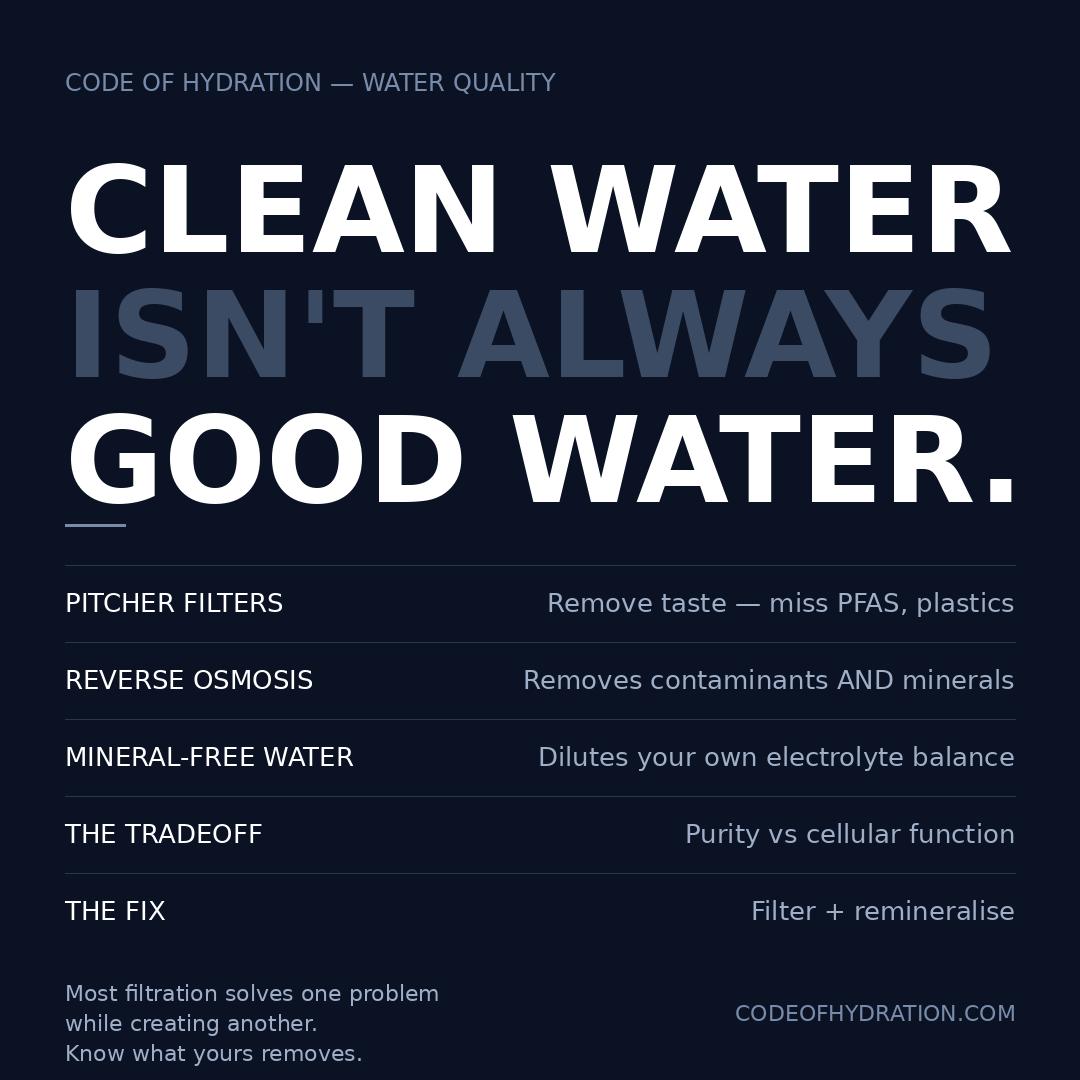
Filtering your water is a reasonable thing to do. The evidence on what’s in unfiltered tap water — PFAS, microplastics, pharmaceutical residues, disinfection byproducts — is concerning enough to justify it. But there’s a significant problem that almost nobody in the filtration conversation talks about, and it can leave you drinking water that’s clean in one sense and actively working against you in another.
What filtration removes that you actually wanted
Modern filtration is very good at removing things. The problem is it’s not selective. Along with contaminants, aggressive filtration — particularly reverse osmosis and distillation — also removes naturally occurring minerals that contribute to how your body absorbs and uses water: calcium, magnesium, potassium, bicarbonate, and trace elements.
Reverse osmosis water is exceptionally clean. It’s also nearly mineral-free. When you drink mineral-poor water in significant quantity, you can dilute the electrolyte concentration in your own body — pulling cellular hydration in the wrong direction. You’re solving for purity at the expense of function.
Why minerals matter for hydration
Water doesn’t just passively absorb into cells. It crosses cell membranes through a process governed by electrolytes — particularly sodium, potassium, and magnesium — that create osmotic gradients pulling water in the right direction. Without adequate minerals, water you drink can pass through your digestive system without ever properly entering the cells that need it.
This is why some people who drink large volumes of filtered water still feel chronically dehydrated. The water is clean. But it’s not doing what they need it to do.
Is your filtered water making things worse?
The free Code of Hydration quiz takes 3 minutes and includes your water source and filtration setup to give you a complete picture.
The fix: filter and remineralise
The answer isn’t to stop filtering. It’s to remineralise after filtering. Many reverse osmosis systems now offer a remineralisation cartridge as a final stage. If you don’t have an RO system, adding a small pinch of unrefined sea salt to filtered water replaces sodium and trace minerals at minimal cost. For magnesium specifically, supplementation is often more reliable than water sources alone.
The principle: filter for purity, then put back what you need for function. Clean water and effective hydration are different things.
Frequently Asked Questions
Does filtered water remove minerals?
It depends on the filtration type. Standard activated carbon filters (like most pitcher filters) remove chlorine, sediment, and some chemicals but leave minerals largely intact. Reverse osmosis removes the vast majority of everything, including beneficial minerals like calcium, magnesium, and potassium. Distillation removes virtually all minerals. If you’re using aggressive filtration, remineralisation is an important second step.
Can drinking too much filtered water cause mineral deficiency?
Drinking large volumes of mineral-poor filtered water (particularly RO or distilled) can dilute electrolyte concentrations in the body, impairing the osmotic gradients needed for cellular hydration. This doesn’t typically cause acute mineral deficiency in otherwise healthy people with a good diet, but it can meaningfully impair how efficiently water is absorbed at the cellular level, producing functional dehydration despite adequate fluid intake.
How do I remineralise reverse osmosis water?
Several practical options: add a remineralisation cartridge as a final stage in your RO system (this adds back calcium and magnesium automatically), add a pinch of unrefined sea salt per litre (replaces sodium and trace minerals), use a remineralisation drops product, or add a small amount of natural mineral water to a larger volume of RO water. Magnesium in particular is often better supplemented separately (200–400mg of magnesium glycinate or malate in the evening) since water sources rarely provide therapeutic amounts.
Is reverse osmosis water bad for you?
RO water is not inherently bad. It produces the cleanest water available for home use, removing PFAS, heavy metals, nitrates, fluoride, microplastics, and pharmaceuticals. The issue is only if it’s consumed in large volumes without mineral replacement. The WHO has noted that long-term consumption of low-mineral water may carry health implications, particularly around calcium and magnesium adequacy. RO water with remineralisation is among the best options available.
Why do I still feel dehydrated even with a water filter?
If you’re using reverse osmosis or another aggressive filter and not remineralising, the mineral-poor water may be passing through your system without effectively entering cells. Cellular hydration requires electrolytes to create the osmotic pressure that pulls water across cell membranes. Try adding a pinch of unrefined sea salt to your water for a week and monitor whether your hydration-related symptoms (fatigue, persistent thirst, brain fog) improve. For many people using RO systems, this single change produces noticeable results.
Is spring water better than filtered tap water?
High-quality spring water from a verified natural source is naturally mineral-rich and hasn’t been stripped by industrial treatment. From a cellular hydration perspective, well-mineralised spring water may be superior to filtered tap water that has lost its natural mineral content. However, spring water quality varies enormously by source, plastic-bottled spring water introduces microplastic contamination, and the cost at scale is prohibitive for most households. For most people, quality filtered water with remineralisation is the most practical high-performance option.
This article is for general informational purposes only and is not medical advice.

Leave a Reply