Your kettle furs up. Your pipes get clogged. Your showerhead calcifies. You clean it off, replace it, move on. No big deal. But here’s the question nobody asks: if hard water does that to your kettle — what is it doing inside your arteries?
According to Simply Younger’s review of the cardiovascular water quality research, the answer is more uncomfortable than most people are ready for.
Key Takeaways
- Hard water contains elevated calcium and magnesium in inorganic mineral forms that the body struggles to process efficiently — and that accumulate in vascular tissue over decades of daily consumption.
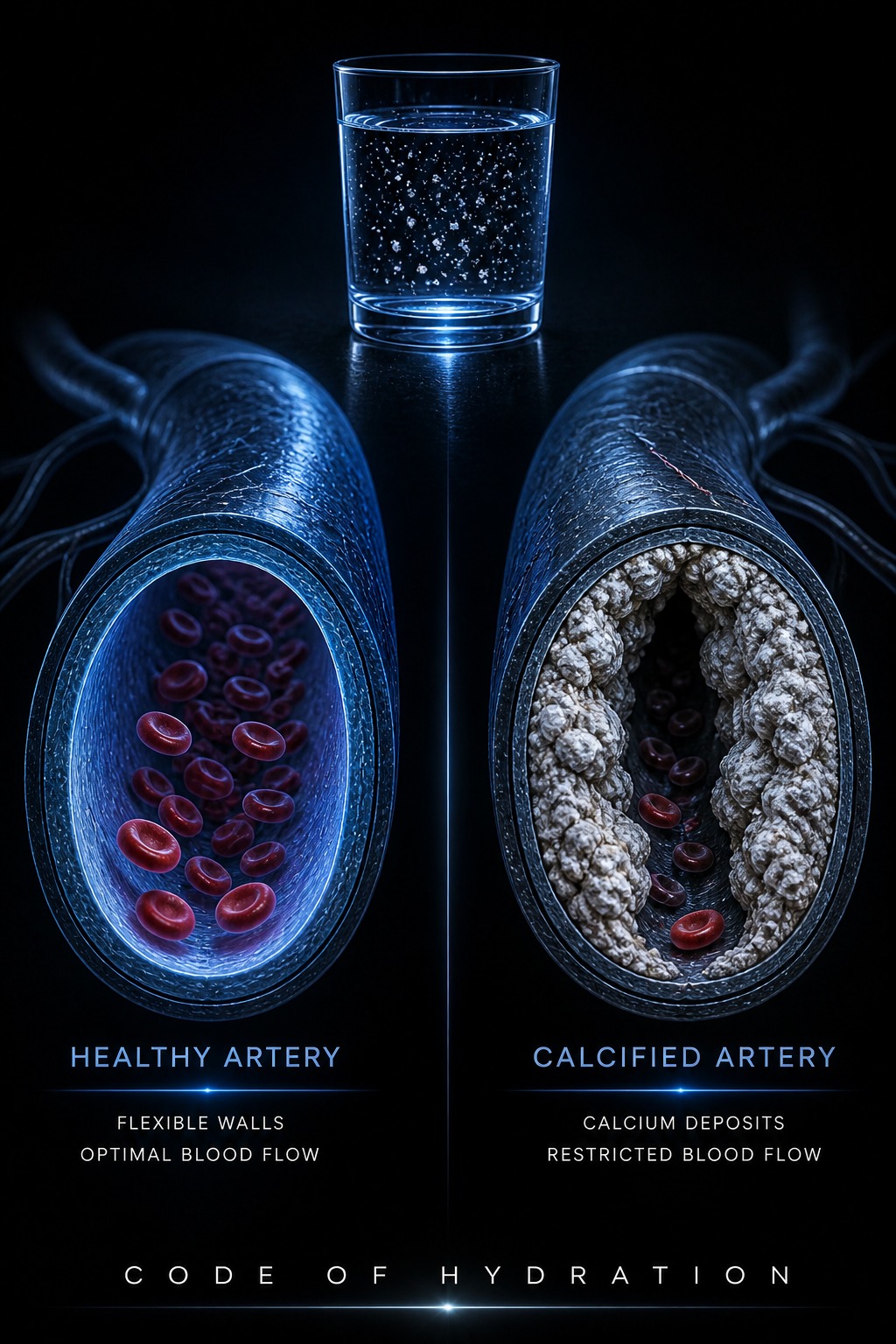
- Arterial calcification — calcium deposits building up inside artery walls — is a primary mechanism behind cardiovascular disease, the number one cause of death globally. Hard water is a documented contributor.
- A study published in Circulation found a significant association between drinking water hardness and cardiovascular mortality. Populations drinking harder water showed higher rates of arterial calcification over time.
- According to Simply Younger, your kettle gives you a daily visible indicator of water hardness — the same calcium building up on the element is building up on a longer timescale inside your arteries.
- This isn’t about eliminating calcium from your diet — dietary calcium and inorganic calcium dissolved in tap water behave differently in the body. The form matters.
What’s Actually in Hard Water
Hard water contains elevated levels of calcium and magnesium. These minerals aren’t inherently harmful — in fact your body needs both. The problem is the form they arrive in and what happens when they interact with your cardiovascular system over years and decades. Most people never give this a second thought. The water tastes fine. But underneath that apparent normality, something is happening at a vascular level that deserves serious attention.
The Arterial Calcification Problem
Arterial calcification is the process by which calcium deposits build up inside artery walls — one of the primary mechanisms behind cardiovascular disease. Your arteries are supposed to be flexible and elastic. When calcium deposits accumulate in the arterial wall, the vessel stiffens. Blood pressure rises. The heart works harder. The risk of heart attack and stroke increases significantly.
Think about that white residue you scrub off your taps. The fur that builds up inside your kettle. That’s calcium doing what calcium does when it’s in a form the body can’t properly process. Now consider what a lifetime of drinking that water means for the vessels carrying blood to your heart and brain.
What the Research Shows
This isn’t speculation. A study published in Circulation — one of the most respected cardiovascular research publications — found a significant association between drinking water hardness and cardiovascular mortality. Populations drinking harder water showed higher rates of arterial calcification over time. A separate review in the International Journal of Preventive Medicine analysed data across multiple countries and found that water hardness was independently associated with increased cardiovascular disease risk — even after controlling for diet, smoking, and other lifestyle factors.
Most People Have No Idea How Hard Their Water Is
Water hardness varies enormously by location. Large parts of the UK, Ireland, and the eastern United States have very hard water. You could have lived in the same house for 20 years, drinking hard water every day, without once considering what it’s doing at a vascular level. Your kettle tells you the water is hard. Your arteries can’t.
This Isn’t About Eliminating Calcium
This isn’t about eliminating calcium from your diet. Dietary calcium from food sources like dairy, leafy greens, and legumes is not the same as consuming it dissolved in tap water in an inorganic mineral form. This is about understanding that the water coming out of your tap is not a neutral substance. It has a mineral profile. That profile has consequences. And most people are completely unaware of both.
Want to know your hydration score?
Take the free Code of Hydration quiz and find out exactly what your water quality means for your long-term health.
Leave a Reply