Affiliate disclosure: This article contains affiliate links, including to PerfectAmino and Hume Health, and I may earn a commission if you buy through them at no extra cost to you. I’m also an authorised LifeWave Brand Partner. Full disclosure at the end.
A note before we start. Check with your GP before starting resistance training if you have a heart condition, uncontrolled blood pressure or a joint problem. This is general information, not medical advice.
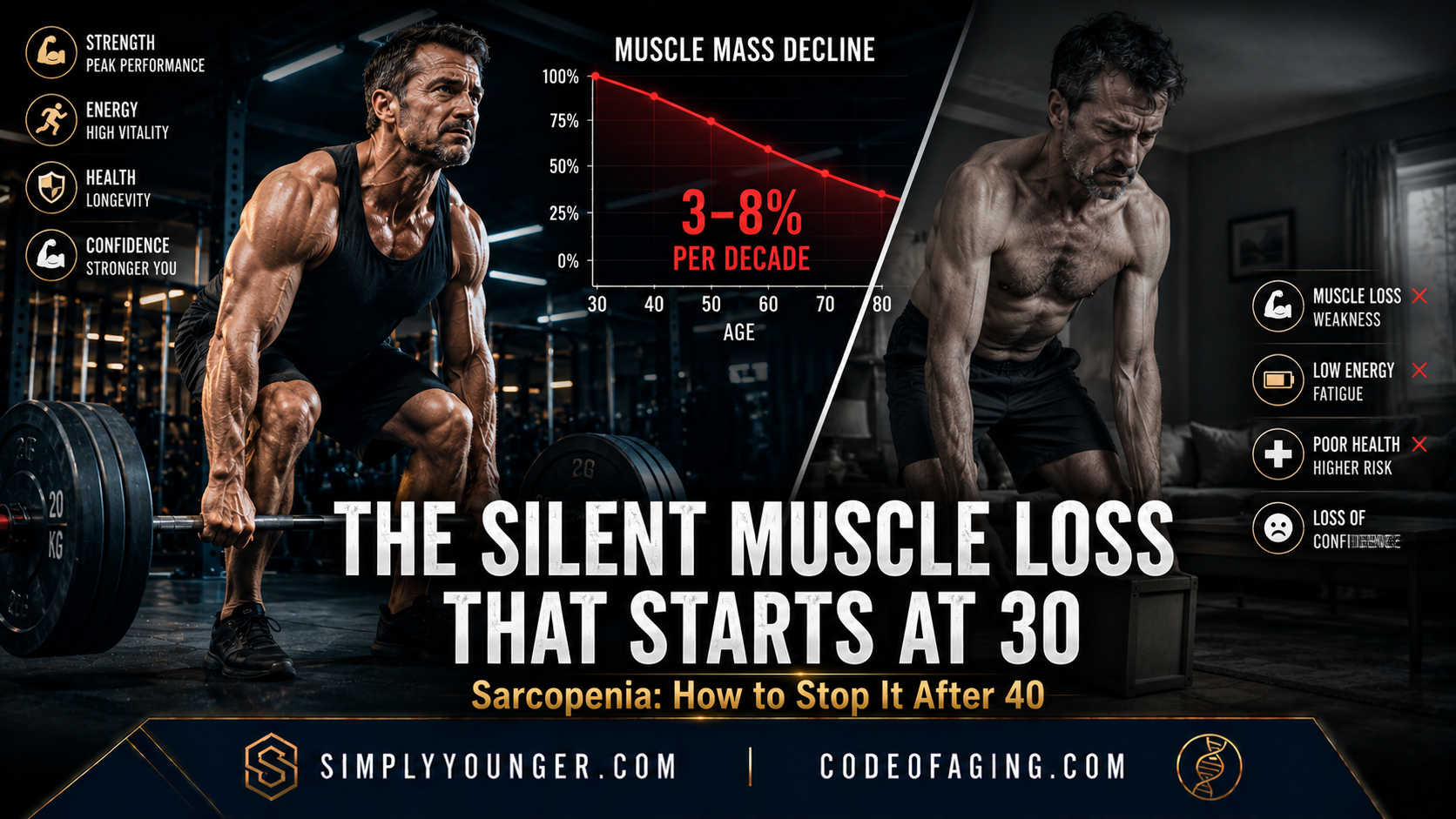
Sarcopenia is the age-related loss of muscle mass and strength. It starts quietly, speeds up later in life, and matters for much more than looks: muscle helps control blood sugar, protects against falls and supports independence. The good news is that it’s largely preventable.
Key takeaways
- Muscle mass peaks around 30 and declines gradually, faster after 60.
- Higher muscle mass and grip strength are linked to lower mortality.
- Resistance training is the most powerful intervention.
- Enough protein and creatine add to training’s effect.
- It’s never too late to start.
What it is
The European Working Group on Sarcopenia in Older People defines it as low muscle strength plus low muscle quantity or quality. Estimates of loss vary, but many sources cite roughly 3–8% of muscle mass per decade from the thirties, accelerating after 60.
Why it matters
A 2014 study in the American Journal of Medicine (Srikanthan and Karlamangla) found higher muscle mass index was associated with lower all-cause mortality in older adults. Grip strength is also a strong predictor of health outcomes. Muscle is the main site of glucose disposal after meals, so losing it raises the risk of insulin resistance.
Anabolic resistance
Older muscle responds less to the same protein and training, so men over 40 generally need a bit more protein per meal and consistent progressive training. See anabolic resistance after 40.
What works
Resistance training. Two to four sessions a week of progressive, compound training. I lift every second day with the RP Hypertrophy app. See build muscle after 40.
Protein. Around 1.2–1.6g/kg a day for most men over 40 who train, spread across meals. I also take 10 PerfectAmino tablets a day. See protein after 40.
Creatine. Meta-analyses show creatine plus resistance training increases lean mass and strength more than training alone in older adults. The standard dose is 3–5g a day; I take 10g. See creatine.
Tracking. Weight can stay the same while muscle falls. I scan monthly on a Hume Body Pod.
Get the Simply Younger daily email
One short email a day: the newest post, what I’m testing, and what’s actually working for men over 40.
Join free →Frequently asked questions
Can you reverse sarcopenia after 40?
Yes, to a large extent. People in their 60s, 70s and beyond gain strength and muscle with training.
Best exercises?
Squats or leg press, deadlift variations, presses, rows and pull-downs — progressed over time.
Is creatine good for older men?
The evidence alongside resistance training is good. Check with your GP if you have kidney problems.
Related reading
Build Muscle After 40 · Protein After 40 · Muscle Is the Organ of Longevity
Full disclosure. This article is general information, not medical advice. These statements have not been evaluated by the FDA. PerfectAmino and Hume Health links are affiliate links. As an authorised LifeWave Brand Partner I also have a financial interest in promoting LifeWave products.
Leave a Reply