Affiliate & partner disclosure: This article contains affiliate links, and I may earn a commission if you buy through them at no extra cost to you. As an authorised LifeWave Brand Partner, I have a financial interest in promoting LifeWave products. Testimonial/editorial given by a LifeWave brand partner with financial interest in promoting the product. Full disclosure at the end.
A note before we start. Everything below about exosomes, stem cell signalling, and extracellular vesicles is general science education — it is not about any product, and nothing here describes a treatment, cure, or fix for any condition. Where LifeWave X39 is mentioned, it is a non-transdermal, general-wellness phototherapy patch that gently stimulates the skin with light to support the body’s natural energy flow for strength and stamina. It is not a drug, contains no exosomes or stem cells, and is not a treatment for any disease. Always consult a qualified medical professional.
What are exosomes and why is everyone talking about them?
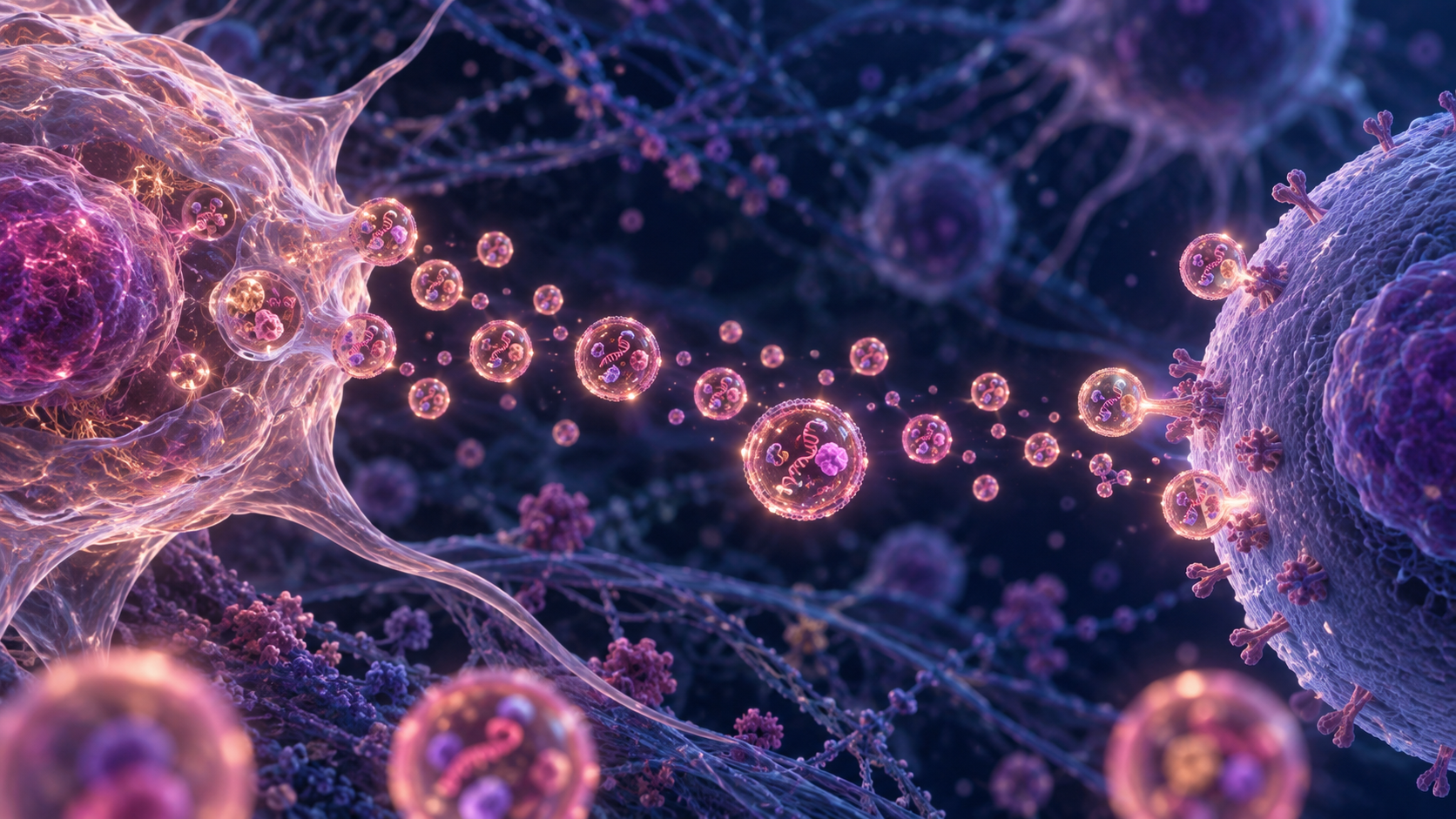
If stem cells are the body’s repair crew, exosomes are the text messages that crew sends before it arrives. Exosomes are tiny membrane-bound vesicles — roughly 30 to 150 nanometres across, far smaller than a single cell — released by virtually every cell type, with mesenchymal stem cells among the most studied producers. These packages carry proteins, lipids, mRNA, and microRNA from cell to cell, delivering instructions that influence inflammation, tissue repair, and immune function.
Exosomes moved into mainstream longevity conversations because of a shift in how researchers understand stem cell therapy. The original assumption was that transplanted stem cells worked by physically replacing damaged tissue. The current view is that much of the benefit seen in research comes from what stem cells secrete, and exosomes are a key delivery vehicle for those signals. This is called the paracrine effect.
I’m Dave, and I’m 50. Exosome research sits at the intersection of topics I write about a lot — stem cell science, inflammation, and how the body coordinates repair as it ages. This article explains what exosomes are, what the research shows, what clinics are selling, and what it means for a man over 40.
Key takeaways
- Exosomes are nanoscale vesicles released by cells to carry molecular cargo — proteins, lipids, RNA — that influences how other cells behave.
- Stem cell–derived exosomes carry anti-inflammatory and pro-repair signals in lab and animal research, and may explain much of the benefit once attributed to stem cells themselves.
- Research suggests exosome cargo changes with age, mirroring stem cell exhaustion.
- The clinic exosome market is largely unregulated — no exosome product is FDA-approved for any anti-ageing use.
- The lifestyle basics that support stem cell health — exercise, sleep, inflammation management — are the sensible place to start.
How do exosomes work inside the body?
Every cell communicates with its neighbours and with distant tissues, and exosomes are one of the long-range systems. Released vesicles can enter the bloodstream and reach other tissues, delivering cargo that changes how recipient cells behave.
The cargo is specific. A stem cell–derived exosome might carry microRNAs that dampen inflammatory gene expression, growth factors that stimulate fibroblast activity, or proteins that help stressed cells survive. The recipient cell absorbs the exosome and responds.
This is relevant to ageing because exosomes from young and old cells appear to differ. Animal and lab research has reported that exosomes from young mesenchymal stem cells can improve markers in aged tissue, while exosomes from old cells may carry more pro-inflammatory signals. The quality of the message seems to depend on the health of the sender.
What happens to exosome signalling as you age?
The pattern that governs stem cell exhaustion appears to apply to exosomes too. As stem cell function declines with age, research suggests exosome cargo shifts toward more inflammatory microRNAs and fewer regenerative signals, reflecting the inflamed environment the cells are working in.
That can become a feedback loop: aged cells send weaker repair signals, tissues degrade further, and the more inflamed environment stresses stem cells further. It’s one proposed explanation for why ageing seems to accelerate after midlife.
A related piece of editorial science, with no product link: GHK-Cu, the copper peptide that declines with age, is another signalling molecule studied for its effects on tissue repair. It isn’t an exosome, but it sits in the same broad area of intercellular communication.
What about exosome therapies at clinics?
Clinics now offer intravenous infusions, topical products and injections of exosome preparations for skin, joints, hair and general anti-ageing, often at prices running into thousands. It’s important to understand where the evidence stands.
What the research supports: Lab and animal studies have shown that stem cell–derived exosomes can reduce inflammation, support tissue repair and modulate immune responses. Early-phase human trials are underway for specific conditions. The science is promising.
What it does not yet support: No exosome product is FDA-approved for any anti-ageing use. The gap between carefully characterised research exosomes and commercial clinic products is large. The FDA has publicly warned consumers about unapproved exosome products, citing risks including contamination and unverified claims. Patients often can’t tell what they’re getting.
The sensible position: exosome science may well produce validated therapies. Today, the safest approach is to support your own stem cells through the basics. If you’re considering a clinic treatment, ask for characterisation data and sourcing, and get an independent doctor’s opinion.
Get the Simply Younger daily email
One short email a day: the newest post, what I’m testing, and what’s actually working for men over 40.
Join free →How can you support healthy cell signalling naturally?
Since exosome quality appears to reflect cell health, the basics that support stem cells are the logical starting point:
Exercise raises levels of circulating extracellular vesicles during and after a session in studies, and regular training supports the tissues that produce them.
Fasting triggers autophagy, the cellular clean-up process that helps keep stem cells functional. Check with your doctor before longer fasts.
Sleep provides the hormonal environment for tissue maintenance, including growth hormone released during deep sleep.
Inflammation management through cold exposure, omega-3s, good nutrition and stress reduction keeps the stem cell niche healthier.
Enough protein gives the body the raw materials for repair. I hit my protein with food plus ten PerfectAmino tablets a day.
My own week at 50 is lifting every second day, 10,000+ steps a day, cold plunge, sauna and steam most days, 10g of creatine, omega-3 and vitamin D daily, and a monthly scan on the Hume Body Pod. Those are the inputs I can control.
Where does X39 fit? Separately from everything above, I wear an X39 patch daily as a general-wellness habit. LifeWave X39 is a non-transdermal, general-wellness phototherapy patch that gently stimulates the skin with light to support the body’s natural energy flow for strength and stamina. It contains no drugs, no exosomes and no stem cells, and is not a treatment for any condition discussed above. The science in this article is educational and is not a claim about the patch.
As an authorised LifeWave Brand Partner I have a financial interest in promoting it.
Shop X39 at my LifeWave store →
Frequently asked questions
What are exosomes in simple terms?
Tiny packages released by cells to carry molecular instructions (proteins, RNA, lipids) to other cells. They’re one way stem cells communicate repair and anti-inflammatory signals.
Are exosomes the same as stem cells?
No. Exosomes are produced by stem cells and other cells but are not cells themselves.
Do exosomes change with age?
Research suggests the cargo of exosomes from aged cells shifts toward more inflammatory signals, though human data is still limited.
Are exosome therapies FDA approved?
No exosome product is FDA-approved for any anti-ageing use, and the FDA has warned consumers about unapproved products.
How can I support healthy cell signalling naturally?
Through the basics: regular exercise, quality sleep, inflammation management, and enough protein.
Does X39 contain exosomes?
No. X39 is a non-transdermal, general-wellness phototherapy patch that gently stimulates the skin with light to support the body’s natural energy flow for strength and stamina. It is not a drug or a treatment for any condition.
Related reading
What Are Stem Cells? · Mesenchymal Stem Cells After 40 · Stem Cell Exhaustion After 50 · Stem Cell Therapy vs Natural Support · Autophagy and Stem Cells · Stem Cells and Inflammation
Full disclosure. This article is general wellness education and is not medical advice, diagnosis, or treatment. LifeWave X39 is a non-transdermal, general-wellness phototherapy patch and is not intended to diagnose, treat, cure, or prevent any disease. As an authorised LifeWave Brand Partner, I have a financial interest in promoting LifeWave products. Links to PerfectAmino and Hume Health are affiliate links. Always consult a qualified professional about your individual health.
Leave a Reply