Affiliate & partner disclosure: This article contains links to products from which Simply Younger may earn a commission. As an authorised LifeWave Brand Partner, the author has a financial interest in promoting LifeWave products. See full disclosure below.
A note before we start. Everything below about peptides is general science education — it is not about any product, and nothing here describes a treatment, cure, or fix for any condition. Where LifeWave X39 is mentioned, it is a non-transdermal, general-wellness phototherapy patch that gently stimulates the skin with light to support the body’s natural energy flow for strength and stamina. It is not a drug, is not a treatment for any disease, and none of the science in this article is a claim about what the patch does.
Peptides are having a moment. Search volume for “peptides for anti-aging” has surged dramatically in 2026, driven by a collision of longevity science, biohacker culture, TikTok dermatology, and the GLP-1 revolution putting the whole peptide category in the spotlight. The problem is that most of what’s circulating online mixes legitimate research with supplement marketing and grey-market injectable culture in ways that make it nearly impossible for a regular person to figure out what’s real. This article is the filter. Here’s what the science actually supports, what’s promising but early, what’s hype, and how to think about peptides as a man over 40 who wants evidence, not enthusiasm.
Key takeaways
- Peptides are short chains of amino acids that act as signalling molecules in the body — many decline with age, contributing to reduced repair capacity.
- GHK-Cu is the most broadly researched anti-aging peptide, modulating ~4,000 genes and showing effects on skin, wound healing, and hair follicle biology.
- BPC-157, Epithalon, and thymosin peptides show interesting preclinical data but have limited or no human clinical trial evidence for anti-aging specifically.
- No peptide is FDA-approved as an anti-aging treatment — the regulatory landscape is important context for evaluating claims.
- The peptide conversation sits alongside the broader stem cell and epigenetic science of biological ageing.
What are peptides and why do they matter for ageing?
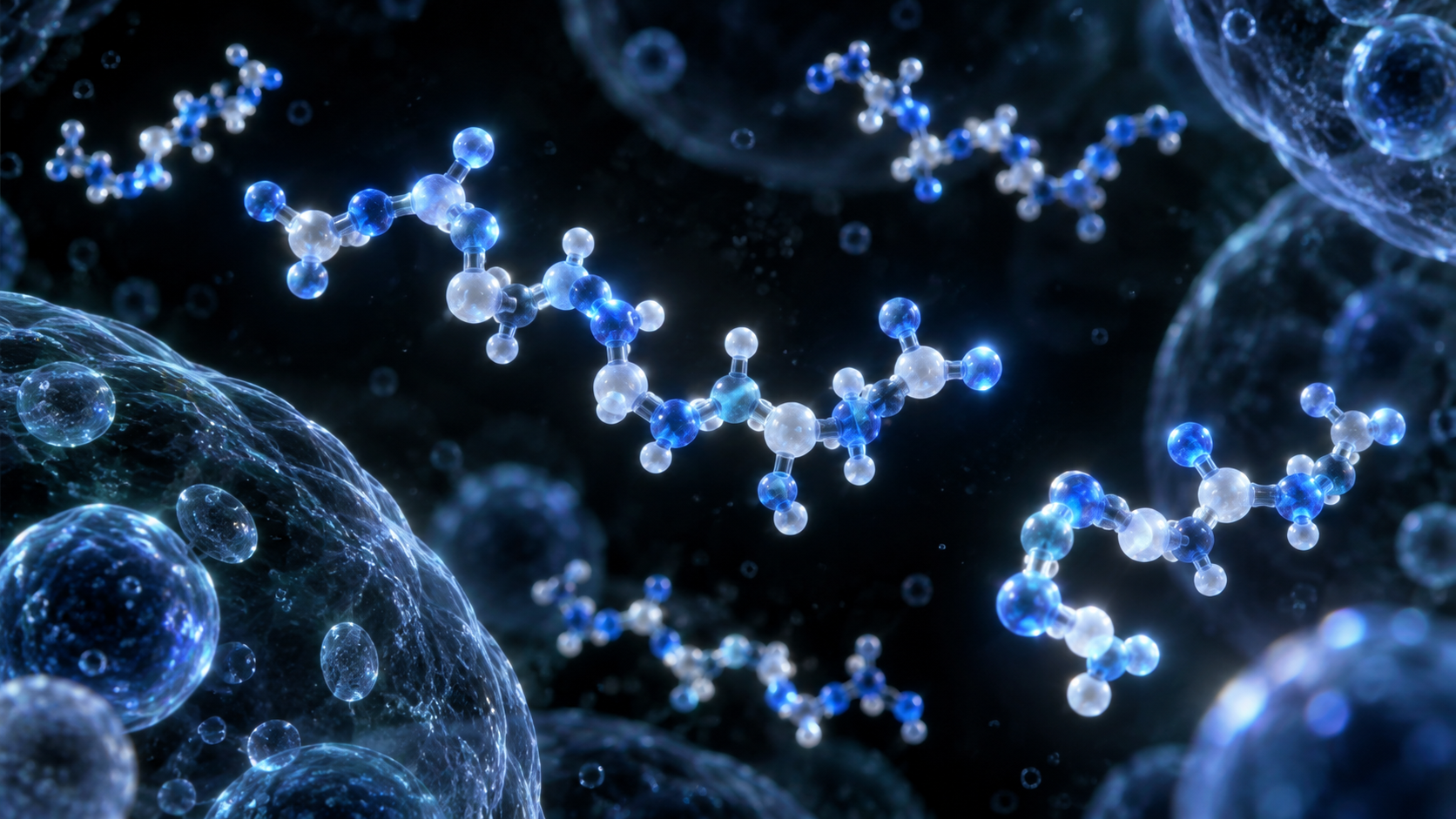
A peptide is simply a short chain of amino acids — typically fewer than 50 — linked by peptide bonds. Your body produces thousands of them, and they function primarily as signalling molecules: hormones, neurotransmitters, growth factors, and immune modulators. The reason peptides keep appearing in longevity conversations is that many of these endogenous signalling molecules decline with age, and their decline correlates with measurable reductions in tissue repair, immune function, skin quality, and regenerative capacity.
The therapeutic logic is straightforward: if the body produces less of a repair-related peptide as it ages, supplementing that peptide might support the repair systems it was originally serving. The complication is that very few peptides have been through the rigorous clinical trial process required to validate that logic in humans. Most of the excitement is built on animal models, in vitro studies, and small pilot trials — which is meaningful science, but not the same as proven medicine.
Which peptides have the strongest anti-aging evidence?
GHK-Cu (Copper Tripeptide-1) sits at the top of the evidence pyramid for anti-aging peptides. It’s naturally occurring, declining roughly 60% between ages 20 and 60, and has the broadest documented effect profile of any peptide studied for ageing. The headline finding: GHK-Cu modulates the expression of approximately 4,000 human genes — about 6% of the genome — shifting patterns in directions associated with younger tissue function. Specific documented effects include: stimulating collagen synthesis (outperforming Matrixyl in head-to-head studies), promoting wound healing and tissue remodelling, reducing inflammatory markers, supporting hair follicle health, and influencing the tissue environment that stem cells depend on. Topical GHK-Cu products are available as cosmetics; injectable formulations are investigational. Search interest is up over 1,000% year-over-year in 2026.
BPC-157 (Body Protection Compound-157) is a synthetic peptide derived from a protein found in gastric juice. The preclinical data is extensive — hundreds of animal studies showing accelerated healing of tendons, ligaments, muscles, gut lining, and bone. The mechanism appears to involve angiogenesis (new blood vessel formation), growth factor modulation, and anti-inflammatory effects. The gap: published human clinical trials are scarce. A 2024 Phase II trial for ulcerative colitis showed some positive signals, but the broader anti-aging and musculoskeletal healing claims rest almost entirely on animal data. BPC-157 is not FDA-approved, and in 2023 the FDA issued warnings about its sale as a research chemical marketed for human use.
Epithalon (Epitalon) is a synthetic tetrapeptide based on a natural pineal gland peptide called epithalamin. The theoretical mechanism is telomerase activation — stimulating the enzyme that maintains telomere length, the protective caps on chromosomes that shorten with each cell division. Animal studies (primarily from Russian researcher Vladimir Khavinson’s laboratory) have shown lifespan extension in mice and rats. Human data is limited to small, older studies from Khavinson’s group showing some immune function improvements in elderly subjects. The independent replication of these findings by Western research groups is limited, which is a meaningful caveat. Epithalon is not FDA-approved and is available primarily through grey-market peptide suppliers.
Thymosin Beta-4 (TB-500) is involved in tissue repair, cell migration, and anti-inflammatory signalling. Preclinical evidence shows activity in wound healing, cardiac repair, and neurological protection. Clinical trials have been conducted in cardiac contexts (post-heart attack recovery) with mixed results. Its use as an anti-aging peptide is based primarily on extrapolation from these repair mechanisms rather than direct anti-aging trial data.
Thymalin / Thymulin are thymic peptides involved in immune regulation. The thymus gland shrinks dramatically with age (thymic involution), and this is a major driver of immunosenescence — the age-related decline in immune function that contributes to everything from increased infection susceptibility to reduced clearance of senescent (zombie) cells. Supplementation with thymic peptides has shown immune parameter improvements in some studies, but the evidence base is thin by pharmaceutical standards.
How do anti-aging peptides connect to stem cell biology?
The connection runs through the tissue environment. Stem cells don’t operate in isolation — they respond to signals from their niche microenvironment, and many of those signals are peptides. Growth factors, cytokines, and chemokines that direct stem cell activation, proliferation, and differentiation are all peptide-based. When the body’s production of these signalling molecules declines with age, the instructions that stem cells receive become weaker, slower, and less precise.
GHK-Cu’s influence on stem cell biology is the most directly documented: its effects on inflammation, extracellular matrix quality, and collagen remodelling all contribute to maintaining the stem cell niche conditions that repair cells need. BPC-157’s angiogenic effects (promoting blood vessel formation) address another aspect of niche health — blood supply to the niche determines oxygen and nutrient delivery to resident stem cells. The broader pattern across all peptide research is that age-related decline isn’t about one missing molecule; it’s about a coordinated degradation of the signalling ecosystem, and peptides are components of that ecosystem.
Get the Simply Younger longevity briefings
Short, no-nonsense breakdowns of the science of ageing well after 40 — straight to your inbox.
Join free →What should you actually be cautious about with peptides?
Several things. Regulatory status. No peptide is FDA-approved as an anti-aging treatment. Topical GHK-Cu products are regulated as cosmetics, not drugs. Injectable peptides sold as “research chemicals” occupy a legal grey area — they’re not approved for human use, their purity is unverified by regulatory bodies, and their sale for self-administration is increasingly under FDA scrutiny. Source quality. The peptide market is flooded with products of unknown purity and potency. Without third-party testing from accredited laboratories, you don’t know what you’re getting. Extrapolation. Animal studies don’t automatically translate to humans. Dosing, delivery, metabolism, and side-effect profiles can differ dramatically between species. Stacking risks. The biohacker practice of combining multiple peptides simultaneously has essentially no safety data behind it — the interactions are unknown. Opportunity cost. Spending heavily on grey-market peptides while neglecting the evidence-based fundamentals — training, sleep, nutrition, stress management — is the wrong order of operations.
The honest position in 2026 is that peptide science is genuinely exciting, GHK-Cu has the broadest and most translatable evidence base, and the field will look very different in five years as more clinical trials complete. But right now, the foundation of any anti-aging approach is still the boring, daily, evidence-based inputs that support every layer of your body’s repair and maintenance systems.
Where X39 fits — and where it doesn’t. LifeWave X39 is a non-transdermal, general-wellness phototherapy patch that gently stimulates the skin with light to support the body’s natural energy flow for strength and stamina. It contains no drugs, no peptides, and is not a treatment for ageing or any condition discussed above. The science in this article is educational and is not a claim about the patch.
As an authorised LifeWave Brand Partner I have a financial interest in promoting it. You can explore X39 and the wider wellness range at my store: lifewave.com/dcp.
Want to add X39 to your own routine? You can order it directly from my LifeWave store.
See your Biological Age markers →
Or shop X39 at my LifeWave store →
Frequently asked questions
What are the best peptides for anti-aging?
GHK-Cu has the broadest evidence base, with documented effects on ~4,000 genes, collagen synthesis, wound healing, and tissue remodelling. BPC-157, Epithalon, and thymic peptides show promising preclinical data but have limited human clinical trial evidence for anti-aging specifically.
Are anti-aging peptides safe?
Topical GHK-Cu has a strong safety profile in clinical studies, with mild irritation as the most common side effect. Injectable peptides sold as research chemicals have not undergone the rigorous safety testing required for pharmaceutical approval, and their purity is unverified.
Is GHK-Cu the best anti-aging peptide?
By volume of published research and breadth of documented effects, GHK-Cu leads the field. It modulates more genes than any other studied peptide and has the most translatable evidence from lab to skin-level outcomes. However, no peptide has FDA approval for anti-aging.
What is the difference between peptides and proteins?
Peptides are short amino acid chains (typically under 50 amino acids); proteins are longer chains that fold into complex 3D structures. Many peptides act as signalling molecules — hormones, growth factors, immune modulators — while proteins serve structural and enzymatic roles.
Can you take peptides orally?
Most peptides are broken down by digestive enzymes before reaching the bloodstream, which is why topical and injectable routes are more common in research. Some peptides (like BPC-157) have been studied orally with reported gut-specific effects, but systemic delivery via oral route is generally poor.
What is LifeWave X39?
It’s a non-transdermal, general-wellness phototherapy patch that gently stimulates the skin with light to support the body’s natural energy flow for strength and stamina. It is not a drug or a treatment for any condition.
Related reading
GHK-Cu Explained · GHK-Cu and Hair Loss · GHK-Cu and Stem Cells · Epigenetics and Aging · Zombie Cells Explained · The Hallmarks of Ageing
Full disclosure. This article is general wellness education and is not medical advice, diagnosis, or treatment. LifeWave X39 is a non-transdermal, general-wellness phototherapy patch and is not intended to diagnose, treat, cure, or prevent any disease. As an authorised LifeWave Brand Partner, the author has a financial interest in promoting LifeWave products. Always consult a qualified professional about your individual health.
Leave a Reply