Affiliate & partner disclosure: This article contains links to products from which Simply Younger may earn a commission. As an authorised LifeWave Brand Partner, the author has a financial interest in promoting LifeWave products. See full disclosure below.
A note before we start. This article is general science education about sleep. It is not medical advice — persistent poor sleep or suspected sleep disorders should be discussed with a doctor. Nothing here is a claim about any product. Where LifeWave X39 is mentioned, it is a non-transdermal, general-wellness phototherapy patch that gently stimulates the skin with light to support the body’s natural energy flow for strength and stamina. It is not a drug or a treatment for any condition.
How can eight hours leave you feeling like four?
You did everything right — in bed by eleven, up at seven, a full eight hours. And you still feel like you’ve been hit by a truck. The number on the clock is only half the story. Sleep isn’t a single flat state; it’s a structured cycle, and it’s entirely possible to spend eight hours in bed while getting far too little of the specific stage that actually restores you.
Key takeaways
- Sleep quality matters as much as sleep quantity.
- Sleep moves through stages, including light, deep, and REM.
- Deep sleep is when much physical restoration happens.
- Deep sleep tends to decline with age.
- Alcohol, late screens, and heat all fragment sleep quality.
- Fixing mornings and light exposure improves nights.
What is “sleep architecture”?
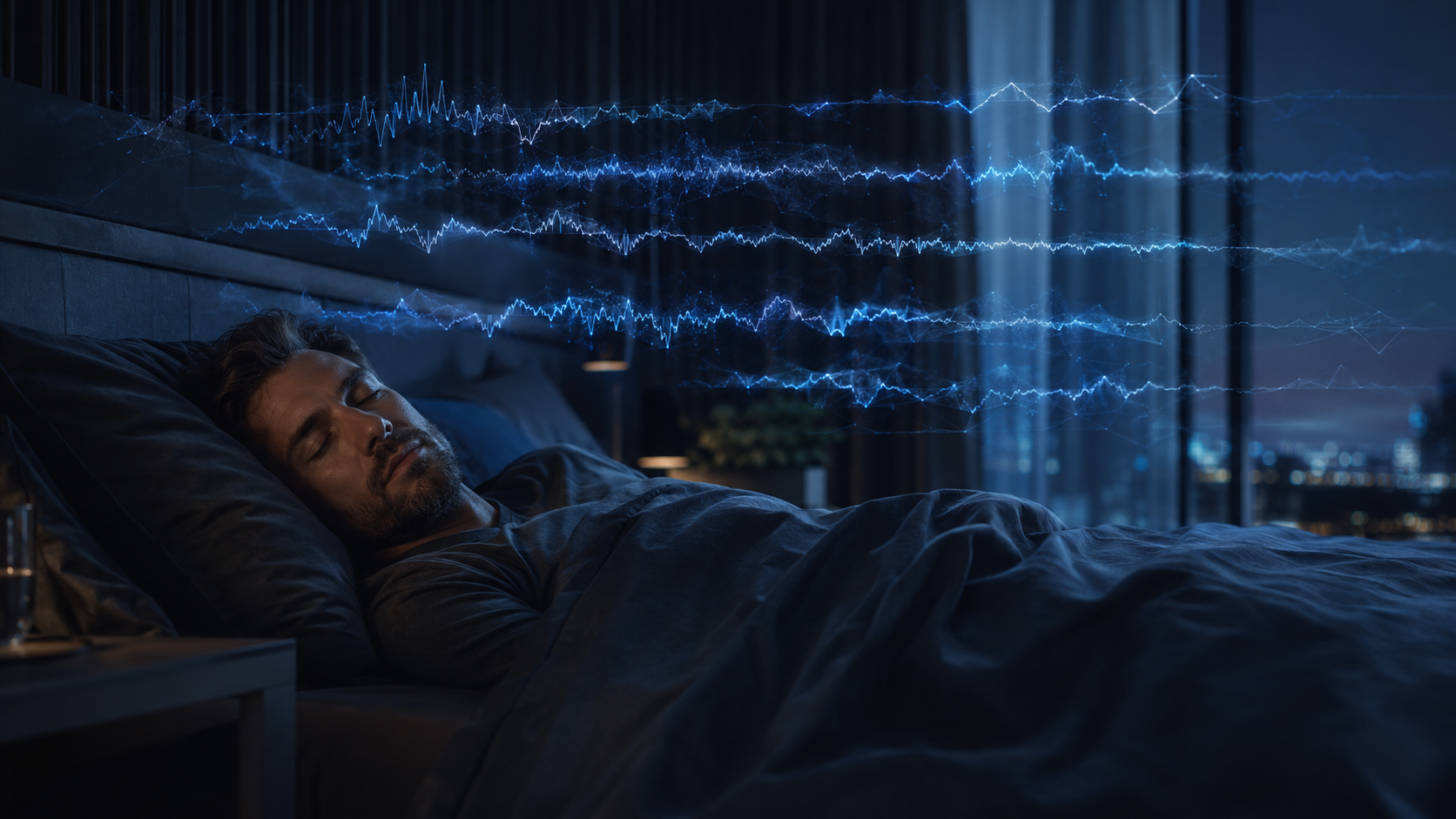
It’s the pattern of stages your brain cycles through each night. You drift through light sleep, drop into deep (slow-wave) sleep, and rise into REM, repeating that cycle several times. Deep sleep, concentrated in the earlier part of the night, is when a lot of physical repair signalling peaks. REM, weighted toward the morning hours, is tied to memory and mood. A night with plenty of hours but shallow, fragmented architecture leaves you unrestored.
Why does deep sleep shrink with age?
Deep sleep is one of the clearest sleep changes across the lifespan — the amount of slow-wave sleep men get tends to fall from young adulthood onward. On top of that natural decline, modern habits chip away at it: alcohol suppresses deep and REM sleep, late-night screens and stress delay it, and a too-warm bedroom fragments it. The upshot is a double hit — less capacity for deep sleep, and more things actively degrading it.
Want to see how your sleep and recovery markers line up with your age? Start with a short assessment.
Get the Simply Younger longevity briefings
Short, no-nonsense breakdowns of the science of ageing well after 40 — straight to your inbox.
Join free →How do you actually get more deep sleep?
Most of the wins come from consistency and environment. Keep a steady sleep and wake time, even at weekends. Get bright light in the morning and dim things down at night to anchor your clock. Keep the bedroom cool and dark. Cut alcohol and heavy meals close to bed, and get your last caffeine well before midday. And if you wake unrefreshed no matter what you do — or you snore heavily — get checked for sleep issues, because that’s downstream of everything else, including your afternoon energy. Chasing it with more of everything else won’t work if the foundation is broken.
Where X39 fits — and where it doesn’t. The sleep science above is general education. LifeWave X39 is a non-transdermal, general-wellness phototherapy patch that gently stimulates the skin with light to support the body’s natural energy flow for strength and stamina. It contains no drug and is not a treatment for sleep problems or any condition.
As an authorised LifeWave Brand Partner I have a financial interest in promoting it. You can explore X39 and the wider wellness range at my store: lifewave.com/dcp.
Get an objective read on your recovery before you overhaul anything — take the quiz.
See your Biological Age markers →
Frequently asked questions
Why do I wake up tired even after 8 hours?
Sleep quality matters as much as quantity. Eight hours of fragmented or shallow sleep with too little deep sleep can leave you feeling unrestored.
What is deep sleep and why does it matter?
Deep, slow-wave sleep is the stage when much physical restoration and repair signalling occurs, which is why too little of it leaves you feeling worn out.
Does deep sleep decrease with age?
Yes. The amount of deep sleep tends to decline from young adulthood onward, which is one reason sleep can feel less restorative over time.
Does alcohol affect sleep quality?
Alcohol can help you fall asleep but tends to suppress deep and REM sleep later in the night, reducing overall sleep quality.
How can I improve deep sleep naturally?
Consistent sleep and wake times, morning light, a cool dark room, and limiting alcohol and late caffeine all tend to support better sleep quality.
What is LifeWave X39?
It’s a non-transdermal, general-wellness phototherapy patch that gently stimulates the skin with light to support the body’s natural energy flow for strength and stamina. It is not a drug or a treatment for any condition.
Full disclosure. This article is general wellness education and is not medical advice, diagnosis, or treatment. LifeWave X39 is a non-transdermal, general-wellness phototherapy patch and is not intended to diagnose, treat, cure, or prevent any disease. As an authorised LifeWave Brand Partner, the author has a financial interest in promoting LifeWave products. Always consult a qualified professional about your individual health.
Leave a Reply