Affiliate & partner disclosure: This article contains links to products from which Simply Younger may earn a commission. As an authorised LifeWave Brand Partner, the author has a financial interest in promoting LifeWave products. See full disclosure below.
A note before we start. This article is general science education about how light interacts with skin. It is not medical advice and not a claim about any product. Where LifeWave X39 is mentioned, it is a non-transdermal, general-wellness phototherapy patch that gently stimulates the skin with light to support the body’s natural energy flow for strength and stamina. It is not a drug or a treatment for any condition.
What if a lot of light never reaches your eyes at all?
We think of light as the stuff we can see — the visible rainbow from red to violet. But that band is a thin slice of a much wider spectrum. Just beyond red sits near-infrared: invisible to your eyes, yet very much interacting with your body. Every warm object, including you, radiates in this range. Your skin is, in a real sense, constantly bathed in light you’ll never see.
Key takeaways
- Near-infrared light is invisible but part of the natural spectrum.
- It penetrates skin more deeply than most visible light.
- Photobiology is the science of how cells respond to specific wavelengths.
- Different wavelengths interact with tissue in different ways.
- The field is active and evolving, not fringe.
- Understanding the spectrum reframes what “light exposure” means.
Why does near-infrared reach deeper than visible light?
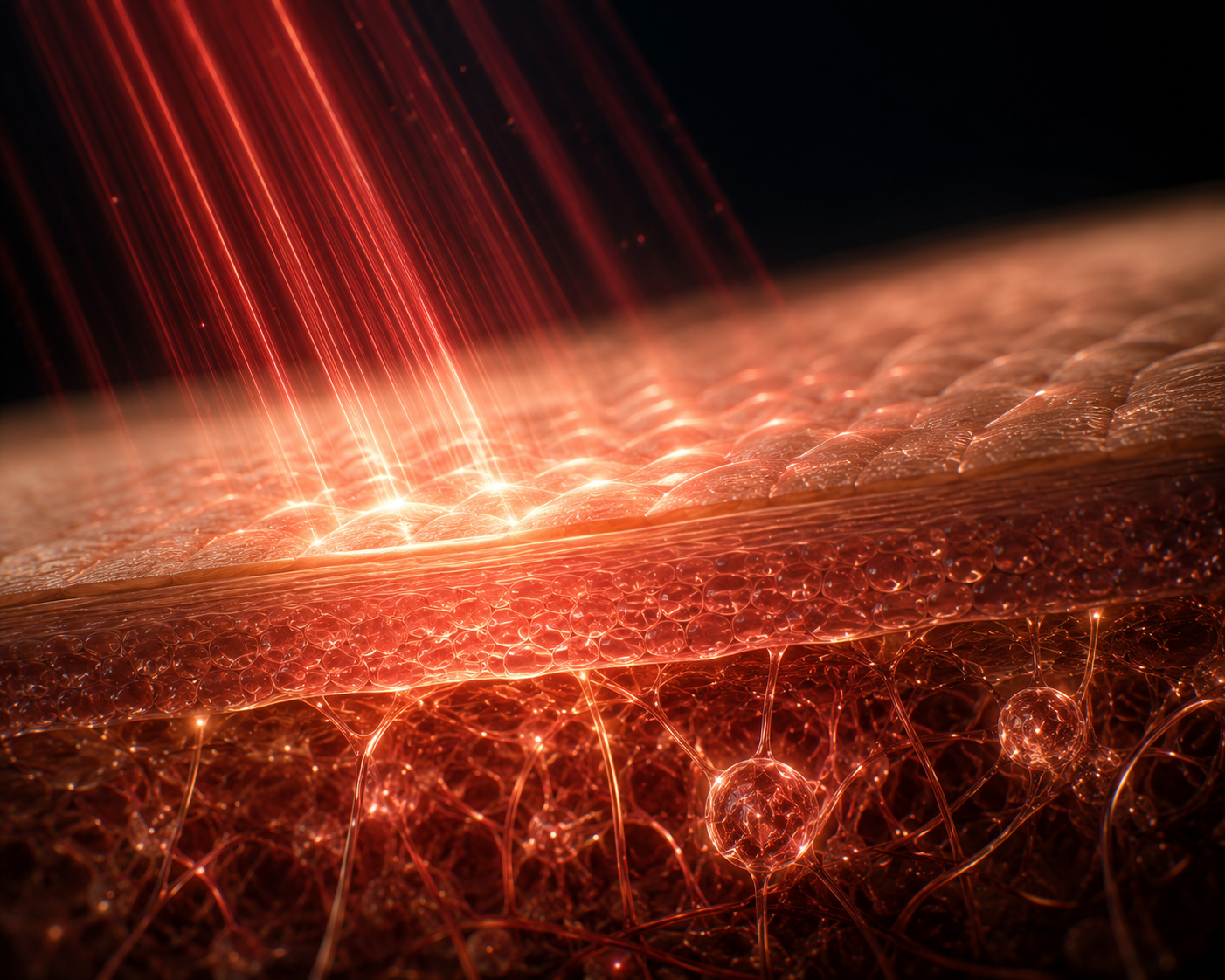
How far light travels into tissue depends heavily on its wavelength. Shorter wavelengths tend to scatter and get absorbed near the surface, while longer wavelengths in the red and near-infrared range can penetrate somewhat further before being absorbed. That’s why a bright torch held to your palm glows red on the other side — the red and near-infrared components make it through, and the rest doesn’t. This penetration is exactly why researchers find these wavelengths interesting.
What does the science say cells do with it?
This is the field of photobiology, and it’s genuinely active. Researchers study how specific wavelengths may influence cellular processes, including how the cell’s energy machinery responds to light. It’s an evolving area with real studies and real open questions — not something to overhype, but not fringe either. The honest framing is: light and cells interact in ways science is still mapping.
Curious where your own cellular markers sit? A short assessment is a solid starting point.
Get the Simply Younger longevity briefings
Short, no-nonsense breakdowns of the science of ageing well after 40 — straight to your inbox.
Join free →How does this change how you think about light?
Most men optimise nutrition and training obsessively but never think about their light environment. Yet we evolved outdoors, awash in a full spectrum including plenty of red and near-infrared from the sun, and now spend our days under narrow-spectrum indoor lighting behind glass that filters much of it out. Getting outside daily isn’t just about vitamin D — it’s about a fuller light diet. It’s the same logic behind why a light-based patch is an optical device rather than a chemical one, and why your skin can show the effects of what it’s exposed to.
Where X39 fits — and where it doesn’t. The photobiology science above is general education. LifeWave X39 is a non-transdermal, general-wellness phototherapy patch that gently stimulates the skin with light to support the body’s natural energy flow for strength and stamina. It contains no drug and is not a treatment for any condition, and nothing here is a claim about how the patch works beyond that general-wellness description.
As an authorised LifeWave Brand Partner I have a financial interest in promoting it. You can explore X39 and the wider wellness range at my store: lifewave.com/dcp.
Anchor your routine in your own data — the quiz is the simplest first step.
See your Biological Age markers →
Frequently asked questions
What is near-infrared light?
Near-infrared is a band of light just beyond visible red on the spectrum. It’s invisible to the eye but part of natural sunlight and radiated by warm objects.
Can near-infrared light penetrate skin?
Yes. Longer wavelengths like red and near-infrared generally penetrate tissue more deeply than shorter, visible wavelengths before being absorbed.
What is photobiology?
Photobiology is the scientific study of how light interacts with living things, including how cells respond to specific wavelengths.
Is red-light and near-infrared research legitimate?
It’s an active, evolving research field with real studies and open questions. It shouldn’t be overhyped, but it isn’t fringe.
Do I get near-infrared from the sun?
Yes, sunlight contains a substantial amount of near-infrared, which is one reason daily outdoor light exposure gives a fuller spectrum than indoor lighting.
What is LifeWave X39?
It’s a non-transdermal, general-wellness phototherapy patch that gently stimulates the skin with light to support the body’s natural energy flow for strength and stamina. It is not a drug or a treatment for any condition.
Full disclosure. This article is general wellness education and is not medical advice, diagnosis, or treatment. LifeWave X39 is a non-transdermal, general-wellness phototherapy patch and is not intended to diagnose, treat, cure, or prevent any disease. As an authorised LifeWave Brand Partner, the author has a financial interest in promoting LifeWave products. Always consult a qualified professional about your individual health.
Leave a Reply