Collagen is everywhere in the wellness world — powders, coffees, creams — but very few people can tell you what it actually is or why it matters. It’s genuinely one of the most important molecules in your body: the scaffolding that holds you together. Here’s the plain-English science of collagen and why it changes as we age.
Key Takeaways
- Collagen is the most abundant protein in the body — its structural scaffolding.
- It gives strength and structure to skin, tendons, bones and connective tissue.
- Natural collagen production tends to decline with age.
- Vitamin C is required for the body to build collagen properly.
- Sun exposure and smoking are known to accelerate its breakdown.
- This is general biology — not a claim about any product.
What is collagen?
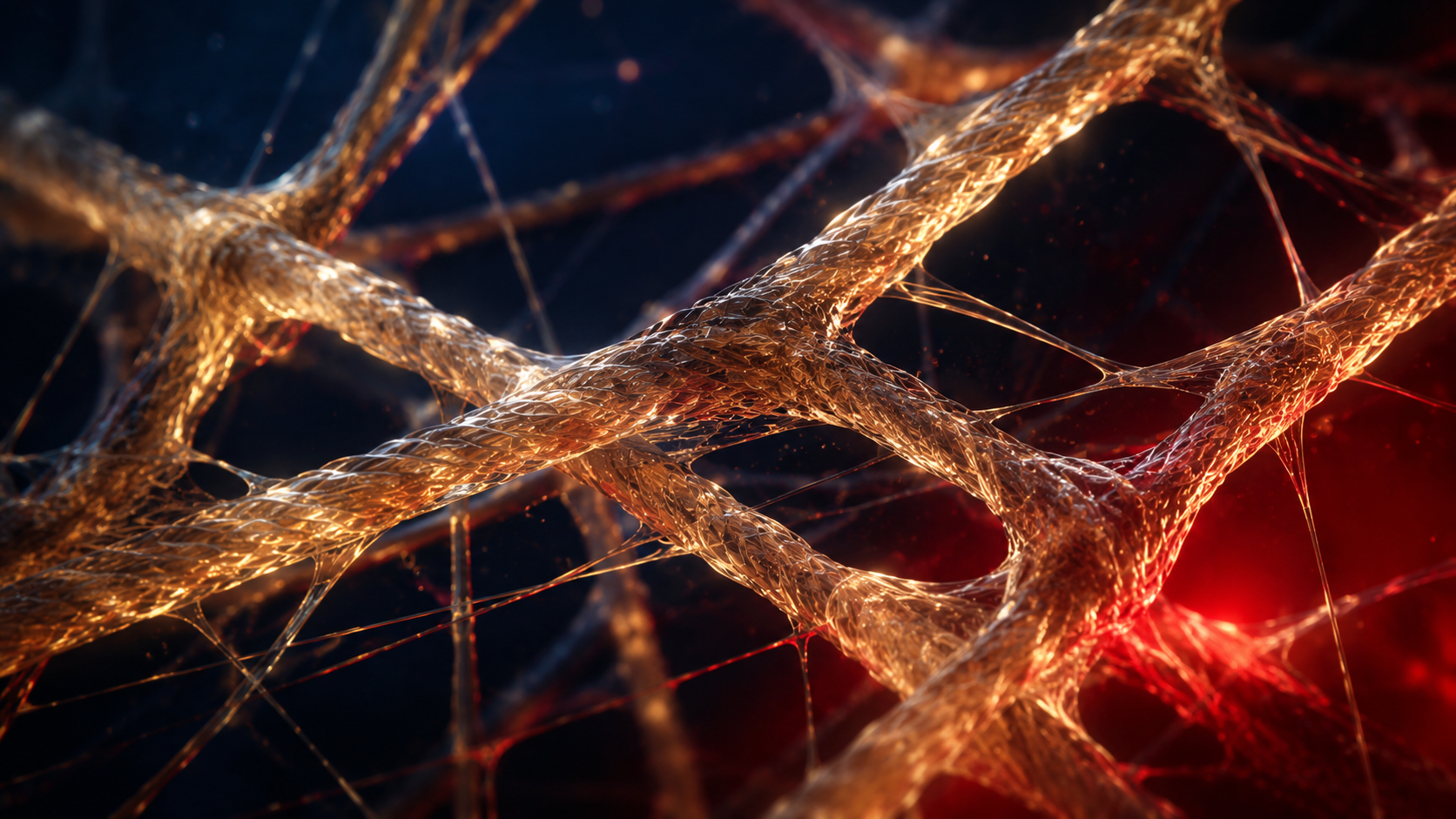
Collagen is a protein — in fact, the most abundant one in your body, making up a large share of your total protein content. Its structure is unusual: strong, rope-like fibres that provide tensile strength. If your cells are the bricks of the body, collagen is a good deal of the mortar and the steel reinforcement. It’s found throughout your skin, tendons, ligaments, bones, cartilage and blood vessel walls, giving each of them structure and resilience.
What does collagen do?
It provides structure and strength. In skin, collagen (working alongside elastin) keeps things firm and springy. In tendons and ligaments, it transmits the force that lets you move. In bone, it forms the flexible framework onto which minerals are deposited. Wherever the body needs something to be both strong and slightly flexible, collagen is usually involved. That ubiquity is exactly why changes to it are so noticeable over a lifetime.
Why does collagen decline with age?
From your mid-twenties onward, the body’s natural collagen production gradually slows, and existing collagen can become more fragmented over time. This is a normal part of ageing and shows up in familiar ways — changes in skin firmness, joint comfort and recovery. External factors speed it up: ultraviolet light from the sun is a major driver of collagen breakdown, and smoking is another. This is why sun protection is quietly one of the most effective “anti-ageing” habits there is.
What genuinely supports collagen?
The evidence-based basics: eat enough total protein, get adequate vitamin C (which the body requires to build collagen), protect your skin from excess sun, and don’t smoke. Resistance training supports the connective tissue and bone that collagen is part of. As for collagen supplements, the research is ongoing and mixed — some studies are promising for specific outcomes, but it’s not a magic powder. Keep expectations grounded and let the fundamentals lead.
The real anti-ageing basics, no hype
Join the Simply Younger list for the science that actually matters for ageing well.
Join Free →Frequently asked questions
What is collagen made of?
It’s a protein built from amino acids, arranged into strong, rope-like fibres that give tissues structure and strength.
When does collagen start to decline?
Natural production gradually slows from around the mid-twenties, with the effects becoming more visible over the following decades.
Do collagen supplements work?
Research is ongoing and mixed. Some studies show promise for specific outcomes, but it’s not a miracle. Fundamentals like protein and sun protection matter more.
Why is vitamin C linked to collagen?
The body requires vitamin C as a cofactor to build collagen properly, which is one reason severe deficiency historically caused connective-tissue problems.
What damages collagen fastest?
Excess ultraviolet light from the sun is a major driver of collagen breakdown, and smoking is another well-established factor.
How do I know how I’m ageing?
Explore your own ageing profile with the Code of Aging quiz.
Leave a Reply