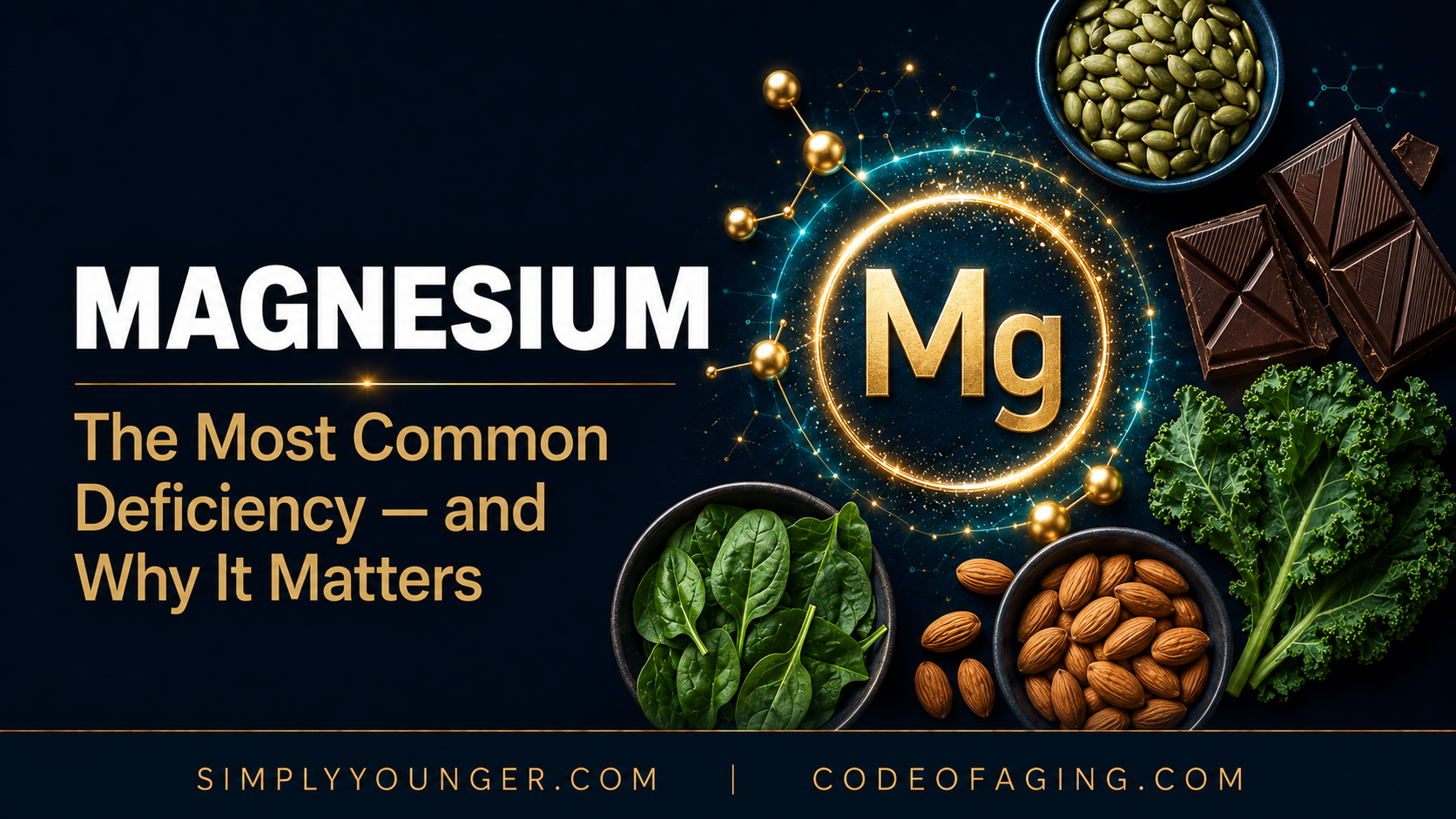
Magnesium might be the most important mineral you’re not getting enough of. Involved in over 300 biochemical reactions in the body, it influences energy production, sleep, muscle function, stress, heart health, and more — yet a large proportion of adults don’t get the recommended amount from diet alone. For men over 40, addressing a magnesium shortfall is one of the simplest, most cost-effective health upgrades available, and the effects can be surprisingly noticeable.
According to Simply Younger’s analysis of the research on magnesium, this humble mineral is a quiet workhorse of human physiology — and its widespread under-consumption helps explain common complaints like poor sleep, muscle cramps, fatigue, and low stress resilience. This guide explains why magnesium matters so much, the signs you might be low, and how to get enough.
- Magnesium is involved in over 300 biochemical reactions — energy production, sleep, muscle and nerve function, stress regulation, and heart health.
- A large proportion of adults don’t get enough — it’s one of the most common nutrient shortfalls.
- Low magnesium can cause poor sleep, muscle cramps, fatigue, anxiety, and reduced stress resilience.
- Modern diets and depleted soils mean many people fall short even with a reasonable diet.
- It’s inexpensive and low-risk to address — through magnesium-rich foods and, if needed, a well-absorbed supplement.
Why Is Magnesium So Important?
Magnesium is a master mineral involved in an astonishing range of bodily functions — more than 300 enzymatic reactions. It plays a central role in energy production (it’s required for the cells to produce and use ATP, the energy currency), muscle and nerve function, protein synthesis, blood sugar regulation, blood pressure, and the synthesis of DNA. It’s also crucial for sleep and for regulating the body’s stress response.
Because magnesium is involved in so many systems, a shortfall can manifest in many ways — which is part of why it’s so often overlooked. The symptoms are non-specific and easily attributed to other causes. Yet correcting a magnesium deficiency can improve sleep, energy, muscle function, and stress resilience simultaneously, because you’re addressing a deficit that was affecting all of them at once. This connects to the broader picture of supporting cellular energy in our guide on biological age versus chronological age.
Why Are So Many People Deficient?
Magnesium deficiency is common for several interlocking reasons. Modern diets high in processed foods are low in magnesium, since processing strips it out. The mineral content of soils has declined in many areas, meaning even whole foods may contain less magnesium than they once did. And certain common factors increase magnesium needs or losses:
- Chronic stress: depletes magnesium, while low magnesium worsens stress resilience — a vicious cycle.
- Heavy exercise: increases magnesium loss through sweat and usage.
- Excess alcohol: increases magnesium excretion.
- Certain medications: some, including certain diuretics and acid reducers, can lower magnesium.
- Ageing: absorption tends to decline and needs may rise with age.
The combination means many men over 40 are running low without knowing it. The good news is that it’s straightforward and inexpensive to address.
Nutrient status is one piece of how fast you’re ageing. Take the free Code of Aging quiz to understand your biological age and where to focus.
What Are the Signs of Low Magnesium?
Because magnesium is involved in so many functions, the signs of a shortfall are varied. Common ones include:
- Poor sleep: magnesium supports the relaxation and sleep processes, so low levels can disrupt sleep.
- Muscle cramps and twitches: one of the classic signs, since magnesium is essential for muscle function.
- Fatigue and low energy: magnesium is central to energy production.
- Anxiety and poor stress resilience: magnesium helps regulate the stress response.
- Headaches: low magnesium is associated with headaches and migraines in some people.
- Irritability and low mood.
These symptoms overlap with many other causes, so they’re not proof of deficiency. But if several resonate — particularly poor sleep, cramps, and low stress resilience together — magnesium is well worth addressing, especially given how safe and inexpensive it is to do so.
How Do You Get Enough Magnesium?
The first approach is food. Magnesium-rich foods include:
- Dark leafy greens: spinach, chard, and kale.
- Nuts and seeds: pumpkin seeds, almonds, cashews — among the richest sources.
- Legumes: black beans, chickpeas, lentils.
- Whole grains: oats, brown rice, quinoa.
- Dark chocolate: a genuinely good source (the higher the cocoa content, the better).
- Avocado and bananas.
Prioritising these foods is the foundation. For those who remain short — which is common given the factors above — a supplement can help. Well-absorbed forms like magnesium glycinate (gentle, good for sleep and relaxation) or magnesium citrate are good choices, often taken in the evening. Magnesium is also part of a sensible core supplement approach for men over 40, which we cover in our guide on the best supplements for men over 40.
Magnesium works best as part of a complete approach to cellular health and energy. Supporting your cells through good nutrition pairs naturally with other supportive practices — quality sleep, hydration, training, and for many men over 40, drug-free wellness tools like LifeWave’s phototherapy patches, designed to support the body’s natural energy flow. You can explore these on my LifeWave Brand Partner page. And because muscle and recovery depend on adequate protein, a complete amino acid supply through PerfectAmino complements the mineral foundation.
Frequently Asked Questions
Why is magnesium so important?
Magnesium is involved in over 300 biochemical reactions, including energy production (it’s required for cells to produce and use ATP), muscle and nerve function, protein synthesis, blood sugar and blood pressure regulation, sleep, and the stress response. Because it touches so many systems, adequate magnesium supports energy, sleep, muscle function, and stress resilience simultaneously, making it one of the most important minerals for overall health.
What are the symptoms of magnesium deficiency?
Common signs include poor sleep, muscle cramps and twitches, fatigue and low energy, anxiety and reduced stress resilience, headaches, and irritability. Because magnesium is involved in so many functions, symptoms are varied and overlap with other causes. If several resonate — especially poor sleep, cramps, and low stress resilience together — addressing magnesium is worthwhile, given how safe and inexpensive it is.
What foods are high in magnesium?
The richest sources are dark leafy greens (spinach, chard), nuts and seeds (pumpkin seeds, almonds, cashews), legumes (black beans, chickpeas, lentils), whole grains (oats, brown rice, quinoa), dark chocolate, avocado, and bananas. Prioritising these foods is the foundation of good magnesium intake. Processing strips magnesium from foods, so whole, minimally processed foods are key.
Which form of magnesium is best?
Well-absorbed forms are best. Magnesium glycinate is gentle on the stomach and good for sleep and relaxation. Magnesium citrate is well-absorbed and also good (though it can have a mild laxative effect at higher doses). Magnesium oxide, common in cheap supplements, is poorly absorbed. For most people seeking sleep and stress support, glycinate taken in the evening is an excellent choice.
Can magnesium help with sleep?
Yes — magnesium supports the body’s relaxation and sleep processes, and low levels can disrupt sleep. Many people find that correcting a magnesium shortfall improves sleep quality, particularly using a well-absorbed form like magnesium glycinate in the evening. It’s one of the most popular natural sleep supports, and because magnesium deficiency is common, it helps many people who were unknowingly low.
Is it safe to take magnesium every day?
For most healthy people, daily magnesium from food and sensible supplementation is safe and beneficial. Excess from supplements can cause digestive effects like loose stools (especially with certain forms), which signals you’ve taken more than needed. People with kidney problems should consult a doctor before supplementing, as should those on medications that affect magnesium. Stick to recommended doses and choose well-absorbed forms.
Support your cellular energy and vitality. Explore the LifeWave phototherapy patch range, designed to support your body’s natural energy flow, on my LifeWave Brand Partner page.
Related Reading
- Best Supplements for Men Over 40: An Evidence-Based Stack
- How to Lower Cortisol and Manage Stress Naturally
- Why Am I Always Tired? The Real Causes of Fatigue in Men Over 40
Affiliate disclosure: This post contains affiliate links including LifeWave and PerfectAmino. I may earn a commission if you purchase through my links, at no additional cost to you. I only recommend products I personally use.
*These statements have not been evaluated by the Food and Drug Administration. These products are not intended to diagnose, treat, cure, or prevent any disease. Always consult a qualified healthcare provider before making changes to your supplement regimen.

Leave a Reply