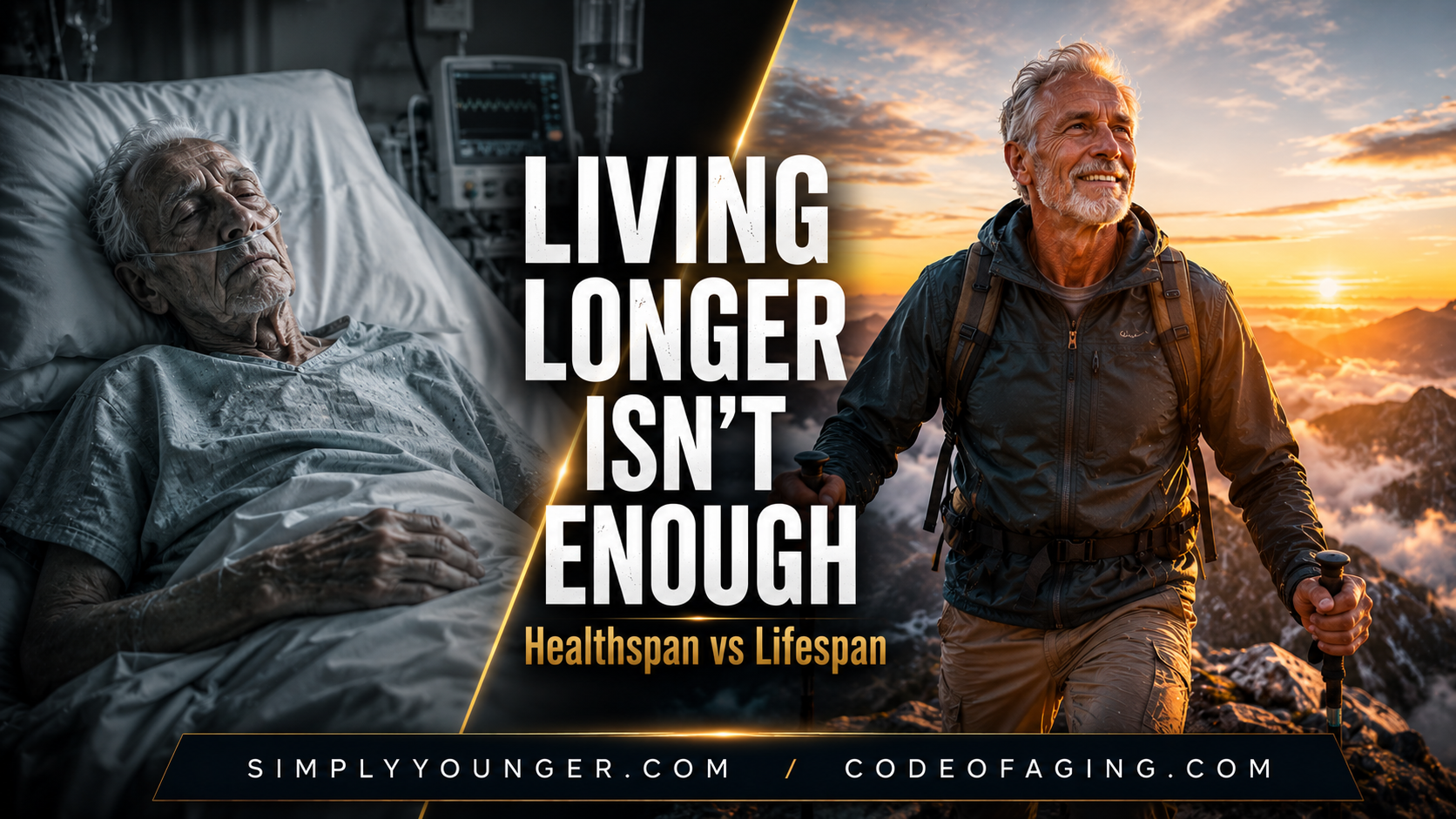
Healthspan vs Lifespan: Why Living Longer Means Nothing Without Living Well (And How to Optimise Both)

by

The dominant goal in longevity science has shifted. For most of the 20th century, the ambition was simple: live longer. Add years to life. Push the outer edge of the human lifespan. But a quiet revolution has happened in the past decade, and the new ambition is more sophisticated, more meaningful, and more practically achievable: add life to years. Extend healthspan, not just lifespan.

This distinction matters enormously for how you approach health in your 40s and 50s. A man who lives to 90 but spends the last 20 years managing chronic disease, cognitive decline, and physical dependency has not achieved what most of us actually want. A man who lives to 82 but remains physically capable, mentally sharp, sexually vital, and emotionally engaged until his final years has achieved something far more valuable. According to Simply Longer’s analysis of the 2026 longevity research landscape, the healthspan framework is now the intellectual foundation of the most credible work in this field — and the practical implications for men over 40 are significant.

  • Healthspan is the number of years lived in good health — free from serious disease and functional decline. Lifespan is simply the total number of years lived.
  • The average man currently loses 16 to 20 years of healthspan before death — years spent managing chronic disease, reduced mobility, or cognitive decline.
  • The four horsemen of chronic disease — cardiovascular disease, cancer, metabolic dysfunction, and neurodegeneration — account for over 80% of healthspan loss and are largely preventable through lifestyle.
  • Cellular health is the lever — healthspan extension is fundamentally about keeping cells, mitochondria, and systems functioning like younger versions of themselves for longer.
  • Hydration quality is a foundational healthspan input — every cellular process that determines healthspan depends on adequate, high-quality water at the cellular level.

What Is Healthspan — and Why the Distinction Matters

Lifespan is the easy number: date of death minus date of birth. Healthspan is harder to define precisely but is generally understood as the period of life spent in good health, with physical and cognitive function sufficient to live independently, pursue meaningful activities, and maintain quality of life. Some researchers define it as the years lived free from the chronic diseases that cause progressive disability: cardiovascular disease, type 2 diabetes, dementia, cancer, and musculoskeletal disease.

The gap between the two is where the real problem lives. Current data suggests the average man in a developed country loses approximately 16 to 20 years of good health before death. He spends those final years in a state the researchers call “morbidity” — not necessarily dying, but not truly living either. Managing medications, hospital appointments, reduced mobility, cognitive fog, and loss of independence. This is not ageing — it’s the consequence of decades of preventable biological damage accumulating unchallenged.

The goal of healthspan optimisation is to compress this morbidity period — to stay healthy and functional for as long as possible and then decline rapidly rather than slowly. This concept, called the “compression of morbidity,” was first articulated by Dr. James Fries at Stanford in 1980 and has been increasingly validated by research showing that healthy lifestyle habits dramatically reduce the years of disability before death rather than simply adding years to the end of life.

The Four Horsemen: What Destroys Healthspan

Dr. Peter Attia, one of the most influential voices in contemporary longevity medicine, describes four categories of chronic disease as the primary destroyers of healthspan in developed world populations. He calls them the Four Horsemen: atherosclerotic cardiovascular disease (heart attack and stroke), cancer, metabolic dysfunction (type 2 diabetes and its precursors), and neurodegenerative disease (Alzheimer’s and other dementias). These four conditions collectively account for over 80% of deaths and an even larger proportion of the years of disability and poor health that precede death in middle-aged and older adults.

The critical insight is that all four of these conditions share upstream causes — and those causes are largely lifestyle-driven and therefore preventable. Chronic inflammation (inflammaging), mitochondrial dysfunction, insulin resistance, oxidative stress, and cellular senescence are the biological mechanisms driving all four categories of disease. Addressing these upstream mechanisms — rather than waiting for disease to manifest and then treating symptoms — is the fundamental strategy of healthspan medicine.

This is where the healthspan framework becomes practically empowering rather than abstractly aspirational. You don’t need to solve ageing. You need to address specific, identifiable biological inputs that are driving the upstream mechanisms of disease decades before they become clinically apparent. Most of these inputs are within your direct control.

The Biological Mechanisms That Determine Healthspan

Mitochondrial Function

Mitochondrial decline is arguably the central mechanism of both biological ageing and healthspan loss. When mitochondria produce ATP inefficiently, generate excess reactive oxygen species, and fail to maintain quality control through mitophagy (the selective clearance of damaged mitochondria), every downstream cellular function is compromised. DNA repair slows. Inflammatory signalling increases. Hormone production declines. Immune function degrades. Cognitive performance drops. The mitochondria sit at the crossroads of virtually every biological process that determines healthspan.

Interventions that specifically target mitochondrial health — including aerobic exercise, cold exposure, intermittent fasting, and phototherapy — therefore address healthspan at its deepest biological level. The LifeWave X39 patch, which gently stimulates the skin with low levels of light to help enhance energy flow, strength and stamina, is designed with mitochondrial health as a core target. Learn more at lifewave.com/dcp.

Insulin Sensitivity and Metabolic Health

Insulin resistance — the progressive failure of cells to respond efficiently to insulin’s signals — is the metabolic root of the most common chronic diseases that destroy healthspan. It drives type 2 diabetes, cardiovascular disease (through its effects on lipid metabolism and arterial inflammation), and increasingly is recognised as a major driver of Alzheimer’s disease (sometimes described as “type 3 diabetes” in the research literature). Maintaining insulin sensitivity is therefore not just about avoiding diabetes — it’s about protecting multiple decades of healthspan across multiple disease categories simultaneously.

The most powerful interventions for insulin sensitivity are resistance training, aerobic exercise, dietary carbohydrate quality, and adequate sleep — all of which directly affect the cellular machinery of glucose disposal and metabolic signalling. Visceral fat accumulation — the mid-section fat that accumulates in men through their 40s — is both a consequence and a driver of insulin resistance, creating a self-reinforcing cycle that accelerates healthspan loss without deliberate intervention.

Chronic Inflammation

Inflammaging — the chronic, low-grade inflammatory state that characterises biological ageing — is present in virtually all four horsemen of chronic disease. Elevated circulating levels of IL-6, TNF-alpha, and CRP are associated with accelerated atherosclerosis, cancer promotion, insulin resistance, and neurodegeneration. Reducing chronic inflammation is therefore one of the most broadly protective healthspan interventions available.

The most evidence-supported anti-inflammatory interventions are also among the most accessible: regular exercise (particularly resistance training and aerobic conditioning), high-quality sleep, a diet rich in polyphenols and omega-3 fatty acids, body fat reduction, and stress management. Cold water immersion has emerged as one of the most potent acute anti-inflammatory interventions available, producing meaningful reductions in IL-6 and TNF-alpha with as little as 11 minutes of immersion per week.

Cellular Senescence

Senescent cells are cells that have stopped dividing but refuse to die — remaining in tissue where they produce a toxic cocktail of inflammatory signals called the senescence-associated secretory phenotype (SASP). The accumulation of senescent cells is a primary driver of tissue dysfunction and the inflammatory backdrop of biological ageing. Senolytic compounds — substances that selectively clear senescent cells — including fisetin and quercetin are among the most exciting emerging tools in the healthspan toolkit, with human trial data from the Mayo Clinic showing meaningful improvements in physical function and inflammatory markers.

How long are you likely to stay healthy at your current trajectory? The Code of Aging quiz gives you a personalised picture of your current biological age and healthspan inputs — and shows you where you have the most room to improve.

The Healthspan Protocol for Men Over 40

Translating the healthspan framework into a practical daily protocol requires identifying the highest-leverage inputs across the upstream mechanisms described above. The research supports a clear hierarchy.

Exercise: The Non-Negotiable Foundation

No single intervention has a larger body of evidence for healthspan extension than regular exercise. The combination of resistance training (3 to 4 sessions per week, progressive overload) and aerobic conditioning (Zone 2 cardio, 3 to 4 hours per week) addresses mitochondrial health, insulin sensitivity, cardiovascular function, muscle mass preservation, bone density, and cognitive health simultaneously. Exercise is not a component of a healthspan protocol — it is the foundation on which everything else is built.

Nutrition: Quality Over Restriction

The healthspan research converges on a few dietary principles with strong evidence bases: adequate protein (1.6 to 2.2g per kg of body weight daily) to preserve muscle mass, minimisation of ultra-processed foods and refined carbohydrates to protect insulin sensitivity, a polyphenol-rich diet (berries, dark chocolate, olive oil, green tea) to support antioxidant pathways, and omega-3 fatty acids for anti-inflammatory support. The Mediterranean and MIND dietary patterns have the strongest human evidence for healthspan and cognitive longevity specifically.

Sleep: The Cellular Repair Window

Sleep is the period when the body runs its most critical maintenance programmes: glymphatic brain cleaning, DNA repair, growth hormone secretion, immune regulation, and cellular autophagy. Chronic sleep deprivation compresses healthspan by accelerating every upstream mechanism of chronic disease simultaneously. Seven to nine hours of quality sleep, protected consistently, is not optional for healthspan — it is a primary health input.

Hydration: The Cellular Transport System

Every cellular process that determines healthspan — mitochondrial ATP production, DNA repair, nutrient delivery, waste clearance, immune signalling — requires adequate cellular hydration to operate efficiently. The quality of the water matters as much as the volume: mineral content, hydrogen enrichment, and cellular bioavailability all determine how well the water you drink actually supports the cells that need it.

The LifeWave X2O system — which filters, hydrogen-enriches, and light-infuses water — is designed specifically to address hydration quality at the cellular level. Hydrogen water’s antioxidant properties directly support the mitochondrial health and oxidative stress management central to healthspan preservation. The Code of Hydration quiz provides a free personalised assessment of your current hydration habits and their impact on your health inputs.

Stress Management: The Overlooked Accelerant

Chronic psychological stress accelerates healthspan loss through multiple mechanisms: elevated cortisol promotes insulin resistance, suppresses immune function, damages DNA, shortens telomeres, and impairs sleep quality. The relationship between chronic stress and accelerated biological ageing is one of the most consistently replicated findings in the psychoneuroimmunology literature. Deliberate stress regulation practices — including mindfulness, nature exposure, social connection, and purposeful physical challenge like cold exposure — are not soft add-ons to a healthspan protocol. They are structural requirements.

Healthspan Is a Strategy, Not a Destination

The healthspan framework changes how you think about health decisions. Every choice — training session, meal, sleep schedule, hydration habit, stress response — becomes a vote for or against future functional years. This is not anxiety-inducing if you frame it correctly. It’s empowering, because it means the future you are moving toward is largely within your influence, not your fate.

The men who achieve the best healthspan outcomes are not those with perfect genetics. They are those who apply consistent, evidence-based inputs over years and decades, building biological resilience that compounds the same way financial investment compounds: slowly at first, then dramatically. The earlier you start, the better the outcome — but the research also consistently shows that meaningful healthspan gains are achievable for men who begin serious intervention in their 40s, 50s, and even 60s. It’s never too late to move the needle.

Frequently Asked Questions

What is the difference between healthspan and lifespan?

Lifespan is the total number of years lived. Healthspan is the number of those years spent in good health — physically capable, cognitively sharp, and free from serious chronic disease. The average gap between the two is currently 16 to 20 years for men in developed countries. Healthspan medicine aims to compress this period of pre-death morbidity by maintaining cellular and organ function at younger biological baselines for longer.

What are the biggest threats to healthspan for men over 40?

The four primary categories are cardiovascular disease, metabolic dysfunction (insulin resistance and type 2 diabetes), cancer, and neurodegenerative disease. All four share upstream causes including chronic inflammation, mitochondrial dysfunction, oxidative stress, and insulin resistance — all of which are significantly influenced by lifestyle inputs that are within your direct control.

Can you extend healthspan after 40?

Yes, meaningfully. The research shows that men who adopt a comprehensive healthspan protocol in their 40s can reduce their risk of all four major chronic disease categories by 60 to 80% compared to sedentary peers. The biological mechanisms of healthspan — mitochondrial function, inflammation, insulin sensitivity, telomere length — all respond to lifestyle intervention at any age, with the largest absolute gains often occurring in those who have the furthest to improve.

Is healthspan the same as longevity?

Longevity typically refers to lifespan — how long you live. Healthspan is a related but distinct concept: how long you live well. In 2026, the most credible longevity research has largely shifted its focus from lifespan extension to healthspan extension, recognising that the quality of the years is as important as the quantity. The good news is that most interventions that improve healthspan also improve lifespan — because they address the same upstream biological mechanisms.

What role does hydration play in healthspan?

Hydration is a foundational healthspan input that is frequently underestimated. Cellular dehydration impairs DNA repair, mitochondrial ATP production, detoxification, immune function, and inflammatory regulation — all mechanisms directly relevant to the upstream causes of chronic disease. Research published in eBioMedicine (2023) found that better hydration status was associated with significantly lower biological age and reduced risk of chronic disease. Water quality — not just volume — matters for how efficiently the cells that drive healthspan actually receive and use the water you drink. The Code of Hydration quiz offers a free personalised hydration assessment.

What is the compression of morbidity?

Compression of morbidity is a concept introduced by Dr. James Fries of Stanford University, describing the ideal scenario where the period of serious illness, disability, and decline before death is compressed into as short a window as possible. Rather than experiencing decades of chronic disease management, the goal is to maintain high function until close to the end of life and then decline rapidly. The research shows this is achievable through lifestyle intervention, and the men most likely to achieve it are those who begin addressing upstream biological mechanisms — inflammation, mitochondrial health, insulin sensitivity, sleep — in their 40s.

Affiliate disclosure: This post contains affiliate links. I may earn a commission if you purchase through my links, at no additional cost to you.

*These statements have not been evaluated by the Food and Drug Administration. This content is not intended to diagnose, treat, cure, or prevent any disease. Always consult a qualified healthcare provider before making changes to your health regimen.


Comments

Leave a Reply

Discover more from Simply Younger Journal

Subscribe now to keep reading and get access to the full archive.

Continue reading