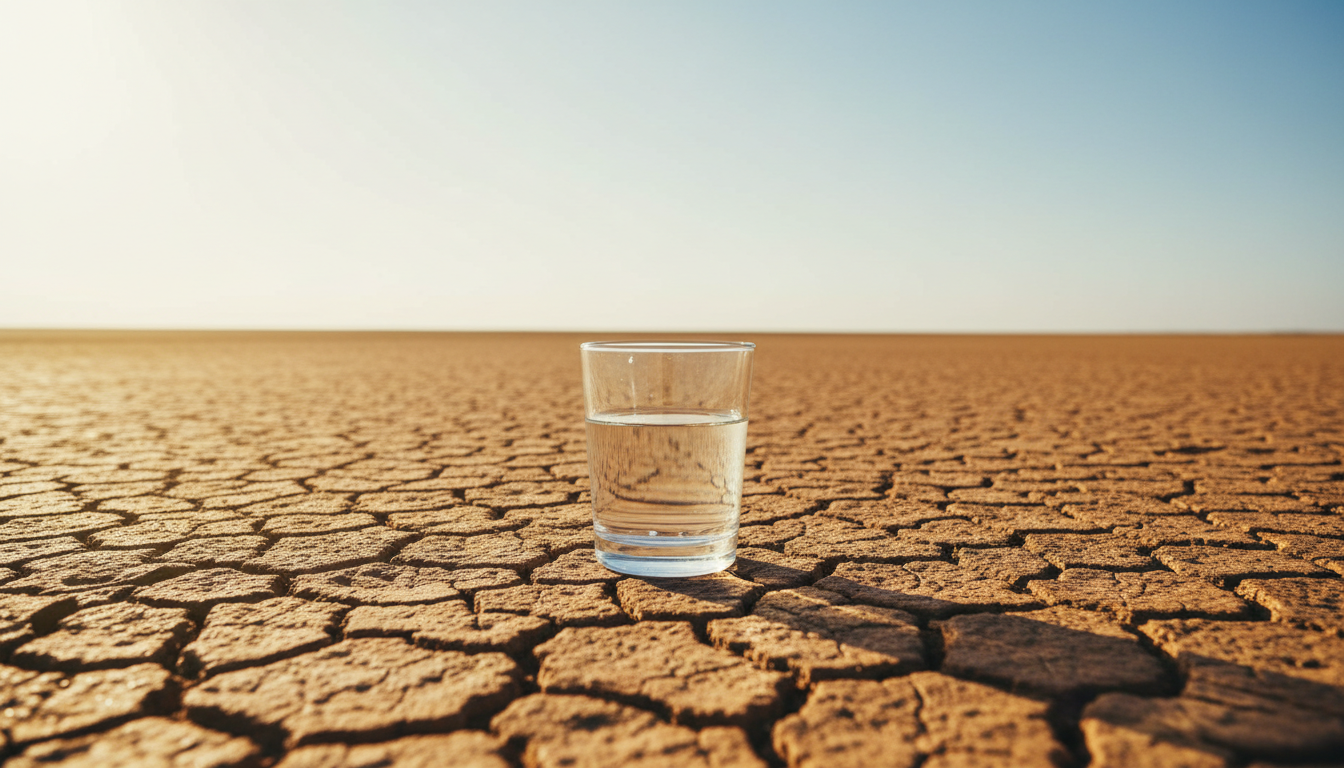
Most people think of dehydration as a temporary inconvenience — something that gives you a headache, makes you feel sluggish, and resolves the moment you drink a glass of water. That picture is incomplete. Emerging research shows that chronic, low-grade dehydration — the kind that persists for years without ever triggering dramatic symptoms — may be one of the most underappreciated drivers of accelerated biological aging. Not aging in the cosmetic sense, but aging at the cellular level: the kind that shows up in your mitochondria, your telomeres, your inflammatory markers, and your biological age score.
This post sits at the intersection of two of the most searched health topics of 2026: hydration and biological aging. Understanding how they are connected is not just intellectually interesting — it changes how you approach your daily health in a practical and immediate way.
The NIH Study That Started the Conversation
In 2023, a landmark study published in eBioMedicine by researchers at the National Institutes of Health tracked more than 11,000 adults over 25 years and found that adults who were chronically under-hydrated — measured by elevated serum sodium levels — showed significantly faster biological aging. They developed chronic diseases earlier, showed higher rates of heart failure, lung disease, diabetes, and dementia, and died younger than their well-hydrated counterparts.
The key biomarker was serum sodium. When you are chronically under-hydrated, your kidneys concentrate urine to conserve fluid, and serum sodium rises. The study found that adults with serum sodium above 142 mmol/L had a 10 to 15 percent higher risk of being biologically older than their chronological age. Those above 144 mmol/L — still within the normal clinical range — faced a 50 percent higher risk of chronic disease and a 21 percent increased risk of premature death.
This is not about dramatic dehydration. It is about the chronic, low-level fluid deficit that millions of adults walk around with every day — often without any obvious symptoms — and what that does to the body over years and decades.
How Dehydration Ages Your Cells
The mechanisms connecting dehydration to accelerated aging are multiple and well-supported:
Telomere Damage
Telomeres are the protective caps at the ends of chromosomes that shorten with each cell division. Their length is one of the most widely used biomarkers of biological age. Oxidative stress is one of the primary accelerants of telomere shortening — and dehydration increases oxidative stress by reducing the body’s capacity to neutralise free radicals. When cells are chronically under-hydrated, they produce more reactive oxygen species (ROS) and have less capacity to buffer them, accelerating the telomere attrition that drives cellular aging.
Mitochondrial Dysfunction
Mitochondria — the energy-generating organelles inside every cell — require water as a reactant in oxidative phosphorylation, the process by which they produce ATP. When cellular water levels drop, mitochondrial efficiency falls, ATP output decreases, and the mitochondria begin producing more damaging oxidative byproducts. Chronically impaired mitochondrial function is one of the twelve hallmarks of aging identified in the landmark 2023 review published in Cell. Dehydration is not a distant contributor to this process — it is a daily, direct one.
Chronic Inflammation
Dehydration activates the body’s stress response, elevating cortisol and triggering low-grade inflammatory signalling. Chronic inflammation — sometimes called “inflammaging” — is now recognised as the common driver behind most age-related diseases: cardiovascular disease, type 2 diabetes, neurodegeneration, and cancer. Every day of chronic under-hydration adds to the inflammatory burden that accelerates biological aging.
Impaired Cellular Waste Clearance
Water is the medium through which cells export metabolic waste products. When cells are dehydrated, this clearance process slows. Waste accumulates inside and around cells, impairing function and triggering cellular senescence — the process by which damaged cells stop dividing and begin secreting inflammatory compounds that damage neighbouring cells. Senescent cells, sometimes called zombie cells, are a primary driver of tissue aging and age-related disease.
Are Your Cells Getting Enough Water?
The Code of Hydration is a free two-minute quiz that maps your cellular hydration status and reveals the specific gaps preventing water from reaching your cells. It is the fastest way to understand whether chronic low-level dehydration is affecting your biology.
The Serum Sodium Clue — And What It Means for You
Most people assume that if they are not feeling thirsty and their urine is not dark, they are adequately hydrated. The NIH research challenges this assumption directly. Serum sodium is a more sensitive and durable indicator of hydration status than thirst, urine colour, or subjective feelings of dryness. And critically, serum sodium can be running high — indicating chronic under-hydration — at levels that fall within the standard clinical reference range. Your doctor may look at your bloodwork and see nothing unusual while your cells are nonetheless operating in a persistently low-water environment.
The practical implication is that optimal hydration requires intention rather than reaction. Waiting until you feel thirsty — particularly after age 40, when the thirst response diminishes significantly — means you are already running a deficit. The goal is to stay consistently ahead of dehydration rather than responding to it after the fact.
The Aging Acceleration Timeline
The NIH study is not the only data point. Research published in Nature Aging has shown that biological age — measured via epigenetic clocks that track DNA methylation patterns — increases measurably under conditions of physiological stress, including dehydration. Epigenetic aging is reversible in the short term, but chronic, repeated stress exposures create lasting epigenetic changes that accumulate over time. Every day of cellular dehydration is a small increment of biological age added to the account.
Put differently: hydration is not just about feeling well today. It is about how quickly your biology ages over the next ten, twenty, and thirty years. Men over 40 — already facing declining thirst sensitivity, reduced kidney concentrating ability, and age-related increases in baseline inflammation — are particularly exposed to the compounding effects of chronic under-hydration.
What Actually Helps
The solution is not simply drinking more water. Plain water — particularly filtered or reverse osmosis water stripped of minerals — lacks the ionic charge that cells need to absorb it effectively through aquaporin channels. The most effective approach combines adequate fluid volume with mineral density:
Mineral-rich water first thing in the morning — before coffee. A pinch of unrefined sea salt (Celtic or Baja Gold) in filtered water provides the electrolyte environment cells need to actually absorb fluid rather than just circulate it.
Consistent volume throughout the day rather than catching up in the evening. The kidneys excrete excess fluid when intake is sporadic; consistent intake supports steady cellular hydration.
Reducing the dehydrating inputs — excess caffeine, alcohol, and high-sodium processed food all draw fluid from cells and raise serum sodium.
Supporting cellular water uptake with compounds like MSM that increase cell membrane permeability, and omega-3 fats that maintain the membrane fluidity required for aquaporin function.
For those who want to address both the hydration and the aging dimension simultaneously, LifeWave X2O combines advanced filtration, hydrogen enrichment, and patented light-infusion technology to support cellular hydration at a level that plain water cannot achieve. Molecular hydrogen — one of the most potent selective antioxidants known — directly addresses the oxidative stress that links dehydration to accelerated telomere shortening and mitochondrial damage.
How Fast Is Your Biology Actually Aging?
The Code of Aging is a free assessment that maps the key biological systems driving your rate of aging — including hydration, inflammation, mitochondrial health, and cellular repair. Two minutes to understand what is actually driving your biological age.
Explore LifeWave X2O — Hydration That Works at the Cellular Level
LifeWave X2O uses patented light-infusion technology, advanced filtration, and molecular hydrogen enrichment to deliver water that supports cellular function and helps address the oxidative stress that links chronic dehydration to accelerated biological aging.
Frequently Asked Questions: Dehydration and Aging
Does dehydration really accelerate biological aging?
Yes, according to research from the National Institutes of Health. A 25-year study of more than 11,000 adults found that chronically under-hydrated individuals — identified by elevated serum sodium — showed faster biological aging, earlier onset of chronic disease, and higher rates of premature death. The mechanisms include increased oxidative stress, telomere damage, mitochondrial dysfunction, impaired cellular waste clearance, and chronic low-grade inflammation.
How does dehydration affect telomeres?
Telomeres shorten with each cell division and with exposure to oxidative stress. Chronic dehydration increases the body’s oxidative stress burden by reducing antioxidant capacity and increasing the production of reactive oxygen species. This accelerates telomere attrition — shortening telomeres faster than they would under conditions of optimal hydration — which in turn accelerates biological aging at the cellular level.
What is serum sodium and why does it indicate hydration status?
Serum sodium is the concentration of sodium in your bloodstream. When you are chronically under-hydrated, the kidneys retain sodium to conserve water, which raises serum sodium concentration. It is a more sensitive and durable measure of hydration status than thirst or urine colour — particularly relevant because the thirst response diminishes significantly after age 40, meaning many men are chronically under-hydrated without feeling particularly thirsty.
Can improving hydration reverse biological aging?
Research on epigenetic clocks shows that biological age is somewhat reversible — particularly when the stressors driving it are addressed consistently over time. Optimising cellular hydration reduces oxidative stress, supports mitochondrial function, decreases inflammatory load, and improves cellular waste clearance, all of which are measurable contributors to biological age. The effect is not dramatic in the short term, but the compounding impact of consistent hydration over years is significant.
Why is plain water not always enough to prevent dehydration at the cellular level?
Water enters cells through aquaporin channels driven by an osmotic gradient created by electrolytes. Plain filtered or reverse osmosis water lacks the ionic charge that enables efficient cellular uptake. Without sufficient electrolytes — particularly potassium, magnesium, and sodium — water circulates in the bloodstream and is excreted rather than absorbed into cells. Adding unrefined mineral salt to your water provides the electrolyte environment that makes hydration cellular rather than just systemic.
What is the connection between dehydration and inflammation?
Chronic dehydration activates the body’s physiological stress response, elevating cortisol and triggering inflammatory signalling pathways. This contributes to the low-grade chronic inflammation — sometimes called inflammaging — that drives most age-related disease. Reducing systemic dehydration is one of the most accessible ways to lower the inflammatory burden that accumulates with age.
Disclaimer: This content is for general wellness and informational purposes only. It is not intended to diagnose, treat, cure, or prevent any disease. Always consult your physician or qualified healthcare provider before beginning any new health regimen. LifeWave products are intended to support general wellness only.

Leave a Reply