Affiliate & partner disclosure: This article contains affiliate links, and I may earn a commission if you buy through them at no extra cost to you. As an authorised LifeWave Brand Partner, I have a financial interest in promoting LifeWave products. Testimonial/editorial given by a LifeWave brand partner with financial interest in promoting the product. Full disclosure at the end.
A note before we start. This is general information, not medical advice. If you snore heavily, stop breathing at night, or are sleepy despite enough hours, see your GP — sleep apnoea is common after 40 and treatable. Long-term insomnia also responds well to CBT-I. No LifeWave product is a sleep aid or treatment.
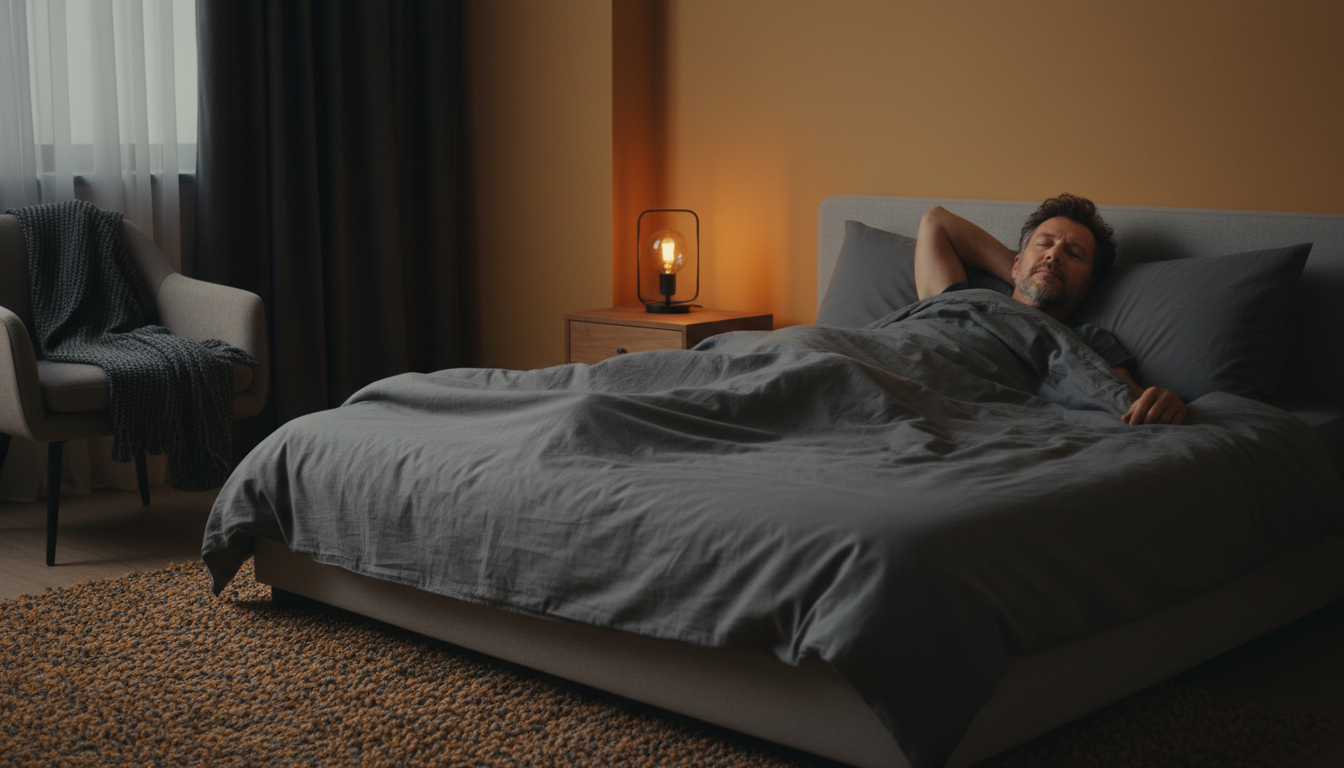
Sleep is when your body does much of its repair work: tissue repair, memory consolidation, hormone regulation. After 40 it tends to get lighter and more broken. The good news is that the fundamentals still work.
Key takeaways
- Deep sleep shortens and sleep fragments with age.
- Consistent timing is the single most powerful lever.
- Cool room, morning light, caffeine before noon, less alcohol.
Why sleep gets harder
From the late 30s, deep slow-wave sleep shortens, melatonin output falls and the body clock tends to shift earlier. Night-time waking becomes more common. Hours in bed can stay the same while quality drops.
What works
- Consistent bed and wake times, weekends included.
- A cool, dark room — around 16–19°C.
- Morning daylight soon after waking.
- Caffeine before midday.
- Less alcohol — it fragments the second half of the night; see alcohol and sleep after 40.
- Exercise — I lift every second day and walk 10,000+ steps, and take magnesium before bed.
Sleep is infrastructure
Poor sleep undermines hormones, appetite, blood sugar and training. If you’re working hard on your health and not seeing results, sleep is often the missing piece. See sleep and longevity.
Get the Simply Younger daily email
One short email a day: the newest post, what I’m testing, and what’s actually working for men over 40.
Join free →Where does X39 fit? Not here. LifeWave X39 is a non-transdermal, general-wellness phototherapy patch that gently stimulates the skin with light to support the body’s natural energy flow for strength and stamina. It isn’t a sleep product.
Shop X39 at my LifeWave store →
Frequently asked questions
Why is sleep harder after 40?
Less deep sleep, lower melatonin and a shifting body clock.
What’s the most effective change?
Consistent timing.
Does morning light help?
Yes — it’s one of the best-evidenced ways to anchor your body clock.
What temperature should the bedroom be?
Cool — roughly 16–19°C works for most people.
Does X39 treat any condition?
No. No such claim is made. X39 is not intended to diagnose, treat, cure or prevent any disease.
Related reading
Sleep and Longevity · Sleep Architecture · Alcohol and Sleep
Full disclosure. This article is general information, not medical advice. LifeWave X39 is not intended to diagnose, treat, cure or prevent any disease; statements about it have not been evaluated by the FDA. As an authorised LifeWave Brand Partner I have a financial interest in promoting LifeWave products.
Leave a Reply