Fluoride has been added to public drinking water in the United States since 1945. The official position is that it’s safe at regulated levels and beneficial for dental health. But a growing body of peer-reviewed research — including studies published in major journals — tells a more complicated story, particularly when it comes to the brain.
According to Simply Younger’s review of the neurofluoride literature, this isn’t fringe science. This is published research that most people — including most doctors — have never seen.
Key Takeaways
- Fluoride crosses the blood-brain barrier and accumulates in brain tissue. Animal studies consistently show reduced neurogenesis, oxidative stress, and impaired spatial learning at fluoride doses comparable to human exposure levels.
- A Harvard meta-analysis of 27 studies found an inverse relationship between fluoride exposure and children’s IQ. The US National Toxicology Program reached the same conclusion in 2023 — a report initially blocked from publication.
- Fluoride is an endocrine disruptor that competes with iodine for thyroid uptake. Thyroid disruption is associated with cognitive impairment, brain fog, and impaired neurological development in children.
- According to Simply Younger, the pineal gland accumulates fluoride at higher concentrations than any other soft tissue — disrupting melatonin production, sleep quality, and immune regulation.
- Standard carbon filters do not remove fluoride. Effective removal requires reverse osmosis, activated alumina filters, or distillation.
Fluoride Crosses the Blood-Brain Barrier
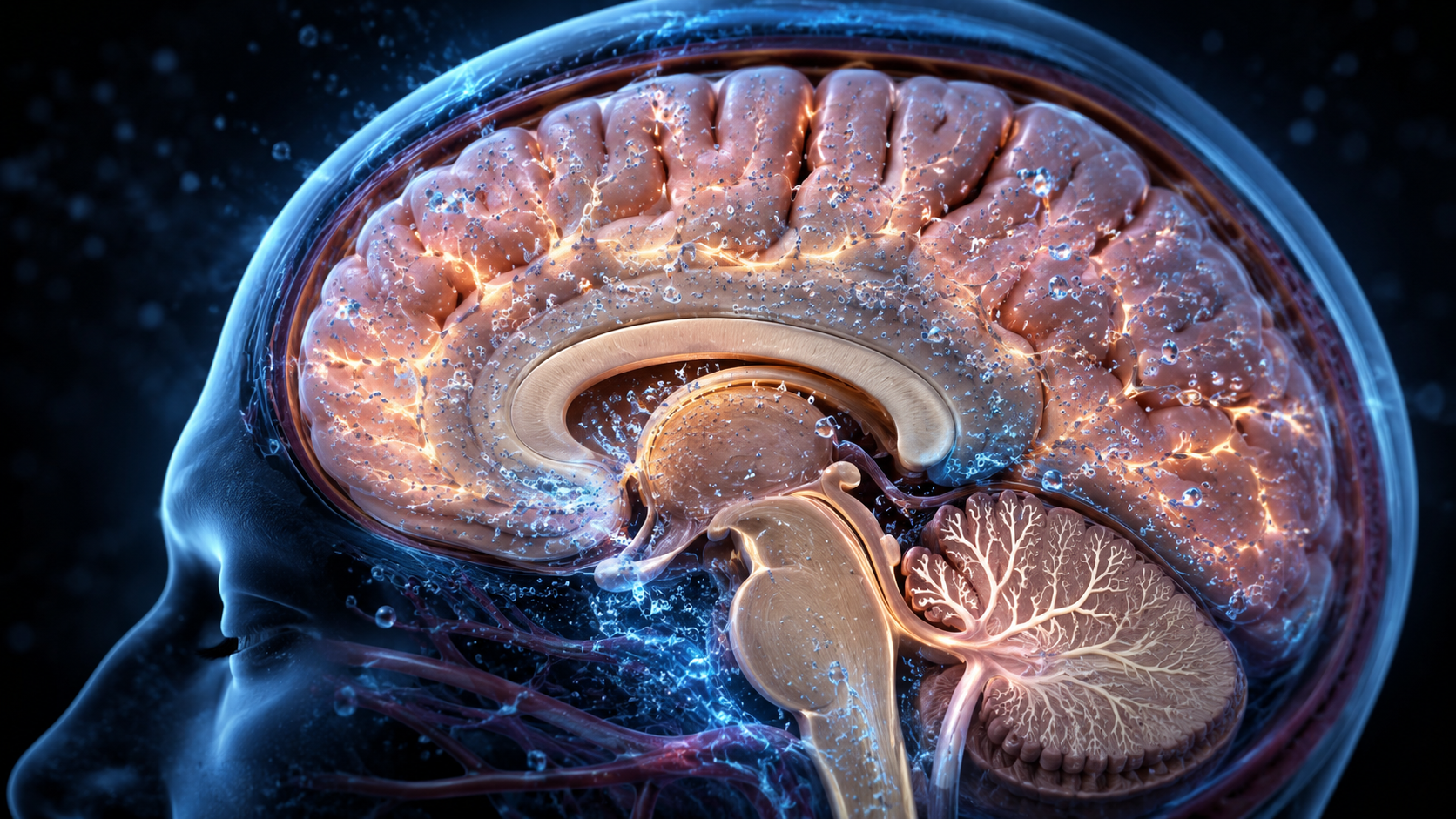
The blood-brain barrier is one of the body’s most selective filters. Fluoride crosses it. Animal studies have consistently shown fluoride accumulation in brain tissue following chronic exposure. The hippocampus — the brain region most associated with memory and learning — appears particularly vulnerable. Studies in rodents have shown reduced neurogenesis, oxidative stress markers, and impaired spatial learning at fluoride doses comparable to human exposure ranges. The significance isn’t any single study — it’s the consistency of the finding across independent research groups in multiple countries over several decades.
The IQ Studies
In 2012, a Harvard meta-analysis published in Environmental Health Perspectives reviewed 27 studies examining fluoride exposure and children’s IQ. The majority showed an inverse relationship — higher fluoride exposure was associated with lower IQ scores in children.
In 2020, a Canadian government-funded study published in Environment International found that children born to mothers with higher fluoride exposure during pregnancy had measurably lower IQ scores — with boys appearing more affected than girls.
In 2023, the National Toxicology Program — a division of the US Department of Health and Human Services — completed a systematic review and concluded that fluoride is associated with lower IQ in children. The report was initially blocked from publication. It was eventually released in 2024 following a court order. That last detail is worth sitting with.
The Thyroid Connection
Fluoride is an endocrine disruptor. It competes with iodine for uptake in the thyroid gland — and the thyroid runs on iodine. When fluoride displaces iodine, thyroid function is compromised. Thyroid hormones are critical for brain development, particularly in utero and in early childhood. A 2018 study in the Journal of Epidemiology and Community Health found that areas in England with higher fluoride levels in water had significantly higher rates of hypothyroidism.
Pineal Gland Calcification
Research by Dr. Jennifer Luke, published in Caries Research, found that the pineal gland accumulates more fluoride than any other soft tissue in the body — including bone. The average adult pineal gland in fluoridated countries contains fluoride concentrations in the range of 9,000 parts per million. The consequence isn’t just calcification. It’s disrupted melatonin production — which affects sleep quality, immune regulation, antioxidant activity, and hormonal balance across the entire endocrine system.
Why Your Doctor Doesn’t Know This
Medical education in the US is largely built around the assumption that fluoridation is safe and beneficial. It’s presented as settled science in dental and medical training. The research challenging that consensus exists in public health and environmental health literature — fields that don’t typically overlap with clinical medicine. This isn’t a conspiracy. It’s a structural problem: medical training doesn’t adequately cover environmental toxicology, and the gap between what research shows and what clinicians learn can span decades.
What You Can Do
Most water filters do not remove fluoride. Standard carbon filters — including most Brita-style pitchers — leave fluoride largely intact. Effective removal requires reverse osmosis, activated alumina filters, or distillation. Understanding your actual fluoride exposure starts with understanding your water — not just fluoride, but the full picture of what’s in it and what it’s doing at the cellular level.
Want to know what your water is actually doing to your body?
Take the free Code of Hydration quiz — and find out what your hydration profile really looks like.
The Bottom Line
The evidence that fluoride affects the brain is not fringe. It has been published in peer-reviewed journals, reviewed by government agencies, and — in the case of the NTP report — initially suppressed before being forced into public view. Your brain is the most complex and valuable thing you own. What goes into your water goes into it. That’s worth knowing about.
Leave a Reply