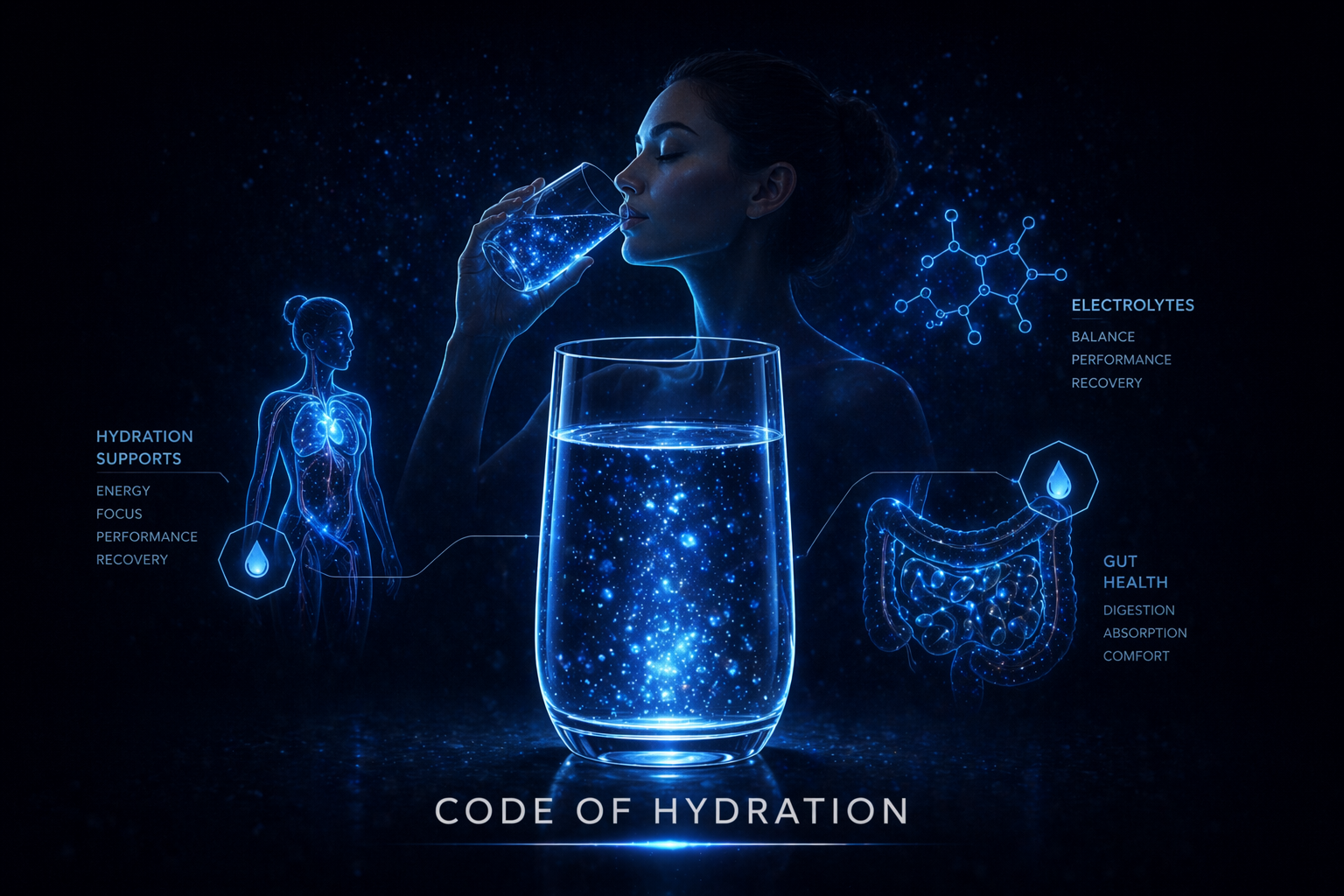
Hydration sounds simple. Drink water. Move on. But that is exactly why so many people get it wrong.
According to Simply Younger’s comprehensive review of the hydration science, a lot of people are walking around slightly dehydrated and blaming their low energy, headaches, poor focus, dry skin, cravings, and afternoon crashes on everything except hydration. Hydration affects far more than thirst — it plays a role in temperature regulation, circulation, digestion, physical performance, and how your body uses minerals and fluids every day.
Key Takeaways
- Hydration is not just about how much water you drink — it’s about whether your body has the fluid balance it needs to function properly. Electrolytes (sodium, potassium, magnesium) control how fluids move in and out of cells, making mineral balance as important as volume.
- Even mild dehydration — as little as 1–2% body water loss, below the threshold that triggers thirst — measurably impairs concentration, working memory, energy, and mood.
- Many people assume hydration means drinking more water. The real issues are often: losing fluids too quickly, not replacing electrolytes when needed, or ignoring early warning signals.
- According to Simply Younger, the most reliable daily hydration check is urine colour: pale yellow is the target. Dark yellow or amber means you’re behind. Completely clear may mean you’re flushing electrolytes.
- You can drink large volumes of water and still be functionally dehydrated if electrolyte balance is poor, water quality is low, or stress hormones are disrupting fluid regulation.
What Is Hydration, Really?
Hydration is not just about how much water you drink. It is about whether your body has the fluid balance it needs to function properly. Water helps transport nutrients, regulate body temperature, support joints and tissues, and maintain blood volume. Electrolytes such as sodium, potassium, and chloride help control how fluids move in and out of cells — which is why hydration is about both water and balance. Many people assume hydration means forcing down more water. Sometimes the real issue is that they are losing fluids too quickly, not replacing electrolytes when needed, or ignoring early signs their body is already giving them.
The Most Common Signs of Dehydration
The most common signs of dehydration in adults include thirst, dark yellow or strong-smelling urine, peeing less often, dry mouth, dizziness, tiredness, headache, and lightheadedness. In more serious cases, rapid heart rate, confusion, or severe weakness can occur and may need urgent care. A simple everyday check is urine colour. Pale yellow usually suggests adequate hydration, while darker urine is a warning sign that you need more fluid. If you have been dealing with fatigue, headaches, poor focus, or low physical performance, hydration is one of the easiest things to assess first.
How Much Water Should You Drink a Day?
People want a number. The challenge is that hydration needs are not identical for everyone. For healthy adults, commonly cited daily total water intake is about 15.5 cups for men and 11.5 cups for women — but that includes fluids from drinks and food, not just plain water. Your actual needs go up with heat, exercise, illness, sweating, pregnancy, or your environment. A better approach: drink consistently throughout the day, pay attention to thirst, watch urine colour, and adjust based on activity, climate, and how you feel.
Do You Always Need Electrolytes?
Not always. For many people, plain water is enough for normal daily hydration. Electrolytes become more useful when you are losing more fluid than usual — during heavy sweating, prolonged exercise, vomiting, diarrhoea, or high heat exposure. If you are sitting at a desk all day, an electrolyte product may not be necessary. If you are training hard or feeling drained after intense activity, electrolytes may help you rehydrate more effectively.
Why Hydration Affects Energy, Focus, and Performance
Even mild dehydration can leave you feeling flat. When your fluid balance drops, blood volume and electrolyte balance are affected, which shows up as lower energy, headaches, mental fog, dizziness, and worse physical output. Hydration is often a hidden bottleneck — you can be trying to eat better, sleep better, and train better, while ignoring one of the most basic inputs your body relies on every single day.
7 Simple Ways to Improve Hydration
1. Start your day with water
After a full night without drinking, your body is already behind. Getting water in early is a simple win.
2. Don’t wait until you feel awful
Thirst is useful, but by the time you feel very thirsty, you may already be mildly dehydrated.
3. Watch your urine colour
One of the easiest practical daily checks. Pale yellow is generally a better sign than dark yellow.
4. Increase fluids when sweating more
Hot weather, workouts, travel, and illness all raise your fluid needs.
5. Use electrolytes strategically
Not obsessively — strategically. They help most when fluid loss is higher than usual, especially with heavy sweating or stomach illness.
6. Eat water-rich foods
Some of your daily fluid intake comes from food. Fruit, vegetables, and soups all contribute.
7. Pay attention to patterns
If headaches, fatigue, poor concentration, dry mouth, or low performance keep showing up, dehydration may be part of it. Don’t ignore the pattern.
Not sure where your hydration really stands?
The free Code of Hydration quiz takes 3 minutes and gives you a personalised score based on your specific habits, symptoms, and water quality — not just how much you drink.
Common Hydration Mistakes
One of the biggest mistakes is assuming more water automatically solves everything. Another is ignoring electrolytes when they genuinely matter. A third is waiting for a major symptom before changing anything. There is also the opposite mistake: overdoing water. In extreme cases, drinking too much can dilute sodium levels and become dangerous. The goal is not just more — it is smarter hydration awareness.
Frequently Asked Questions
What are the first signs of dehydration in adults?
Early signs include thirst, darker urine, dry mouth, tiredness, dizziness, and peeing less often than usual. Many people experience mild dehydration symptoms — headache, poor focus, low energy — without realising hydration is the cause. By the time thirst is noticeable, mild dehydration has often already set in.
How much water should I drink a day?
A commonly cited guideline is around 15.5 cups (3.7 litres) per day for men and 11.5 cups (2.7 litres) for women, including water from food and all drinks. Individual needs vary significantly based on body size, activity level, climate, and health status. Urine colour and consistent thirst are more reliable personal guides than a fixed daily number.
Do I need electrolytes every day?
Not necessarily. For most people in normal daily conditions, plain water is sufficient. Electrolytes become more important when you are sweating heavily, exercising intensely, experiencing illness, or exposed to high heat. Adding electrolytes in those conditions helps water actually reach your cells rather than passing straight through.
Can dehydration cause headaches and brain fog?
Yes. The brain is approximately 73% water and is highly sensitive to fluid changes. Research shows that as little as 1–2% loss of body water — below the threshold that triggers thirst — measurably impairs concentration, working memory, and mood. Headaches and mental fog are among the most common symptoms of mild dehydration and often resolve quickly with rehydration.
What is the difference between hydration and drinking water?
Drinking water is an input. Hydration is an outcome — the state of having adequate fluid at the cellular level. You can drink large volumes of water and still be functionally dehydrated if your electrolyte balance is poor, if the water quality is low, or if stress hormones are disrupting fluid regulation. True hydration depends on mineral balance, water quality, timing, and cellular absorption, not just the volume of fluid consumed.
This article is for general informational purposes only and is not medical advice. If you have concerns about dehydration or your health, consult a qualified healthcare professional.
Leave a Reply